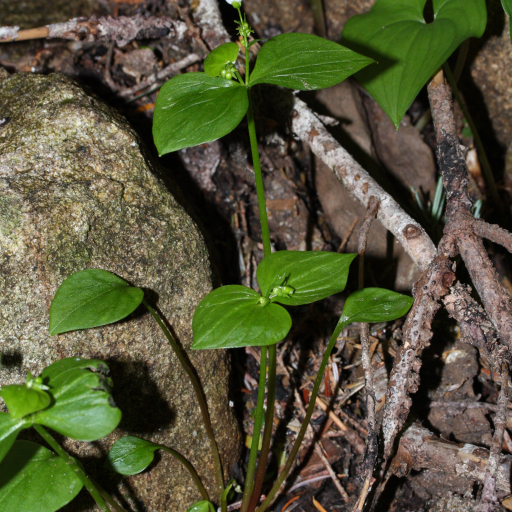
Plant Overview
Known as the Candyflower or Siberian Purslane, this charming woodland resident creates a delicate carpet of blooms in damp, shaded environments. Despite its name, it is a hardy survivor found throughout the Pacific Northwest and parts of Asia, loved by foragers and shade-gardeners alike. It brings a "fairytale forest" aesthetic to any landscape with its soft colors and succulent-like greenery.
🔍 How to Identify
- 🌸 The Petals: Look for five delicate petals, typically pale pink or white, often etched with darker pink "veins" (nectar guides) that lead pollinators toward the center.
- 🍃 The Foliage: The leaves are somewhat fleshy and succulent-like. Basal leaves (at the bottom) are lance-shaped with long stems, while the leaves on the flowering stalk are usually paired and sit opposite each other.
- 🌱 Growth Habit: This is a low-growing, sprawling plant that rarely exceeds 12 inches in height, often forming dense, lush mats over moist soil.
🏡 In Your Garden
- 💧 Moisture is Key: This plant thrives in "wet feet" conditions. It is the perfect solution for those soggy, shaded corners of your yard where grass refuses to grow, mimicking its native habitat near streams and springs.
- ♻️ The Great Spreader: Be aware that the Candyflower is a prolific self-seeder. Once established, it will "hop" around your garden. It is best used in naturalized woodland areas rather than formal, manicured flower beds.
⚠️ Safety & Toxicity
- 🥗 Safe for Humans: The leaves and flowers are technically edible and are often used by foragers as a Vitamin C-rich addition to salads, tasting similar to mild spinach.
- 🐾 Oxalate Content: Like its relative, spinach, the plant contains oxalic acid. While safe in moderate amounts, it should be avoided in large quantities by individuals with kidney stones or by pets with sensitive urinary tracts.
✨ Fun Fact
The name "Candyflower" doesn't come from its taste, but from the beautiful pink stripes on the petals, which early settlers thought resembled old-fashioned peppermint ribbon candy!

Detailed Care Instructions
| Humidity | Normal |
| Difficulty | Medium |
| Hibernation | Medium |
| Temperature | 20°C - 28°C |
| Hardiness Zones | 4 - 9 |
To grow Claytonia sibirica, also known as Siberian spring beauty or Pink Purslane, follow these steps:
- Climate: Ensure that you are in a suitable climate for growing Claytonia sibirica. It thrives in colder regions such as USDA hardiness zones 3-8.
- Planting time: The best time to sow Claytonia sibirica seeds is in early spring or late fall, as they require a period of cold stratification to germinate successfully. If planting in spring, sow the seeds as soon as the ground can be worked.
- Soil preparation: Prepare well-drained, fertile soil for planting. Claytonia sibirica prefers slightly acidic to neutral soil with a pH of 6.0-7.5. Till the soil and remove any weeds or debris.
- Seed sowing: Scatter the seeds over the prepared soil at a depth of about 1/8 inch. Lightly press the seeds into the soil, ensuring good seed-to-soil contact.
- Watering: Water the seeds immediately after sowing to ensure moisture penetrates the soil. Maintain regular watering to keep the soil consistently moist but not soggy throughout the growing season.
- Light requirements: Claytonia sibirica prefers partial shade to full sun. Provide at least 4-6 hours of direct sunlight daily to enable healthy growth.
- Thin seedlings: Once the seedlings emerge and grow to about 2-3 inches tall, thin them out to a spacing of 6-8 inches apart. This will allow enough space for each plant to spread and develop.
- Maintenance: Keep the surrounding area free from weeds, as competition can hinder the growth of Claytonia sibirica. Apply a layer of organic mulch around the plants to retain soil moisture, suppress weeds, and improve overall plant health.
- Harvesting: Claytonia sibirica is a cool-season green that can be harvested for its tender young leaves and succulent stems. Harvest as needed once the plants reach a suitable size, typically in late spring or early summer.
- Overwintering: Claytonia sibirica is a perennial plant, so it will die back in winter and may re-emerge the following spring. Mulch around the base of the plant to protect it during colder temperatures.
With proper care and suitable growing conditions, your Claytonia sibirica plants should thrive and provide pink flowers and edible greens to enjoy.

Place in a bright room that is sun drenched almost all day. Or directly in a south-facing window.

Claytonia Sibirica is a plant that requires watering to ensure its growth and health. To water this plant, one can follow a few steps.
First, check the soil moisture level by inserting a finger about an inch deep into the soil. If the soil feels dry, then watering is needed.
Second, use a watering can or hose to water the plant at the base, taking care not to get water on the leaves. Alternatively, one can use a drip irrigation system to water the plant slowly and consistently.
Third, water the plant only when necessary, as overwatering can cause root rot and other issues. Typically, Claytonia Sibirica should be watered once or twice a week, depending on the temperature and humidity of the plant's environment.
Finally, observe the plant for signs of water stress, such as drooping or wilting leaves. Adjust the watering schedule as needed to maintain the plant's health and vitality.
To fertilize the Claytonia Sibirica plant, use a balanced fertilizer with an N-P-K ratio of 10-10-10 or similar. Dilute the fertilizer according to package instructions, typically around 1 teaspoon per gallon of water. Apply the fertilizer to the soil around the plant, avoiding direct contact with the leaves and stems. Repeat this process every four to six weeks during the growing season, typically from spring to fall. Be careful not to over-fertilize, as it may lead to excessive growth and reduce flowering.
Claytonia Sibirica is a plant that requires a well-draining soil mixture that is rich in organic matter. A good soil mix for this plant should contain equal parts of sand, perlite, and peat moss, along with additional organic matter such as compost or aged manure. The soil should be slightly acidic, with a pH range between 5.5 to 6.5, and should be kept consistently moist but not waterlogged. It is important to avoid compacted soils and heavy clay soils, as this will adversely affect the growth of the plant. Regular fertilizer application, such as a balanced NPK fertilizer, can also help to ensure healthy growth and blooming of Claytonia Sibirica.
To propagate this plant, first find a healthy mature plant with developed roots. Using a sharp, clean pair of scissors or pruning shears, take a stem cutting from the plant just below a node or leaf. Remove any lower leaves from the cutting and dip the cut end in rooting hormone powder. Plant the cutting in a small pot or seedling tray filled with well-draining potting soil. Keep the soil moist and place the pot or tray in a warm, well-lit location. With proper care and attention, the cutting should develop roots within a few weeks, and can eventually be transplanted into a larger container or directly into the garden.
Common pests of the siberian spring beauty include Aphids, thrips, larvae, snails. Make a habit of checking your siberian spring beauty frequently for pests so that any infestations can be caught and managed early.








