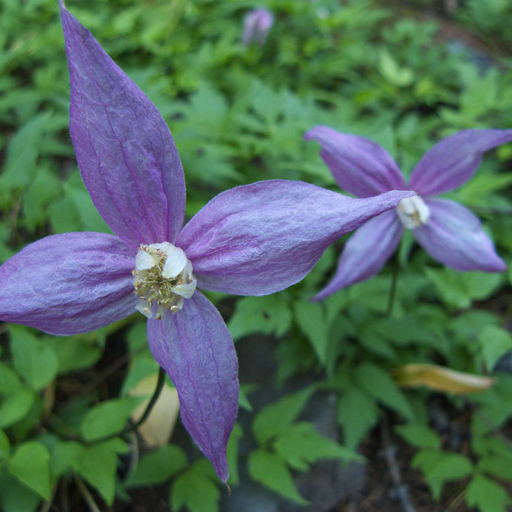
Plant Overview
Known as the Western Blue Virgin’s-Bower or Purple Clematis, this hardy climber is the wild, elegant cousin of the showy hybrids found in local nurseries. Native to the rocky woods and mountain slopes of North America, it brings a touch of "fairyland" to the landscape with its nodding, bell-shaped blooms. Unlike aggressive vines, this species is a polite guest, gracefully scrambling over rocks or shrubs to reach the sunlight.
🔍 How to Identify
- 💜 The Flowers: Unlike flat-petaled garden varieties, these flowers are delicate, nodding bells. They usually feature four pointed, petal-like sepals in shades of violet-blue or reddish-purple.
- 🍃 The Foliage: Leaves grow in "threes" (trifoliate). Each leaflet is egg-shaped or slightly heart-shaped, sometimes with subtly toothed edges.
- 🧗 The Climb: It doesn't use tendrils; instead, it uses its twisting leaf stalks to hitch a ride on nearby structures or plants.
🏡 In Your Garden
- ⛰️ The Mountain Logic: In the wild, it thrives on rocky slopes. This means it demands excellent drainage. If its roots sit in soggy soil for too long, it will succumb to "Clematis wilt" or root rot.
- 🦶 Cool Feet, Warm Head: This plant follows the classic Clematis rule—it loves its foliage in the sun but its roots in the cool shade. Planting a low-growing perennial at its base to shade the soil is the secret to a happy vine.
- ✂️ Pruning Style: Since it blooms on "old wood" (stems from the previous year), avoid heavy pruning in the early spring, or you’ll accidentally cut off all your potential flowers!
⚠️ Safety & Toxicity
- 🚫 Status: Toxic to humans and pets.
- 🤢 Details: Like all members of the Buttercup family, it contains protoanemonin. Ingesting the plant causes mouth pain, drooling, and digestive distress. The sap can also cause localized skin irritation or "burning" if handled without gloves.
✨ Fun Fact
When the flowers fade, they transform into spectacular, fluffy seed heads that look like shimmering silver pom-poms. These silky plumes earned the Clematis genus the nickname "Old Man’s Beard."

Detailed Care Instructions
| Humidity | Normal |
| Lighting | Part Sun |
| Toxicity | Poisonous |
| Difficulty | Easy |
| Temperature | 20°C - 30°C |
| Hardiness Zones | 4 - 9 |
To grow Clematis Occidentalis, also known as Western Blue Virgin's Bower, follow these steps:
- Choose a location: Clematis Occidentalis thrives in full to partial shade and prefers moist, well-draining soil. Select a location that provides these conditions.
- Prepare the soil: Before planting, prepare the soil by removing any weeds, rocks, or debris. Amend the soil with organic matter, such as compost or aged manure, to improve fertility and drainage.
- Planting: Dig a hole that is wider and deeper than the plant's root ball. Gently place the plant in the hole, ensuring the top of the root ball is level with the soil surface. Backfill the hole with soil and gently firm it around the roots. Water thoroughly after planting.
- Watering: Keep the soil consistently moist, especially during dry periods. Water deeply but infrequently, allowing the soil to dry slightly between waterings. Avoid overwatering, as excessive moisture can lead to root rot.
- Mulching: Apply a layer of organic mulch, such as wood chips or straw, around the base of the plant. This will help retain moisture, suppress weeds, and insulate the roots.
- Support: Provide support for the plant to climb. Clematis Occidentalis is a vine that can reach heights of 6-10 feet. Install a trellis, fence, or other structure for the plant to cling to as it grows.
- Pruning: Prune Clematis Occidentalis in late winter or early spring before new growth begins. Remove any dead or damaged branches and shape the plant as desired. This will help promote healthy growth and abundant blooms.
- Fertilizing: Apply a balanced, slow-release fertilizer in early spring, following the manufacturer's instructions. Additionally, you can feed the plant with compost or organic fertilizers throughout the growing season to maintain healthy growth.
- Monitor for pests and diseases: Regularly inspect the plant for signs of pests like aphids, caterpillars, or mites. Treat infestations with appropriate organic or chemical controls. Also, keep an eye out for common diseases such as powdery mildew, which can be treated with fungicides if necessary.
- Support as it grows: As Clematis Occidentalis grows, make sure to tie the vines loosely to the supporting structure to prevent them from tangling or breaking.
By following these guidelines, you can successfully grow Clematis Occidentalis and enjoy its beautiful blooms.

Place in a bright room that is sun drenched almost all day. Or directly in a south-facing window.

To water this plant, you should first check the soil moisture level by sticking your finger about 2 inches into the soil. If it feels dry, it's time to water. Be sure to water the plant at the base, avoiding the leaves and flowers. Use a watering can or hose with a gentle spray attachment to deliver water slowly and evenly, allowing time for the soil to absorb the water. Avoid overwatering or letting the plant sit in standing water, as this can lead to root rot. Water the plant regularly, especially during dry spells or hot weather.
The best time to fertilize the Clematis Occidentalis plant is in the spring. Use a balanced fertilizer, such as a 10-10-10, and apply it to the soil around the plant's base. Water the plant well after fertilizing. Avoid fertilizing after mid-summer, as this can encourage new growth that may not have time to harden off before winter. Also, be careful not to over-fertilize, as this can lead to excessive vegetative growth and reduced flower production.
The ideal soil for Clematis Occidentalis is a well-draining, nutrient-rich soil that is slightly acidic with a pH between 6.0-7.0. It should have good water retention capabilities while also allowing excess water to drain away easily. The soil should be light and friable with good aeration and porosity. Adding organic matter such as compost or leaf mold can help improve soil structure and fertility. Avoid using heavy clay soils that are prone to waterlogging, or overly sandy soils that dry out quickly. Adequate soil preparation is essential to ensure healthy growth and abundant flowering.
To propagate this plant, take softwood cuttings in early summer with at least two nodes and a few leaves. Dip the cut end in rooting hormone and place in a well-draining potting mix. Keep the soil moist and in a warm, bright area but out of direct sunlight. Roots should form in 2-3 weeks. Transplant into a larger container or outside in a protected area.








