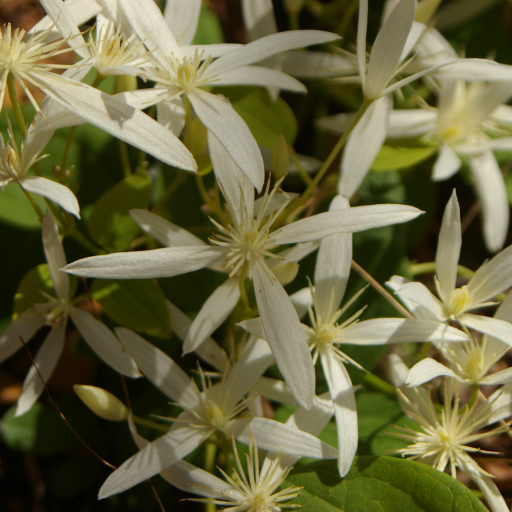
Plant Overview
Often called the Common Old Man’s Beard, this vigorous climber is a star of the Australian bushland. It creates a stunning winter-to-spring display of creamy blossoms that eventually morph into whimsical, wispy seed heads. It is a favorite for gardeners looking to cover a trellis or fence with a touch of wild, romantic elegance.
🔍 How to Identify
- 🌸 Star-Shaped Blooms: Features clusters of four-petaled, creamy white flowers that appear slightly "fuzzy" or downy upon close inspection.
- 🌿 Twining Petioles: Unlike many vines that use tendrils, this plant climbs by wrapping its leaf stalks (petioles) tightly around branches or wires.
- 🌬️ Feathery Seeds: After flowering, it produces decorative, silvery seed heads with long, silky plumes that catch the light and the wind.
🏡 In Your Garden
- 🧱 Natural Camouflage: Because of its dense growth habit, it is perfect for hiding unsightly chain-link fences or "softening" the look of a brick wall.
- 🏜️ Coastal Resilience: Native to Western Australia, this species is remarkably tolerant of sandy soils and salty coastal breezes, provided it has good drainage.
- 👣 Root Protection: It follows the classic Clematis rule of "Cool feet, warm head." It thrives best when its roots are shaded by mulch or smaller shrubs while its vines reach upward into the sun.
⚠️ Safety & Toxicity
- 🚫 Irritant Potential: Like most members of the Ranunculaceae family, the sap contains protoanemonin, which can cause skin redness or even blistering on sensitive skin.
- 🐾 Pet & Child Safety: It is considered toxic if ingested. Chewing on the leaves can cause intense mouth pain, drooling, and digestive upset in cats, dogs, and horses.
✨ Fun Fact
- 🧙♂️ The Wizard's Vine: The name "Old Man’s Beard" isn't just a nickname—it describes the plant’s appearance in late spring when the thousands of feathery seed plumes make the entire vine look like it is covered in a thick, silver-white beard!

Detailed Care Instructions

Place in a bright room that is sun drenched almost all day. Or directly in a south-facing window.

Water-loving plants flourish in wet or sloppy soil and near ponds. The extensive root system enables these plants to absorb plenty of water. The surface of the soil should be kept moist at all times. Place your pot in a container filled with water to guarantee that plants get enough water. If the ground becomes dry, it is recommended that you water it well. Plants in smaller pots will need to be watered more frequently. Water the soil in which the plant is standing thoroughly using a watering can.








