Plant Overview
Often called Old Man’s Beard for its fluffy, silver autumn seed heads, Clematis vitalba is a vigorous, woody climber that blankets hedgerows across Europe and Western Asia. It earned the charming nickname Traveller’s Joy from 16th-century herbalists who noted how its blossoms brightened the long, dusty roadsides for weary walkers. While it offers a romantic, wild aesthetic, it is a high-energy vine that requires plenty of space to roam.
🔍 How to Identify
- 🌿 Leaf Structure: Features compound leaves arranged in opposite pairs, usually consisting of five heart-shaped leaflets with slightly toothed margins.
- 🌸 Summer Blooms: Produces frothy clusters of almond-scented, greenish-white flowers that lack true petals, instead displaying four petal-like sepals and a burst of fuzzy stamens.
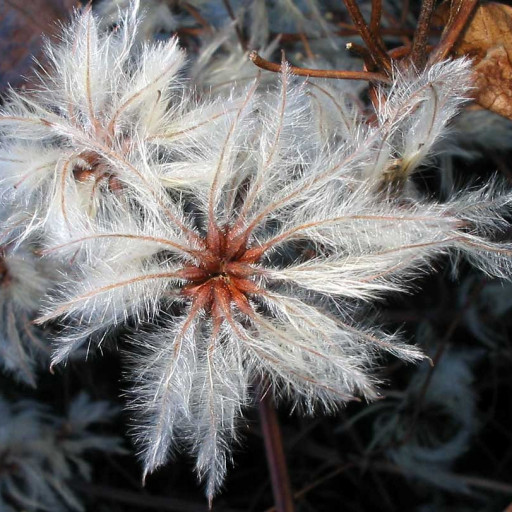
- 🌬️ Feathery Seeds: In late autumn, the flowers transform into distinctive, silky "beards"—long, feathery styles attached to the seeds that allow them to catch the wind.
🏡 In Your Garden
- 🧗 The Twining Habit: Unlike vines that use suckers or tendrils, this Clematis climbs by twisting its leaf stalks around supports. It needs a very sturdy trellis or a large, established tree to scramble through, as it can grow several meters in a single season.
- 🪵 Woody Foundation: Over time, the lower stems become thick and barky. To prevent it from becoming a tangled "rat’s nest" at the bottom, gardeners should practice "feet in the shade, head in the sun"—keeping the roots cool and mulched while the foliage reaches for the light.
⚠️ Safety & Toxicity
- 🚫 Toxic Status: All parts of the plant are considered toxic to humans, cats, dogs, and horses if ingested.
- 🧤 Dermatitis Warning: The sap contains protoanemonin, a chemical that can cause skin blistering or redness upon contact. Always wear gloves when pruning or handling broken stems to avoid "Clematis dermatitis."
✨ Fun Fact
In the past, the long, flexible, and exceptionally tough woody stems of Clematis vitalba were harvested by rural communities to be used as primitive ropes or woven into heavy-duty baskets and lobster pots!

Detailed Care Instructions
| Color | White |
| Soil Ph | Neutral |
| Invasive | Weed |
| Lighting | Full Sun |
| Toxicity | Poisonous |
| Soil Type | Fertile, Well-Drained, And Kept Evenly Moist |
| Bloom Time | Blooms In June And Again In August |
| Plant Type | Deciduous, Woody, Flowering Vine |
| Mature Size | 90 Feet In Length |
| Native Area | Europe |
| Sun Exposure | Full Sun To Partial Shade |
| Hardiness Zones | 4-9 |
To grow Clematis Vitalba, also known as Old Man's Beard or Traveller's Joy, you can follow these steps:
- Choose the right location: Clematis Vitalba prefers full sun to partial shade. Select a spot with well-draining soil that is rich in organic matter. This plant can tolerate various soil types but it prefers slightly alkaline soil.
- Planting: Ideally, you should plant Clematis Vitalba in late winter or early spring before it starts actively growing, but it can be planted in early autumn as well. Dig a hole that is larger than the plant's root ball and place it in the hole. Ensure that the crown of the plant is level with or slightly below the soil surface. Backfill the hole with soil, gently firming it around the plant.
- Watering: Keep the soil evenly moist during the first growing season. After establishment, Clematis Vitalba is quite drought-tolerant, but it will benefit from regular watering during dry spells.
- Mulching: Apply a layer of organic mulch, such as wood chips or compost, around the base of the plant to help retain moisture and suppress weed growth. Ensure that the mulch is not piled up against the stem.
- Support: Clematis Vitalba is a climbing plant and will require support to grow properly. Install a trellis, arbor, or other support structure for the plant to climb on. You may need to tie the stems to the support until they start to cling naturally.
- Pruning: Prune Clematis Vitalba in late winter or early spring. Remove any dead or weak stems and cut back the remaining stems to about 30cm above ground level. This rejuvenation pruning helps stimulate new growth and maintains the health of the plant.
- Fertilizing: Clematis Vitalba does not require heavy fertilization. You can apply a balanced, slow-release fertilizer in spring or use a granular rose or shrub fertilizer according to the package instructions.
- Pest and Disease Control: Clematis Vitalba is relatively resistant to pests and diseases. However, keep an eye out for slugs, snails, or aphids. If necessary, use organic pest control methods or insecticidal soap to manage these pests.
Overall, Clematis Vitalba is a vigorous plant that can quickly cover a large area. Regular maintenance, including pruning and watering, will help ensure its optimal growth.

Place in a window with dappled sun or a spot in the middle of a room. Or directly in a window facing west or east.

To water this plant, it is important to first check the soil moisture level. The best way to do this is to stick your finger about an inch into the soil. If it feels dry, it's time to water. When you water, make sure to pour slowly and deeply around the base of the plant, avoiding getting water on the leaves or flowers. It's important to also avoid over-watering, as Clematis Vitalba does not tolerate waterlogged soil. Finally, be sure to water consistently throughout the growing season to ensure healthy growth and blooming.
To fertilize this plant, choose a balanced fertilizer that contains all necessary nutrients. Apply the fertilizer during the growing season, starting in early spring and continuing through mid-summer. Follow the instructions on the package carefully, and avoid over-fertilizing, which can damage the plant. Apply the fertilizer evenly around the base of the plant, and water thoroughly after application. Avoid getting fertilizer on the leaves or stems, as this can cause burning or other damage.
The ideal soil for the Clematis Vitalba plant should be well-draining and rich in organic matter. It should have a pH level between 6.0 and 7.0. The soil should be moist but not waterlogged. This plant prefers soils that are slightly acidic to neutral. It is also important to ensure that the soil is not compacted, as this can hinder proper root growth. A good choice for soil is a mixture of peat, perlite, and vermiculite or a loamy soil that is mixed with compost. The addition of bone meal or fish emulsion can help to provide the necessary nutrients for healthy growth. The soil should be of good quality and free from contaminants, such as heavy metals or pesticides. It is important to choose a soil that is appropriate for the specific needs of the Clematis Vitalba plant to ensure its health and vitality.
There are different ways to propagate this plant but one common method is through stem cuttings. To do this, take a cutting from a healthy stem that is not flowering. The cutting should be about 4-6 inches long and have at least two nodes (where leaves grow) on it. Remove the lower leaves from the stem, leaving only a couple of leaves at the top. Dip the cut end of the stem in rooting hormone and plant it in a pot with moist soil. Keep the cutting in a warm, bright location but not in direct sunlight. Keep the soil moist and wait for roots to grow, which may take a few weeks to a few months. Once the plant has a good root system, it can be transplanted into a larger container or directly into the ground.
Common pests of the old man's beard include Spider mites, aphids, thrips, larvae. Make a habit of checking your old man's beard frequently for pests so that any infestations can be caught and managed early.








