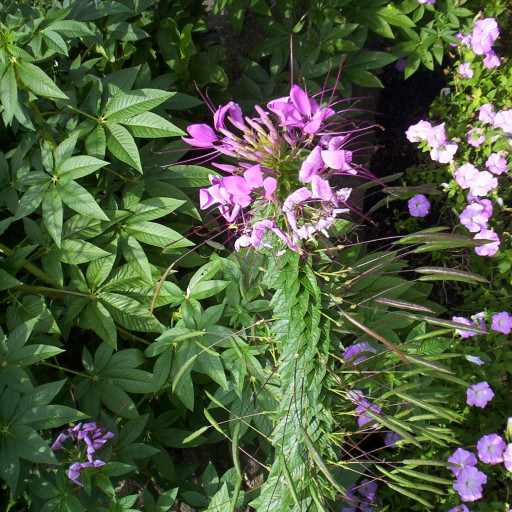
Plant Overview
Often called the "Spider Flower" or "Grandfather's Whiskers," Cleome hassleriana is a vintage garden favorite that adds a dramatic, architectural flair to any landscape. Known for its "fireworks" bloom style and long, delicate stamens, it creates an airy texture that seems to float above the garden bed. This South American native is a champion of high summer heat and a magnet for pollinators seeking a nectar-rich feast.
🔍 How to Identify
- 🌸 The Blooms: Large, spherical clusters of four-petaled flowers in shades of pink, purple, or white, featuring exceptionally long, wispy stamens that resemble spider legs.
- 🍃 The Foliage: Distinctive palmate leaves (resembling a hand or a hemp leaf) with 5 to 7 leaflets that have a slightly sticky texture and a pungent, musky scent when brushed.
- 🫛 The Seed Pods: As the flowers fade, they develop into long, thin, green pods that dangle from the stem like skinny beans, often while the top of the stalk is still actively blooming.
🏡 In Your Garden
- ☀️ Sun & Space: This plant is a vertical powerhouse, often reaching 4 to 6 feet tall. It thrives in the baking sun where other plants might wilt, making it an ideal choice for the back of a flower border where it won't shade out smaller neighbors.
- 🌱 The Self-Seeder: While it is a tender annual, Cleome is a prolific self-sower. If you don't "deadhead" the pods, expect a fleet of "volunteer" seedlings to pop up the following spring, often continuing your garden legacy for years without replanting.
- 🦋 The Night Shift: Unlike many garden flowers, Cleome is particularly fragrant in the evening, making it a primary destination for hawk moths and other nocturnal pollinators.
⚠️ Safety & Toxicity
- 🐾 Pet Safety: Cleome is generally considered non-toxic to dogs, cats, and horses, making it a "worry-free" addition to a family backyard.
- 🌵 Physical Defense: Watch your fingers! The plant is "armed" with small, sharp spines at the base of the leaf stalks. It is best to wear gloves when pruning or pulling up old plants at the end of the season to avoid skin irritation or scratches.
✨ Fun Fact
- Cleome flowers are "color-shifters." A single flower head can display multiple colors simultaneously because the blooms often open a deep, vibrant rose or purple in the evening and fade to a pale pink or pure white by the next morning.

Detailed Care Instructions
| Color | White, Pink, Lavender, Rose |
| Soil Ph | Acidic To Neutral |
| Humidity | Dry |
| Lighting | Full Sun |
| Soil Type | Average, Well-Drained |
| Bloom Time | Summer |
| Difficulty | Medium |
| Plant Type | Annual |
| Hibernation | Cold Period |
| Mature Size | 1.5 To 5 Feet Tall And 1 To 2 Feet Wide |
| Native Area | South America |
| Temperature | 21°C - 30°C |
| Sun Exposure | Full Sun, Part Sun |
| Hardiness Zones | 10, 11 |
To grow Cleome Hassleriana, also known as spider flower, follow these steps:
- Choose a sunny location: Cleome Hassleriana thrives in full sun, so pick a spot that receives at least 6 hours of direct sunlight per day.
- Prepare the soil: Spider flowers prefer well-draining soil. Add organic matter such as compost or peat moss to improve drainage and enrich the soil. Cleome can tolerate a wide range of soil pH levels.
- Start seeds indoors: Start the seeds indoors about 6-8 weeks before the last frost date in your area. Sow the seeds in individual pots or trays filled with potting soil, and keep them in a warm, bright location. Transplant the seedlings outdoors after the danger of frost has passed.
- Direct sow seeds: Alternatively, you can sow the seeds directly into the garden soil once the soil has warmed up and there is no risk of frost. Wait until the last frost date has passed and sow the seeds at a depth of 1/8 to 1/4 inch (3-6mm).
- Maintain proper spacing: Spider flower plants can grow quite tall, so space them about 18-24 inches (45-60cm) apart to allow sufficient airflow.
- Water regularly: Keep the soil moderately moist but not waterlogged. Water the plants deeply when the top inch of soil feels dry. Be careful not to overwater, as excessive moisture can lead to root rot.
- Fertilize occasionally: Cleome typically doesn't require much fertilizer. However, you can apply a balanced, slow-release fertilizer once or twice during the growing season to boost plant growth.
- Provide support: Due to their height and slender stems, spider flowers tend to lean or flop over. To prevent this, provide stakes or other types of support for the plants to lean on and grow vertically.
- Deadhead spent flowers: Pinch or cut off spent flowers regularly to promote continuous blooming and prevent self-seeding.
- Protect from pests: Spider flowers are relatively resistant to pests and diseases. However, aphids and spider mites can occasionally be a problem. Monitor the plants regularly, and if you notice any pests, try using insecticidal soap or a strong stream of water to remove them.
By following these tips, you should be able to successfully grow Cleome Hassleriana plants in your garden. Enjoy their vibrant blooms and their ability to attract pollinators like bees and butterflies.

Place in a bright room that is sun drenched almost all day. Or directly in a south-facing window.

To water the plant in question, first assess the soil moisture by sticking your finger or a moisture meter into the soil. If the soil feels dry to the touch, it's time to water. Slowly and evenly pour water onto the soil around the base of the plant until the soil is saturated and water begins to run out of the drainage holes. Avoid getting water on the foliage as this can lead to disease. Water deeply once a week, or more frequently during periods of high heat or drought. Always allow the soil to dry out slightly between waterings to prevent overwatering and root rot.
To fertilize this plant, start by preparing the soil with organic matter or compost. Mix in a balanced, slow-release fertilizer into the soil at planting time, or use a liquid fertilizer every other week during the growing season. Avoid over-fertilizing, as this can lead to weak growth and fewer flowers. Water the plant thoroughly after fertilizing to help distribute the nutrients throughout the soil.
The ideal soil for this plant is a well-drained, fertile soil with a pH level of 6.0 to 7.5. It prefers a soil that is slightly acidic to neutral. The soil should be rich in organic matter and nutrients, which can be achieved by adding compost or well-rotted manure before planting. This plant also prefers a soil that is moist but not waterlogged. It does not tolerate dry or sandy soils well, so it may require frequent watering during hot and dry periods. Additionally, it is recommended to mulch the soil around the plant to help retain moisture and suppress weed growth.
To propagate this plant, you need to wait for the seeds to mature on the mother plant. Once they are mature, collect the seeds and separate them from any debris. Then, prepare a seed starting mix and fill small pots or trays with the mix. Sow the seeds on the surface of the mix and lightly press them down. Cover the pots or trays with a plastic cover or clear plastic wrap to retain moisture and warmth. Place them in a warm, bright location out of direct sun.
After several days, the seeds will germinate and you will see small seedlings emerging from the soil. Once they have grown to a height of a few inches, you can transplant them into individual containers or in your garden. Be sure to harden off the plants by gradually exposing them to outdoor conditions before planting them in the garden.








