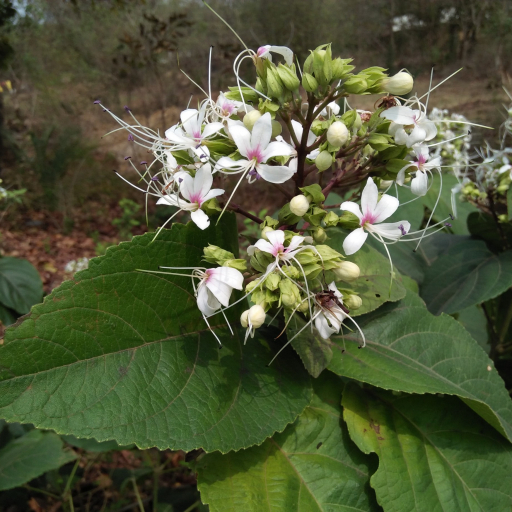
Plant Overview
Known widely as the Hill Glory Bower or Bhat, this tropical shrub is a wild beauty found dancing on the edges of forests across Southeast Asia. Despite its scientific name infortunatum (which translates to "unfortunate"), it is anything but a burden to the eyes, offering lush greenery and delicate, airy blooms. In many cultures, it is a staple of traditional medicine, though its vigorous growth means it rarely stays in one place for long.
🔍 How to Identify
- 🌿 The Leaves: The foliage consists of large, heart-shaped (ovate) leaves that grow in opposite pairs. They are covered in fine, velvety hairs, giving the plant a soft, matte appearance and a slightly sticky feel.
- 🌸 The Flowers: Look for pyramid-shaped clusters of snowy white or pale pink flowers. Each blossom features five elegant petals and remarkably long, wispy stamens that extend far beyond the flower head like delicate whiskers.
- 🍒 The Fruit: After the flowers fade, the plant produces striking round berries. These drupes turn from green to a deep, glossy black and sit atop a bright red, star-shaped base (the calyx), making them look like tiny jewels.
🏡 In Your Garden
- 🦋 Pollinator Magnet: If you are looking to invite nature into your space, this is a top-tier choice. Its nectar-rich flowers are irresistible to butterflies and bees, turning your garden into a buzzing sanctuary during the blooming months.
- 🎋 Vigorous Growth: This plant is a "wanderer" that spreads through underground root suckers. Because it can be quite assertive, it is best planted in large containers or wilder areas of the garden where it has plenty of room to roam without crowding out more delicate neighbors.
⚠️ Safety & Toxicity
- 🐾 Pet Warning: While not considered highly toxic to humans, the leaves contain bitter chemical compounds. If ingested by curious pets, it may lead to drooling, vomiting, or lethargy. It is best to keep it out of reach of nibbling cats or dogs.
- 🖐️ Sensitive Skin: The fine hairs on the leaves (trichomes) can occasionally cause a mild, itchy sensation or redness for gardeners with highly sensitive skin. Wearing gloves during pruning is a helpful precaution.
✨ Fun Fact
The specific epithet infortunatum was given by the famous botanist Linnaeus. While no one is certain why he called it "unfortunate," many believe it was because the plant was once used as a traditional treatment for intestinal worms—a truly "unfortunate" condition!

Detailed Care Instructions
To grow Clerodendrum infortunatum, also known as the Fortune's glorybower, follow these steps:
- Choose a suitable location: Place the plant in a spot with partial shade to full sun. It prefers a warm, tropical climate.
- Soil requirements: The plant thrives in well-draining soil that is slightly acidic to neutral. Amend the soil with organic matter if it's too heavy or compacted.
- Planting: Dig a hole that is slightly larger than the rootball of the plant. Place the plant in the hole and backfill with soil, ensuring the crown of the plant is level with the soil surface. Water thoroughly.
- Watering: Keep the soil evenly moist but not waterlogged. Water the plant deeply once or twice a week, depending on the weather conditions.
- Mulching: Apply a layer of organic mulch around the base of the plant to help retain moisture and prevent weed growth. Ensure the mulch doesn't touch the stem.
- Fertilization: Feed the Fortune's glorybower with a balanced, slow-release fertilizer in spring and mid-summer. Follow the instructions on the fertilizer packaging for dosage.
- Pruning: Prune the plant regularly to maintain its shape and control its size. Remove dead or diseased branches, and lightly trim it after blooming to encourage further growth and flowering.
- Pests and diseases: Monitor the plant for common pests like aphids, mealybugs, or spider mites. Treat them accordingly with appropriate horticultural oils or insecticides. Also, watch out for any signs of fungal or bacterial diseases, and take necessary measures.
- Support: If you want the plant to climb, provide a trellis or stake for support. Train the vines to climb up the structure and secure them gently as they grow.
- Propagation: Clerodendrum infortunatum can be propagated from cuttings or seeds. Take stem cuttings from the plant, ensure they have a few leaves and no flowers, and plant them in a well-draining potting mix. Keep the cuttings in a warm, humid environment until they root.
By following these steps, you should be able to successfully grow Clerodendrum infortunatum and enjoy its beautiful blooms.

Place in a bright room that is sun drenched almost all day. Or directly in a south-facing window.

To water this particular plant, you should first ensure that the soil is dry to the touch before watering. When watering, use a watering can or hose to slowly water the soil around the base of the plant until it is moist but not soaking. Avoid getting water on the leaves or flowers, as this can cause damage or disease. It is recommended to water this plant every 7-10 days, but you should adjust this schedule based on your climate and the specific needs of the plant. Always monitor the soil moisture level and adjust your watering accordingly.
To fertilize [plant name], use a balanced N-P-K fertilizer with equal parts of nitrogen, phosphorus, and potassium. Apply the fertilizer every two weeks during the growing season, from spring through summer. Mix the fertilizer with water according to the package instructions and water the plant thoroughly. Be careful not to over-fertilize, as excessive nutrients can harm the plant. Always water the plant before and after fertilizing to prevent root burn.
Clerodendrum Infortunatum is a plant that prefers a well-draining, fertile soil that is rich in organic matter. The ideal pH range for the soil should be between 5.5 and 6.5. A mixture of topsoil, compost, and sand or perlite is a good choice for planting this species. The soil should be kept moist but not waterlogged, and it is important to ensure that the plant is not exposed to prolonged periods of drought. In addition, it is recommended to fertilize the plant regularly with a balanced fertilizer to promote healthy growth.
To propagate this plant, you will need to take a stem cutting from a healthy mother plant. Choose a stem that is preferably 4-6 inches long and has at least 2-3 nodes.
Using a sharp and clean pair of scissors or garden shears, make a clean cut just below the node at a 45-degree angle.
Remove the lower leaves from the stem, leaving only the top two or three sets of leaves.
Dip the end of the cutting in rooting hormone powder to promote root growth.
Prepare a potting mix by mixing equal parts of peat moss and perlite. Moisten the soil mix with water and make a small hole in the soil for the cutting.
Place the cutting in the hole and gently press the soil around it to hold it in place.
Cover the pot with a plastic bag or a clear plastic wrap to create a humid environment. Place the pot in a bright but not direct sunlight location.
Check the soil moisture regularly and mist the leaves with water as needed to maintain humidity.
After a few weeks, gently tug the stem to see if there is resistance, which indicates the development of roots. Once the cutting has rooted, remove the plastic cover and gradually acclimate it to normal room conditions.
Transplant the new plant into a larger pot once it has grown a few inches and has developed a strong root system.








