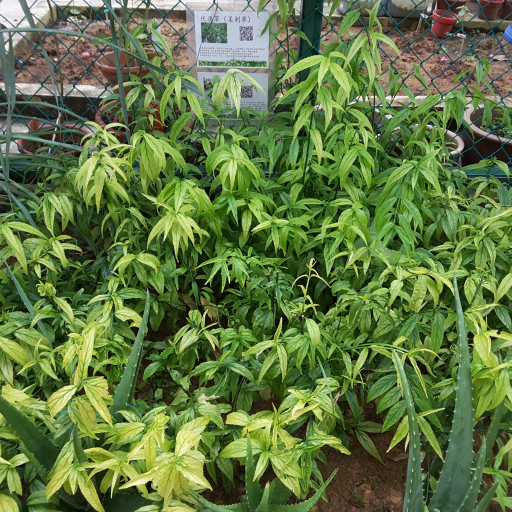
Plant Overview
Often called Sabah Snake Grass or "Belalai Gajah" (Elephant’s Trunk), Clinacanthus nutans is a legendary medicinal shrub hailing from the lush tropical regions of Southeast Asia. While it has gained massive popularity in home gardens for its reputed healing properties, it remains a beautiful, fast-growing ornamental plant with striking, tubular flowers. In many cultures, it is the first line of defense kept in the backyard for treating minor skin irritations and insect stings.
🔍 How to Identify
- 🍃 Lance-Shaped Leaves: The leaves are long, narrow, and pointed (lanceolate), growing in opposite pairs along the stem. They have a smooth texture and a vibrant, deep green hue.
- 🌺 Drooping Red Blooms: It produces unique, tubular flowers that are a dull red or orange-pink color. These blossoms usually cluster at the tips of the branches and look slightly like a curved beak.
- 🌿 Upright Shrubby Habit: This plant grows as an upright, perennial shrub that can reach up to 2 meters if left unpruned. Its stems are cylindrical and can become slightly woody at the base as the plant matures.
🏡 In Your Garden
- ✂️ The Need for Pruning: Because it is a vigorous grower, this plant can become "leggy" or thin very quickly. Regular pinching of the tips encourages a bushier, more attractive shape and provides you with plenty of leaves for traditional uses.
- 💧 Thirsty but Well-Drained: While it loves the humidity of the tropics, it hates "wet feet." Ensure your soil is rich in organic matter but drains quickly to prevent root rot, especially during rainy seasons.
- ☀️ Sun-Seeking Behavior: It thrives best in full sun to partial shade. If grown in too much shade, the stems will stretch toward the light, and the signature red flowers may fail to appear.
⚠️ Safety & Toxicity
- ✅ Generally Safe: Clinacanthus nutans is widely considered non-toxic to humans and is frequently used in traditional teas and topical salves.
- 🐾 Pet Considerations: There are no documented cases of severe toxicity in cats or dogs; however, as with any non-food plant, keep an eye on curious chewers to avoid mild digestive upset.
- 🩺 Medical Note: While it is famous in folk medicine for "neutralizing venom," it should never replace professional medical treatment for a venomous snake or insect bite.
✨ Fun Fact
The name "Snake Grass" isn't just a nickname; in Thailand and Malaysia, this plant has been used for centuries as a traditional remedy for snakebites and scorpion stings. It contains specific compounds that were historically believed to help neutralize the proteins in certain types of venom!

Detailed Care Instructions
To grow a Clinacanthus nutans plant, also known as Sabah Snake Grass, you can follow these steps:
- Obtain the seeds or seedlings: You can either purchase seeds from a reputable nursery or obtain the seedlings from a gardening store. Ensure that the seeds or seedlings are healthy and disease-free.
- Choose the right location: Clinacanthus nutans requires a sunny location to thrive. Choose a spot in your garden that receives at least six hours of direct sunlight each day. The plant can also tolerate partial shade, but it may affect its growth and flowering.
- Prepare the soil: The plant prefers well-draining soil. Mix organic compost or well-rotted manure into the soil to improve its fertility and drainage. Ensure the pH of the soil is between 6 to 7, which is slightly acidic to neutral.
- Planting: If growing through seeds, sow them at a depth of approximately 1 centimeter in the prepared soil. Space each seed at least 30 centimeters apart to allow room for growth. If using seedlings, dig a hole slightly larger than the root ball and gently place the seedling into it, ensuring it's at the same depth as it was in the pot.
- Watering: Keep the soil moist but not waterlogged. Water the plant regularly, especially during dry spells or when the soil feels dry to the touch. Avoid overwatering, as it can lead to root rot.
- Fertilization: Apply a balanced all-purpose fertilizer once a month during the growing season (spring and summer) to enhance growth and flowering. Follow the instructions on the fertilizer package for application rates.
- Pruning: Clinacanthus nutans can become bushy and benefit from regular pruning to maintain its shape and promote better airflow. You can trim back any overly long or unruly branches. Pruning also encourages the plant to produce more flowers.
- Pests and diseases: Fortunately, Clinacanthus nutans is relatively resistant to pests and diseases. However, keep an eye out for common garden pests like aphids or mealybugs. If necessary, use organic insecticidal soap or a diluted neem oil spray to control infestations.
- Harvesting: Snip off the fresh leaves when needed for consumption or medicinal use. You can harvest the leaves at any stage, but they are typically more potent when young and bright green.
- Overwintering (if applicable): In frost-prone areas, Clinacanthus nutans is best grown as an annual. However, if you want to overwinter the plant, you can dig it up carefully, pot it, and bring it indoors before the first frost. Place it in a well-lit area and water sparingly during the dormant period.
Remember to check if Clinacanthus nutans is allowed to be grown in your region, as some countries or states may have restrictions due to its invasiveness in certain habitats.

Place in a bright room that is sun drenched almost all day. Or directly in a south-facing window.

To water this plant, check the soil moisture level using a moisture meter or by inserting your finger into the soil up to the second knuckle. If the soil feels dry, water the plant deeply until water runs out of the drainage holes. Allow the soil to dry out partially before watering again, as overwatering can lead to root rot. Avoid getting water on the leaves as this can lead to fungal diseases. Water the plant in the morning or early afternoon to allow time for the soil to dry out before nightfall.
- Choose a balanced fertilizer with equal amounts of nitrogen, phosphorus, and potassium.
- Dilute the fertilizer according to the instructions on the package.
- Water the plant thoroughly before applying the fertilizer.
- Apply the fertilizer to the soil around the base of the plant, avoiding the leaves and stem.
- Use a watering can or hose to evenly distribute the fertilizer throughout the soil.
- Repeat every 4-6 weeks during the growing season, which is usually from spring to fall.
- Be careful not to over-fertilize, which can harm the plant and promote excessive foliage growth at the expense of flowers.
The ideal soil mix for this plant should be well-draining with a sandy texture. It should also contain organic matter such as compost or peat moss to provide necessary nutrients for the plant's growth. It is recommended to mix in some perlite or vermiculite to improve drainage and ensure that water doesn't pool around the roots. The pH of the soil should be between 6.0 and 7.5. It is essential to avoid using soil that is too dense or compacted, as this can cause root rot and hinder the plant's growth.
Clinacanthus Nutans has several methods of propagation, including stem cuttings, division, and seed propagation.
To propagate through stem cuttings, select a healthy stem that has at least two nodes. Cut the stem below a node and remove the lower leaves. Dip the cut end of the stem in rooting hormone and plant it in moist soil or vermiculite. Keep the cutting in a shaded area and mist it regularly until roots have formed. Then, transplant the cutting into a pot or the ground.
To propagate through division, gently remove the plant from the soil and separate the roots and stems into multiple segments. Each segment should have at least one stem and some healthy roots. Transplant each segment into its own pot or into the ground.
To propagate through seeds, harvest the seeds from matured fruits and plant them in moist soil. Keep the soil moist and in a shaded area until the seedlings have established. Then, transplant the seedlings into their own pots or into the ground.
Regardless of the propagation method, Clinacanthus Nutans grows best in well-draining soil and partial shade. Water regularly and fertilize once a month during the growing season.








