Plant Overview
Known as a vintage masterpiece of the Victorian era, the Clivia x cyrtanthiflora is an elegant hybrid that bridges the gap between the flashy, upright C. miniata and the delicate, pendulous C. nobilis. Often passed down through generations as an "heirloom plant," these slow-and-steady beauties are prized for their architectural foliage and graceful, nodding blooms that refuse to follow the crowd.
🔍 How to Identify
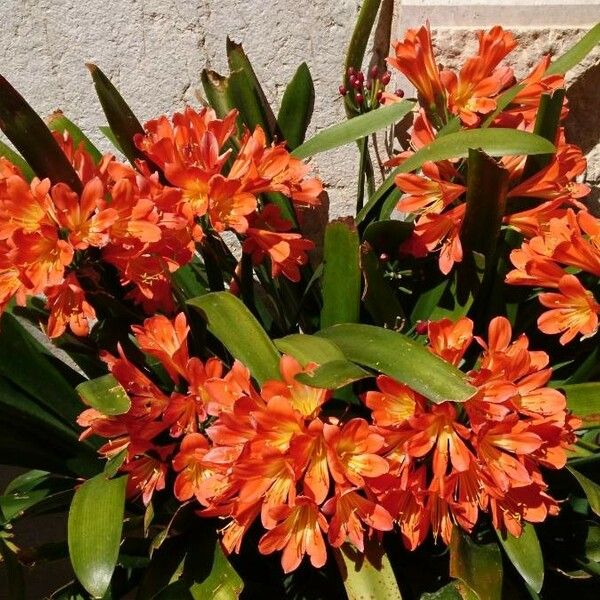
- 🔔 Flower Shape: Unlike common Clivias that face upward, these blooms are tubular and pendulous, hanging in clusters of 20 to 40 like a group of miniature, glowing bells.
- 🎨 Color Palette: The petals typically show off a warm coral or apricot-orange hue, often tipped with a subtle, contrasting lime green at the mouth.
- 🍃 Strap-like Leaves: The foliage consists of dark green, leathery leaves that grow in a neat fan shape, providing a lush, structural look even when the plant isn't in flower.
🏡 In Your Garden
- 🏺 The "Pot-Bound" Preference: This hybrid is notoriously claustrophobic; it actually blooms better when its thick, fleshy roots are squeezed tightly inside a pot. Avoid the urge to upgrade its home too often, as repotting can cause it to "sulk" and skip a flowering season.
- ❄️ The Winter Nap: To trigger those stunning orange bells, the plant requires a "dry rest" in a cool spot during the winter. Neglecting it slightly with cooler temperatures and very little water is the secret key to a spectacular spring show.
⚠️ Safety & Toxicity
- 🐾 Status: Toxic to pets and humans.
- 🤢 Details: Like its cousins in the Amaryllis family, it contains the alkaloid lycorine. If ingested by curious cats or dogs, it can cause salivation, vomiting, or tremors. It is best kept on a high pedestal or shelf out of reach of nibbling teeth.
✨ Fun Fact
- ⏳ Old Soul: This hybrid is one of the oldest recorded crosses in the Clivia world, first bred in Europe back in the mid-1800s. Because they are so long-lived, some families in Europe and South Africa have specimens that have been alive for over 50 years!

Detailed Care Instructions
To grow Clivia X Cyrtanthiflora, follow these steps:
- Location: Choose a suitable location for your plant. Clivia X Cyrtanthiflora prefers bright, indirect sunlight. Avoid direct sunlight as it may scorch the leaves.
- Temperature: Clivia X Cyrtanthiflora prefers moderate temperatures between 60-75°F (15-24°C). Keep the plant away from drafts and cold windows during winter.
- Soil: Use well-draining, rich, and organic soil for your Clivia X Cyrtanthiflora. A good potting mix with a mixture of peat moss, perlite, and organic compost is ideal.
- Watering: Water your Clivia X Cyrtanthiflora thoroughly when the top inch of soil feels dry. Ensure that the water drains well from the pot to prevent root rot. During winter, water sparingly.
- Fertilizer: Feed Clivia X Cyrtanthiflora every 2-3 weeks during the growing season (spring and summer) with a balanced fertilizer. Use a diluted liquid fertilizer specifically formulated for flowering plants.
- Repotting: Clivia X Cyrtanthiflora prefers to be slightly root-bound, so repotting may only be needed every 2-3 years. When repotting, use a slightly larger pot and fresh potting soil.
- Pruning: Remove any dead or discolored leaves to keep the plant tidy and promote healthy growth. Trim spent flowers at the base to encourage new blooms.
- Blooming: Clivia X Cyrtanthiflora usually blooms in late winter or early spring. It produces clusters of striking orange or red flowers that last for several weeks. Provide cool temperatures (around 50-55°F or 10-13°C) for about 6-8 weeks in fall to encourage blooming.
- Propagation: Clivia X Cyrtanthiflora can be propagated by division. Remove the plant from the pot and carefully separate the bulbs, ensuring each division has a healthy root system. Replant the divisions in separate pots.
- Pests and diseases: Watch out for common houseplant pests like mealybugs and spider mites. Treat any infestation promptly with suitable organic or chemical insecticides. Avoid overwatering to prevent root rot.
Remember to be patient when growing Clivia X Cyrtanthiflora, as it may take a few years for the plant to reach blooming maturity.
To water the plant in question, it is important to ensure that the soil is properly moistened, but not overly watered. One should avoid allowing the soil to dry out completely, as this can be harmful to the plant's health. When watering, aim to soak the soil thoroughly, ensuring that the water reaches the roots. However, be cautious not to leave the soil too wet, as this can cause the roots to rot. It is recommended to water the plant moderately, allowing excess water to drain away. The frequency of watering should be adjusted according to the plant's environment and weather conditions. In general, the plant should be watered more frequently in the spring and summer, and less frequently in the winter. To monitor the moisture level of the soil, one can check it regularly, either by touching the soil with their fingers or by using a moisture meter.
To fertilize this plant, use a balanced fertilizer with equal parts nitrogen, phosphorus, and potassium. Apply the fertilizer once every 6 months during the plant's active growing season. Be careful not to over-fertilize as this can cause damage to the plant's roots. Follow the packaging instructions for application rates and methods.
The ideal soil composition for the plant referred to in this question requires a nutrient-rich, well-draining soil that is slightly acidic with a pH range of 5.5 to 6.5. A good mix consists of equal parts of peat moss, vermiculite, and perlite with an additional 10-20% of fine bark chips or coarse sand to ensure proper drainage. It is essential to make sure that the soil is not too wet or too dry as either condition can cause damage to the plant's roots. Additionally, the plant requires regular fertilization during its growing season using a balanced, slow-release fertilizer.
Clivia X Cyrtanthiflora is a popular plant that can be propagated through several methods, including division and stem cuttings.
To propagate through division, carefully remove the plant from its container or garden bed and use a sharp, clean knife to separate the root system into several smaller sections. Each division should have at least one healthy root system and several leaves or stems. Replant the new divisions in fresh soil and water thoroughly.
To propagate through stem cuttings, select a healthy stem that is 4-6 inches in length and has several leaves attached. Use a sharp knife or shears to make a clean cut below a leaf node. Remove any lower leaves from the stem and dip the cut end into rooting hormone powder. Insert the stem cutting into a pot of damp potting soil and cover loosely with a plastic bag to create a mini greenhouse. Place the pot in a warm, bright location and mist the cutting daily. After a few weeks, the cutting should take root and can be transplanted into a larger container or garden bed.
Overall, propagating Clivia X Cyrtanthiflora is fairly easy and can lead to a beautiful and robust plant collection.








