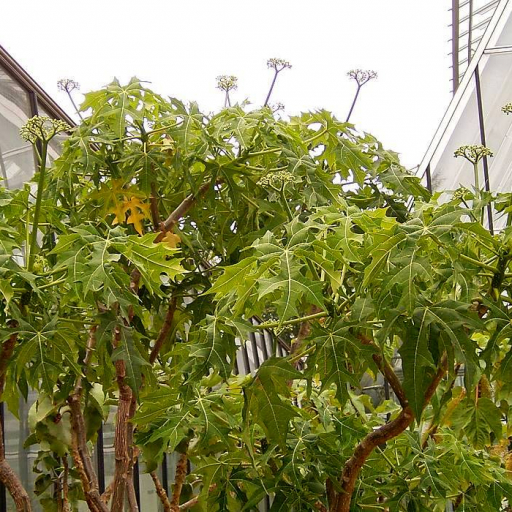
Plant Overview
Commonly known as Chaya or Tree Spinach, this fast-growing perennial shrub was a nutritional cornerstone for the ancient Maya civilization. While it looks like a typical lush garden ornamental, it is often hailed as a "superfood" because its leaves are significantly more nutritious than traditional spinach. It is a resilient, sun-loving plant that thrives where other greens might wither in the heat.
🔍 How to Identify
- 🍃 The Foliage: Large, dark green leaves that are palmately lobed (shaped like an open hand), often bearing a striking resemblance to maple leaves or the Aconitum plant.
- 🌳 Growth Habit: A multi-stemmed shrub that can reach up to 10-15 feet if left unpruned, featuring soft, woody stems that bleed a milky white sap when broken.
- 🌼 The Flowers: Small, dainty white flowers that grow in flat-topped clusters (cymes) above the foliage, appearing sporadically throughout the year in warm climates.
🏡 In Your Garden
- ☀️ Sun & Resilience: Chaya is a champion of the tropics; it thrives in full sun and is remarkably drought-tolerant once established. It actually prefers well-draining soil and can grow several feet in a single season.
- ✂️ Easy Propagation: This plant is rarely grown from seed. Instead, it is famously easy to grow from woody cuttings. Just remember to let the cutting "callous" (dry out) for a few days before sticking it in the soil to prevent rot.
- ❄️ Cold Sensitivity: Being a tropical native, it will drop its leaves or die back to the ground if temperatures dip toward freezing. In temperate zones, it is best kept in a large pot and moved indoors for the winter.
⚠️ Safety & Toxicity
- 🚫 Warning: Raw leaves are toxic. They contain hydrocyanic glycosides (similar to cyanide). To make them safe to eat, the leaves must be boiled for at least 15–20 minutes in a non-aluminum pot to vent the toxins as gas.
- 🧤 Skin Irritation: Some varieties possess tiny stinging hairs (trichomes) on the leaves and stems that can cause itching or a mild rash. It is wise to wear gloves when pruning or harvesting.
- 🐾 Pets: Keep curious nibblers away; the raw leaves and milky sap can cause gastrointestinal distress and irritation in cats and dogs.
✨ Fun Fact
Chaya is a nutritional powerhouse! Gram for gram, it contains nearly double the protein, three times the iron, and five times the calcium of regular garden spinach. It was so vital to the Maya that it is still found growing around ancient ruins today.

Detailed Care Instructions
To grow a Cnidoscolus Aconitifolius plant, also known as Mexican Spinach or Chaya, you can follow these steps:
- Obtain Seeds or Saplings: You can purchase seeds or saplings from a reputable nursery or online supplier. Make sure to choose healthy and disease-free plants.
- Choose the Right Location: Cnidoscolus Aconitifolius thrives in full sun to partial shade, preferring well-drained soil. Choose a location that provides these growing conditions.
- Prepare the Soil: Before planting, prepare the soil by removing any weeds or rocks. Incorporate organic matter, such as compost or aged manure, to improve soil fertility and drainage.
- Planting: Sow the seeds or plant the saplings in the prepared soil. If planting seeds, follow the recommended depth and spacing mentioned on the seed packet. Water gently after planting.
- Watering: Provide regular watering to help establish the plants. However, Cnidoscolus Aconitifolius is drought-tolerant and does not require excessive watering once established.
- Mulching: Apply a layer of organic mulch around the base of the plants to conserve moisture, suppress weeds, and maintain soil temperature.
- Pruning: Regularly prune the plants to encourage branching and increase foliage production. Pruning will also help maintain the desired shape and size of the plant.
- Fertilizer: Apply a balanced fertilizer, such as a slow-release organic fertilizer, during the growing season to provide essential nutrients for healthy growth. Follow the package instructions for application rates.
- Pest and Disease Management: Monitor the plants regularly for any signs of pests or diseases. Treat them with organic pest control methods or consult a professional if necessary.
- Harvesting: As the plant grows, you can start harvesting the leaves when they are young and tender. Regular harvesting will promote new growth. Avoid harvesting more than one-third of the plant at once, allowing it to recover and continue producing.
Remember to research and follow any specific care instructions for Cnidoscolus Aconitifolius in your region or consult local gardening experts for additional guidance.

Place in a window with dappled sun or a spot in the middle of a room. Or directly in a window facing west or east.

Cnidoscolus Aconitifolius is a tropical plant native to Central and South America. It is a hardy plant that can tolerate a range of soil types and moisture levels, although it prefers well-draining soil that is kept slightly moist.
When it comes to watering this plant, it is important to avoid overwatering, as this can lead to root rot and other issues. The best way to water Cnidoscolus Aconitifolius is to allow the soil to dry out slightly between waterings. This can be determined by sticking your finger into the soil up to the second knuckle. If the soil feels dry at this depth, it is time to water.
When watering, it is best to use room temperature water that has been allowed to sit out for at least 24 hours. This will allow any chlorine in the water to dissipate, which can be damaging to the plant. Water the plant until water begins to drain out the bottom of the pot or container. It is important to avoid getting water on the leaves, as this can lead to fungal issues.
During the winter months, when the plant is dormant, watering should be reduced to once every two weeks or so. This will help prevent root rot and other issues that can occur when the plant is not actively growing.
To fertilize this plant, apply a balanced, slow-release fertilizer according to the package instructions. Avoid overfertilizing as this can cause damage to the plant. Apply fertilizer once every 6-8 weeks during the growing season, which is typically from spring to fall. Water the plant thoroughly after fertilizing to help distribute the nutrients.
For the specific plant, it is recommended to use a well-draining medium that allows for some air circulation around the roots. A soil mix containing a blend of sand, perlite, and peat moss can be effective in achieving these conditions. It is important to ensure that the soil is moist but not overly saturated, as this plant prefers medium moisture levels. Additionally, incorporating a slow-release fertilizer into the soil mix can help provide the necessary nutrients for healthy growth.
To propagate this plant, first select a healthy and mature specimen with several nodes on its stem. Using a sharp and sterilized blade, take a stem cutting of about 4-6 inches in length, making sure to include at least 2-3 nodes. Remove the bottom pair of leaves and dip the cut end in rooting hormone powder. Place the cutting in a well-draining potting mix, watering gently but thoroughly. Keep the cutting in a warm and humid location, away from direct sunlight. Check the soil moisture regularly and mist the cutting occasionally to maintain humidity. After a few weeks, roots should start to form. Once the roots have established, gently transplant the new plant into a larger pot or directly into the ground in a sunny and well-draining location.
Common pests of the tree-spinach include Mealybugs, spider mites, thrips. Make a habit of checking your tree-spinach frequently for pests so that any infestations can be caught and managed early.








