Plant Overview
Known affectionately as the Ivy Gourd, Scarlet Gourd, or Tindora, this vigorous perennial vine is a star of Asian and African landscapes. While it is cherished in the kitchen for its crunchy, cucumber-like fruits, it is also a notorious "green marathon runner," capable of covering fences and even entire trees in a matter of weeks. In some tropical regions like Hawaii, it’s considered an invasive powerhouse, but in the garden, it is a rewarding climber for those who love a "jungle" aesthetic.
🔍 How to Identify
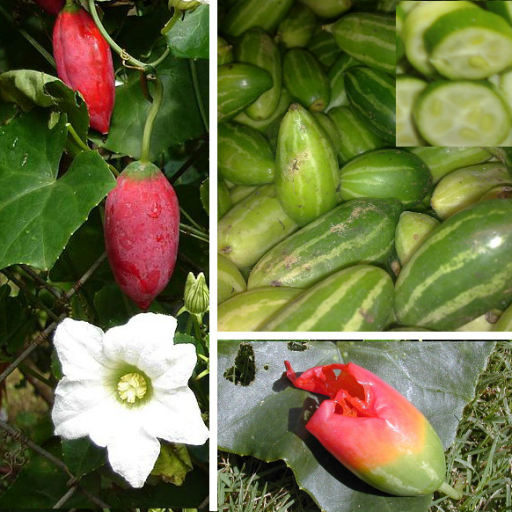
- 🌿 The Foliage: The leaves are bright green and smooth, typically shaped like a heart or a shield with five distinct lobes, mimicking the look of English Ivy.
- 🌸 The Bloom: It produces delicate, star-shaped white flowers with five petals that appear almost waxy or crystalline under the sun.
- 🎈 The Fruit: The most striking feature is the fruit; it starts as a small, green cylinder with white stripes (resembling a tiny watermelon) and matures into a brilliant, juicy scarlet red.
🏡 In Your Garden
- 🪜 The Need for Support: Because this is a climbing vine with grasping tendrils, it requires a sturdy trellis or fence. Without a "ladder," it will sprawl across the ground and may suffocate smaller neighbors.
- ✂️ Vigorous Control: This plant hates being stagnant. To keep it healthy and prevent it from taking over your yard, regular pruning is essential. It is remarkably resilient—cutting it back often encourages more fruit production rather than slowing it down.
- 💧 Thirst & Heat: It thrives in tropical heat and prefers consistent moisture. While it can survive short dry spells, the fruits will become bitter and tough if the plant is stressed by thirst.
⚠️ Safety & Toxicity
- 🟢 Status: Generally safe and widely edible for humans.
- 🍲 Human Use: The young green fruits are a staple in Indian curries, while the tender shoots and leaves are often used in soups. However, once the fruit turns bright red and mushy, it becomes very sweet and is often left for the birds.
- 🐾 Pets: While not listed as highly toxic, the high saponin content in the raw leaves can cause mild stomach upset or lethargy in dogs or cats if consumed in large quantities.
✨ Fun Fact
In many cultures, Coccinia grandis is nicknamed the "Gentle Healer." In traditional Ayurvedic medicine, the juice from the roots and leaves has been used for centuries to help regulate blood sugar levels, a practice that modern science is now actively studying for its potential anti-diabetic properties!

Detailed Care Instructions
| Humidity | Normal |
| Lighting | Full Sun |
| Difficulty | Easy |
| Hibernation | Cold Period |
| Hardiness Zones | 8 - 11 |
To grow Coccinia grandis, also known as ivy gourd or scarlet gourd, you can follow these steps:
- Climate and soil: Ensure that you are in a suitable climate for growing Coccinia grandis, which is typically warm and tropical. The plant thrives in full sun and well-drained, fertile soil.
- Seeds: Obtain good quality seeds from a reputable supplier or save them from a mature fruit. Soak the seeds in warm water for about 24 hours before planting to enhance germination.
- Germination: Plant the seeds in small pots or seed trays filled with a well-draining potting mix. The pots should be at least 3-4 inches deep. Sow the seeds about ¼ inch deep and cover them lightly with soil. Water the soil gently to keep it moist.
- Indoor germination: If you live in a colder climate, you can start the seeds indoors about 6-8 weeks before the last frost. Place the pots in a warm location, around 68-86°F (20-30°C), and maintain moist soil. Germination typically takes 2-3 weeks.
- Outdoor planting: If you live in a suitable climate, you can also directly sow the seeds in the desired location after the last frost. Prepare the soil by removing weeds and loosening it using a garden fork or tiller. Plant the seeds as mentioned above.
- Watering: Keep the soil consistently moist but not waterlogged. Water the plants when the top inch of soil feels dry to the touch. Avoid overwatering as it can lead to root rot.
- Support: Coccinia grandis is a climbing plant, so provide a sturdy trellis, fence, or other support to help the vines grow vertically.
- Fertilizer: Apply a balanced, slow-release fertilizer or organic compost to the soil during planting. Additionally, you can provide a water-soluble fertilizer every 2-4 weeks during the growing season.
- Pruning: Regularly prune or trim the vines to maintain their size and shape. This will also help boost branching and fruiting.
- Harvesting: Coccinia grandis produces green fruits that turn bright red when ripe. Harvest them when they reach the desired size and color, usually when they are about 2-3 inches long. Harvesting regularly will encourage more fruit production.
By following these steps, you can successfully grow Coccinia grandis plants and enjoy their edible fruits.

Place in a bright room that is sun drenched almost all day. Or directly in a south-facing window.

Coccinia Grandis is a plant species that belongs to the Cucurbitaceae family. Like any other plant, it requires water to survive and thrive. Here are some tips on how to water Coccinia Grandis without using its common names.
1. Check the soil: Before watering the plant, check the soil to make sure it is dry and not moist. Use your index finger to insert it in the soil up to the first knuckle. If the soil feels dry, it is time to water the plant.
2. Watering frequency: Coccinia Grandis needs to be watered regularly to keep the soil moist. However, it should not be watered too frequently, as this may lead to root rot. In general, watering twice a week is sufficient.
3. Water amount: When watering the plant, make sure to water it thoroughly. The water should reach the bottom of the pot, so that the roots get enough water. However, do not overwater, as this may lead to waterlogging.
4. Time of day: Water the plant in the early morning or late evening when temperatures are cooler. This will prevent the water from evaporating quickly. Watering during the hottest part of the day may cause the water to evaporate quickly, leaving the plant without enough moisture.
5. Drainage: It is important to ensure that the pot or container has proper drainage holes. This will allow excess water to drain out and prevent the roots from becoming waterlogged.
By following these tips, you can ensure that your Coccinia Grandis plant gets the right amount of water to grow healthy and strong.
- Choose a balanced fertilizer with equal amounts of nitrogen, phosphorus, and potassium.
- Apply the fertilizer once a month during the active growing season.
- Use a water-soluble or granular fertilizer, following the manufacturer's instructions for application rates.
- Apply the fertilizer around the base of the plant, avoiding contact with leaves and stems.
- Water the plant thoroughly after fertilizing to ensure the nutrients are absorbed by the roots.
- Monitor the plant for signs of over-fertilization, such as yellowing leaves or stunted growth, and reduce the frequency or amount of fertilizer if necessary.
- Do not fertilize during the dormant season.
When growing Coccinia Grandis plants, it is important to use soil that is well-draining and nutrient-rich. The soil should be composed of a mixture of organic matter and inorganic materials, such as sand, to promote aeration and moisture retention. Ideally, the pH level of the soil should be between 6.0 and 6.5.
A good soil mix for Coccinia Grandis plants may consist of equal parts of garden soil, compost, and perlite. This mixture provides the necessary nutrients and drainage while also promoting root growth and development.
To further improve soil quality, it is recommended to use organic fertilizers and compost regularly during the growing season. Adding a layer of mulch around the base of the plant can also help retain moisture and prevent weed growth.
Overall, the goal when selecting soil for Coccinia Grandis is to provide a healthy growing environment that supports the plant's roots, promotes healthy foliage, and encourages optimal fruit production.
To propagate this plant, you will need to first identify a mature and healthy parent plant. Once identified, take a cutting from the parent plant. The cutting should be about 6 inches in length and preferably be taken from the top of the plant.
Remove all leaves from the bottom of the cutting, leaving only a few at the top. If the cutting has any flowers or fruit, remove them as well as these can divert energy from the cutting's growth.
Next, dip the cutting into rooting hormone powder and shake off any excess. Place the cutting into a pot filled with well-draining soil. Water the cutting thoroughly and place it in a bright and warm location.
For the first few days, keep the soil moist and ensure the cutting doesn't dry out. After about 2-3 weeks, the cutting should begin to develop roots and small leaves. Once the plant has sufficiently grown, you can transplant it into a larger pot or into your garden.








