Plant Overview
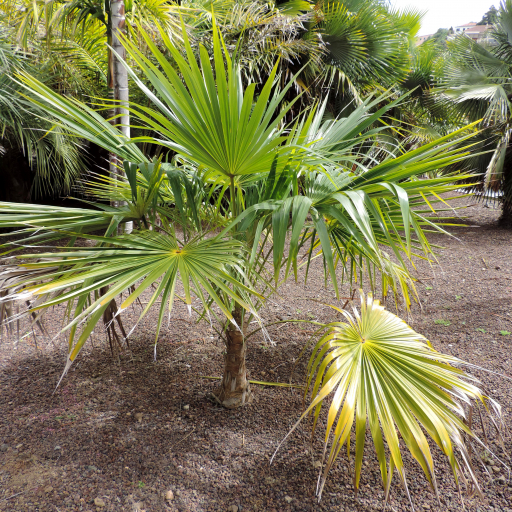
Known as the Barbados Silver Palm, this Caribbean beauty is the quintessential island escape in plant form. Often found swaying along the sun-drenched coastlines of the Lesser Antilles, it is beloved for its slender silhouette and leaves that shimmer like moonlight when the wind catches them. While it looks delicate, it is a resilient survivor of salty breezes and tropical sun.
🔍 How to Identify
- 🍃 The Shimmering Canopy: Its fan-shaped (palmate) leaves are deep green on top, but the undersides are coated in a stunning, satiny silver-grey sheen.
- 🎋 Woven Trunk: The slender, single trunk is often wrapped in a unique, burlap-like fiber when young, which eventually falls away to reveal a smooth, grey bark as the tree matures.
- 🍇 Ornate Fruit: During the fruiting season, it produces hanging clusters of small, round berries that transition from green to a deep, royal purple or black.
🏡 In Your Garden
- 🏝️ Coastal Warrior: Because it evolved on limestone cliffs and sandy shores, this palm is exceptionally salt-tolerant. It’s a perfect choice for seaside gardens where other plants might "burn" from the salt spray.
- 🪵 Drainage is Vital: This palm thrives in "sweet" (alkaline) soils and absolutely hates having "wet feet." If the soil stays soggy, the roots can suffocate quickly, so ensure your planting site is well-drained and sandy.
- 🐢 A Lesson in Patience: This is a slow-growing species. While it won't outgrow its space quickly, it also means you should be careful with pruning; it takes a long time to replace a lost frond!
⚠️ Safety & Toxicity
- ✅ Pet & Child Safe: The Barbados Silver Palm is generally considered non-toxic to cats, dogs, and humans.
- 🌵 Mechanical Hazards: While not poisonous, the leaf tips can be quite stiff and pointy. When pruning or walking nearby, be mindful of your eyes and skin to avoid accidental pokes.
✨ Fun Fact
The silvery underside of the leaves isn't just for decoration—it acts as a biological "sunscreen." The reflective surface helps the palm deflect intense UV rays and reduces water loss, allowing it to survive in the blistering heat of the Caribbean sun.

Detailed Care Instructions
Here are some steps you can follow to grow a Coccothrinax Barbadensis plant successfully:
- Choose a well-draining potting mix: Coccothrinax Barbadensis plants prefer well-draining soil to prevent root rot. A mixture of potting soil, sand, and perlite is a good option.
- Select a suitable container: Choose a pot with drainage holes to allow excess water to drain out. Make sure the container is large enough to accommodate the plant's root system.
- Provide the right amount of sunlight: Coccothrinax Barbadensis plants prefer bright, indirect light. Place the plant near a window where it can receive filtered sunlight.
- Water the plant regularly: Keep the soil evenly moist but not soggy. Water the plant when the top inch of soil feels dry to the touch. Avoid overwatering, as this can lead to root rot.
- Fertilize the plant: Feed your Coccothrinax Barbadensis plant with a balanced fertilizer once a month during the growing season (spring and summer). Follow the instructions on the fertilizer package for proper application.
- Monitor for pests and diseases: Keep an eye out for common houseplant pests like spider mites and mealybugs. Treat any infestations promptly with insecticidal soap or neem oil.
- Provide adequate humidity: Coccothrinax Barbadensis plants thrive in humid environments. Mist the plant regularly or place a humidifier nearby to maintain humidity levels.
Following these tips should help you successfully grow a Coccothrinax Barbadensis plant. Good luck!
Coccothrinax Barbadensis plant prefers to be watered thoroughly but infrequently. It requires a well-draining soil. When watering, make sure the entire rootball is saturated, and any excess water drains out of the pot. It's essential not to let the plant sit in standing water as this can lead to root rot. Allow the soil to dry out partially before watering again, as overwatering can be harmful to this plant. The frequency of watering will vary depending on the climate, humidity, and lighting conditions, but typically it will need watering once a week to two weeks.
To fertilize Coccothrinax Barbadensis, apply a balanced fertilizer with an N-P-K ratio of 10-10-10 or a palm-specific fertilizer in early spring, late spring, and summer. Follow the instructions on the fertilizer label for the proper amount to use based on the size of the plant. Avoid over-fertilizing as this can damage the plant's roots. Water the plant after fertilizing to help distribute the nutrients into the soil.
Coccothrinax Barbadensis plant thrives in well-draining soil that is rich in organic matter. A good soil mix for this plant will include a combination of sandy loam, peat moss, and perlite to ensure proper drainage and aeration. Additionally, adding a small amount of compost or well-aged manure to the soil mix can provide essential nutrients to support the plant's growth. It is important to avoid using heavy clay soils or soils that retain too much moisture, as this can lead to root rot and other issues. Overall, a loose, well-aerated soil mix with good drainage and some organic matter will provide the ideal growing conditions for Coccothrinax Barbadensis plant.
Coccothrinax Barbadensis plants can be propagated through division or by collecting and planting seeds. To propagate through division, carefully separate the plant's root system into several sections, making sure that each section has enough roots to support its growth. Plant each divided section in a separate container filled with well-draining soil, and water thoroughly.
To propagate with seeds, collect fresh seeds from a mature plant and soak them in warm water for a few hours to help soften the outer shell. Plant the seeds in a mix of peat moss and sand, ensuring that they are partially submerged in the soil. Keep the soil consistently moist and provide indirect sunlight for germination.
Both methods of propagation require warm and humid conditions to encourage root development and growth. It is important to provide adequate water, sunlight, and nutrients to promote healthy growth in the propagated plants. Additionally, be patient as it may take several months to see significant growth in the propagated plants.








