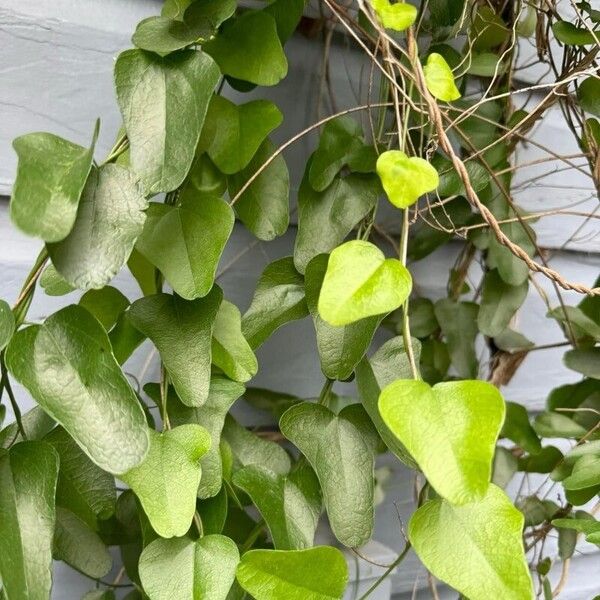
Plant Overview
Often called the Snailseed Vine, Cocculus diversifolius is a resilient climber native to the sun-drenched landscapes of Mexico and the Southwestern United States. It earned its botanical name from its remarkably "diverse" foliage—where a single vine might sport heart-shaped, oval, and lance-like leaves all at once. While it lacks flashy flowers, its lush greenery and curious, snail-shaped seeds make it a subtle yet fascinating choice for a native or wilder garden aesthetic.
🔍 How to Identify
- 🍃 Variable Leaves: The most striking feature is its "shape-shifting" foliage; you will find narrow, pointed leaves and broad, rounded ones growing on the very same stem.
- 🍇 Dark Berries: In late summer and autumn, female plants produce clusters of small, fleshy fruits that transition from green to a deep, waxy bluish-black.
- 🐌 The "Snail" Seed: If you examine the seed inside the fruit, you’ll find it is distinctly curved and ridged, looking remarkably like a tiny coiled snail shell or a crescent moon.
🏡 In Your Garden
- 🧗 A Natural Scrambler: This vine is a "weaver" rather than a "clinger." It doesn't have aggressive suction cups, preferring to drape itself over fences, trellises, or existing shrubs to create a dense, green privacy screen.
- ☀️ Drought Warrior: Once established, it is incredibly tough. It thrives in rocky or sandy soils and can handle the intense heat of a desert summer with very little supplemental water, making it perfect for xeriscaping.
⚠️ Safety & Toxicity
- 🚫 Toxic Status: All parts of the plant, especially the berries and roots, are considered toxic if ingested.
- 🐾 Risk to Pets & Kids: The dark berries can be mistaken for wild grapes by children or curious pets. They contain alkaloids that can cause severe digestive upset and should never be consumed.
✨ Fun Fact
The genus name Cocculus is derived from the Latin word for "berry," but its family (Menispermaceae) is globally famous for a darker reason: some of its tropical relatives are used to create curare, the potent substance used by indigenous hunters to tip poison darts!

Detailed Care Instructions

Place in a bright room that is sun drenched almost all day. Or directly in a south-facing window.

Water-loving plants flourish in wet or sloppy soil and near ponds. The extensive root system enables these plants to absorb plenty of water. The surface of the soil should be kept moist at all times. Place your pot in a container filled with water to guarantee that plants get enough water. If the ground becomes dry, it is recommended that you water it well. Plants in smaller pots will need to be watered more frequently. Water the soil in which the plant is standing thoroughly using a watering can.







