Plant Overview
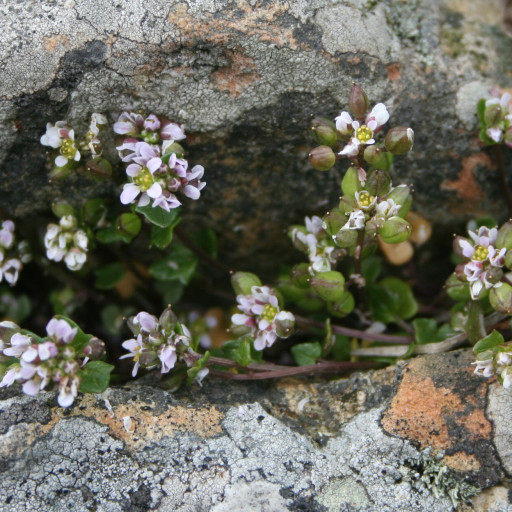
Often called Danish Scurvygrass, this salt-loving little herb is a true survivor with a fascinating history of saving lives at sea. While it was once strictly a coastal dweller, it has recently become a "highway traveler," spreading inland by hitching a ride along the salted edges of modern motorways. This tiny member of the mustard family provides a splash of early-season color when most other plants are still dormant.
🔍 How to Identify
- 🍃 Ivy-Like Leaves: The lower leaves are fleshy, heart-shaped, or triangular, resembling tiny ivy leaves, while the upper leaves clasp directly to the stem.
- 🌸 Cross-Shaped Blooms: It produces clusters of very small, four-petaled flowers that range from brilliant white to a delicate pale mauve or pink.
- 🌱 Low Profile: The plant rarely grows tall, instead forming low-lying, succulent-like mats that help it retain moisture in harsh, salty environments.
🏡 In Your Garden & Nature
- 🧂 Salt Enthusiast: This plant is an "extremophile" regarding salt. In a garden setting, it requires very well-drained, sandy soil and doesn't mind a bit of salt spray, making it perfect for coastal rockeries.
- 🛣️ The Motorway Migration: If you see a white "mist" along the edges of a highway in early spring, it’s likely Cochlearia danica. It thrives in the salty slush created by winter road gritting, effectively using our road networks as artificial coastlines.
⚠️ Safety & Toxicity
- ✅ Edible Status: Generally considered non-toxic and historically used as a medicinal herb.
- 👅 Flavor Profile: The leaves have a very strong, pungent flavor similar to hot mustard or horseradish.
- 🚫 Location Warning: While edible, you should never harvest this plant from the side of a road or highway. It absorbs heavy metals and pollutants from vehicle exhaust and road runoff.
✨ Fun Fact
As its name suggests, sailors used to eat this plant to prevent scurvy! It is incredibly rich in Vitamin C, and in the days before citrus fruits could be easily preserved, "scurvygrass" was often dried or pickled and taken on long sea voyages to keep the crew healthy.

Detailed Care Instructions
| Humidity | Normal |
| Lighting | Part Sun |
| Difficulty | Easy |
| Hibernation | Cold Period |
| Hardiness Zones | 5 - 9 |
Here is a step-by-step guide on how to grow Cochlearia Danica (Danish scurvygrass) plant:
- Choose the right location: Cochlearia Danica prefers cool and moist conditions. Select a spot in your garden that receives partial shade or full sun in cooler regions. Ensure the soil is well-draining and slightly acidic.
- Prepare the soil: Before planting, amend the soil with organic matter like compost or well-rotted manure to improve its fertility and drainage. This plant prefers slightly sandy or loamy soil, so ensure there is good drainage.
- Sow the seeds: Cochlearia Danica can be directly sown in the garden bed in early spring or fall. Alternatively, you can start the seeds indoors in pots or trays and then transplant them once they have developed a few true leaves.
- Planting depth: Sow the seeds at a shallow depth, about 1/4 inch (6 mm) deep. Space the seeds approximately 6-8 inches (15-20 cm) apart to allow them to spread.
- Watering: Keep the soil consistently moist but not waterlogged, especially during the germination period. Once the plants are established, water them regularly to ensure the soil remains evenly moist.
- Fertilization: Cochlearia Danica doesn't require heavy fertilization. You can apply a balanced, slow-release granular fertilizer during the planting phase, following the package instructions.
- Weed control: Keep the planting area free from weeds to reduce competition for nutrients and water. Regularly weed the area to prevent any unwanted plants from overpowering the Cochlearia Danica.
- Mulching: Applying a layer of organic mulch, like straw or wood chips, around the plants can help retain moisture, suppress weeds, and protect the roots from extreme temperature fluctuations.
- Harvesting: Cochlearia Danica has edible leaves, which are often used in salads or as a garnish. You can begin harvesting when the plants have reached a decent size, usually within 6-8 weeks from sowing.
- Pruning: Regularly harvest the outer leaves to encourage new growth and prevent the plants from becoming leggy or going to seed prematurely.
- Pests and diseases: Cochlearia Danica is generally resistant to pests and diseases. However, keep an eye out for any aphid or caterpillar infestation and promptly remove them manually or use organic pest control methods if necessary.
By following these steps, you can successfully grow Cochlearia Danica plants in your garden. Enjoy your fresh harvest!

Place in a bright room that is sun drenched almost all day. Or directly in a south-facing window.

To water this plant, one should first determine the moisture level of the soil by pressing their finger approximately one inch into the soil. If the soil feels dry, it is time to water. Water should be applied directly to the soil and not to the leaves or stem. It is important to avoid overwatering as this can lead to root rot and other fungal diseases. Regular watering, ideally once a week, is recommended to maintain the health and growth of this plant.
To fertilize this plant, use a balanced fertilizer with equal amounts of nitrogen, phosphorus, and potassium. Apply the fertilizer once a month during the growing season, making sure not to over-fertilize. Water the plant before and after fertilizing to avoid burning the roots.
It is recommended to use a well-draining soil with good texture for this plant. The soil pH should be slightly acidic to neutral. It is important that the soil is moist but not waterlogged. Adding organic matter to the soil can also be beneficial for the growth of this plant.
To propagate this plant, you can begin by obtaining stem cuttings from a healthy, mature plant. Cut a section of stem that is approximately 4-6 inches long and contains at least two nodes (where leaves emerge from the stem).
Remove any leaves from the lower portion of the stem and dip the cut end in a rooting hormone powder. Place the cutting in a pot filled with a well-draining growing medium, such as a mixture of perlite and peat moss.
Water the cutting and cover it with a clear plastic bag to create a humid environment. Place the pot in a warm, bright location but out of direct sunlight.
After a few weeks, tiny roots should begin to emerge from the stem cutting. Once the roots have developed and the cutting is actively growing, you can transplant it into a larger pot or directly into the garden.
Be sure to keep the soil moist but not soggy and protect the new plant from direct sunlight for a few weeks while it gets established. With proper care, your propagated Cochlearia Danica should flourish and produce more offspring in the future.








