Plant Overview
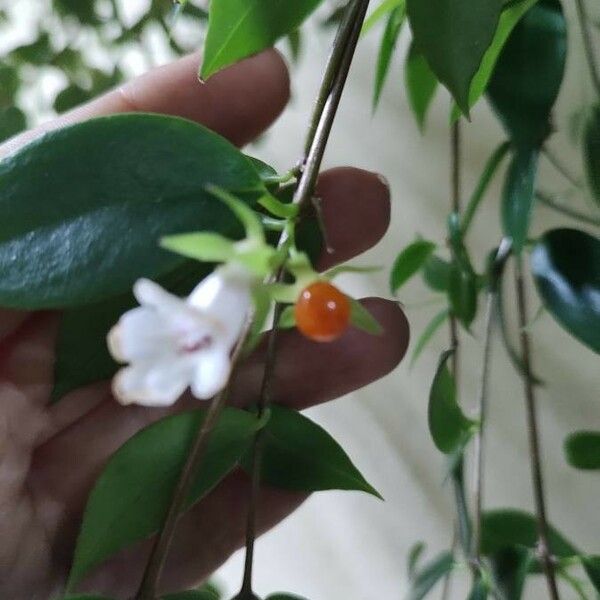
Often called the "Ant-Plant," Codonanthe crassifolia is a charming, trailing epiphyte native to the humid rainforests of Central and South America. In its natural habitat, it shares a fascinating "room and board" relationship with arboreal ants, but in the home, it is beloved for its waxy, succulent-like leaves and dainty, bell-shaped flowers. It is the perfect choice for a hanging basket where its vines can spill over the edges like a living waterfall.
🔍 How to Identify
- 🍃 Waxy Foliage: The leaves are small, oval, and noticeably thick or "crass" (hence the name crassifolia), with a glossy, deep green finish that helps the plant retain moisture.
- 🔔 Trumpet Blooms: It produces small, tubular white or pale pink flowers that often feature a splash of yellow or orange in the throat, resembling tiny trumpets.
- 🍒 Bright Berries: One of its most distinct features is the production of fleshy, pea-sized berries that turn a vivid orange or red after the flowering stage, providing color for months.
🏡 In Your Garden
- 🌿 The Epiphytic Edge: Because this plant naturally grows on tree branches, it suffocates in heavy garden soil. To keep it happy, use a chunky, well-draining mix like orchid bark or peat moss to mimic its airy rainforest home.
- 💧 Humidity over Wet Feet: While it appreciates a humid environment, its succulent leaves mean it is surprisingly drought-tolerant. It prefers its roots to breathe, so allow the top layer of soil to dry out before giving it another drink.
⚠️ Safety & Toxicity
- ✅ Safe for the Family: Codonanthe crassifolia is generally considered non-toxic to humans.
- 🐾 Pet Friendly: Unlike many common houseplants, this species is safe for cats and dogs. It belongs to the Gesneriad family (the same family as African Violets), which is known for being pet-safe.
✨ Fun Fact
In the wild, this plant is a master of bribery! It grows "extrafloral nectaries"—tiny glands on the underside of its leaves that secrete sweet nectar. This attracts ants, which protect the plant from pests in exchange for the sugary snack. The ants even help disperse the plant's seeds!

Detailed Care Instructions
Here are the steps to grow Codonanthe Crassifolia plant:
- Choose a suitable pot: Select a well-draining pot that is approximately 4-6 inches in diameter. Ensure that the pot has drainage holes at the bottom to prevent waterlogging.
- Potting mix: Prepare a well-draining potting mix by combining equal parts of peat moss, perlite, and sand. This mix will provide adequate drainage and aeration to the plant roots.
- Planting: Fill the pot with the potting mix, leaving some space at the top for watering. Gently remove the plant from its nursery container, being careful not to damage the roots. Place the plant in the center of the pot and fill the remaining space with additional potting mix, firming it gently around the roots.
- Watering: Codonanthe Crassifolia prefers slightly moist soil. Water the plant thoroughly, ensuring that the water reaches the roots, but avoid overwatering. Allow the top inch of soil to dry out before watering again. It is important to find a balance and not let the soil completely dry out or become waterlogged.
- Lighting: Place the plant in a location with bright, indirect sunlight. Avoid exposing it to direct sunlight, as it can scorch the leaves. A bright window sill or an area with filtered light is ideal.
- Temperature and humidity: Codonanthe Crassifolia prefers temperatures between 60-75°F (15-24°C) and high humidity levels. Placing a small tray of water near the plant or using a humidifier can help maintain the required humidity level.
- Fertilizer: Feed the plant with a balanced, water-soluble fertilizer once a month during the growing season (spring and summer). Follow the package instructions for the correct dosage.
- Pruning: Regularly check for any dead or discolored leaves, and trim them off using clean, sharp scissors. Pruning will help maintain the plant's shape and encourage healthy growth.
- Propagation: Codonanthe Crassifolia can be propagated through stem cuttings. Take a 4-6 inch long cutting from a healthy plant, remove the lower leaves, and plant the cutting in moist potting mix. Keep the soil moist and provide indirect light until the cutting develops roots.
By following these steps and providing the appropriate care, you can successfully grow a Codonanthe Crassifolia plant. Remember to adjust the care routine as needed and monitor the plant's growth to ensure it remains healthy.
To water this plant, you should first check the topsoil to determine if it has dried out. If the soil is dry, use a watering can with a narrow spout to slowly and evenly water the plant at the base, avoiding the leaves or stems. Wait for the excess water to drain out from the bottom of the pot before returning it to its spot. This plant prefers to be kept moist but not waterlogged, so ensure that the soil is well-draining and not left sitting in standing water. In addition, be mindful not to overwater the plant as this can lead to root rot. Watering frequency will depend on the climate and humidity levels in your environment, so it's a good idea to monitor the soil moisture regularly.
To fertilize a Codonanthe Crassifolia plant, follow these instructions:
- Choose a balanced, water-soluble fertilizer with equal parts nitrogen (N), phosphorus (P), and potassium (K). A ratio of 10-10-10 or 20-20-20 is suitable.
- Prepare a diluted solution by mixing the fertilizer with water according to the package instructions. Use half the recommended strength to avoid over-fertilization.
- Water the plant thoroughly before applying the fertilizer to ensure the soil is moist.
- Pour the diluted fertilizer solution into the soil around the base of the plant, avoiding direct contact with the leaves.
- Make sure the fertilizer is evenly distributed and saturates the root zone.
- Repeat the fertilization process every two to four weeks during the growing season, typically spring and summer. Reduce or stop fertilizing during the winter months when the plant is dormant.
- Monitor the plant's response to the fertilizer. If the leaves start turning brown or show signs of fertilizer burn, reduce the frequency or strength of fertilization.
- Regularly flush the soil with plain water to prevent fertilizer buildup and salt accumulation.
- Remember to read and follow the specific instructions provided on the fertilizer packaging for best results.
- Lastly, observe the plant for any signs of nutrient deficiencies or excessive fertilization and adjust the fertilizing schedule as needed.
The soil recommended for the Codonanthe Crassifolia plant should be loose, well-draining, and rich in organic material. It should have a slightly acidic pH, ranging from 5.5 to 6.5, and be aerated to promote healthy roots. The soil should be able to retain moisture without becoming waterlogged, as this can lead to root rot. A good soil mix for Codonanthe Crassifolia could consist of peat moss, perlite, and orchid bark. It is also recommended to add some slow-release fertilizer to the soil to provide essential nutrients to the plant. Avoid using heavy soils or those that do not drain well, as this can harm the plant's growth and development.
Codonanthe crassifolia, commonly known as (omitted), is a lovely plant that can be easily propagated through several methods. Here's a detailed guide on how to propagate this plant:
- Stem Cuttings: During the growing season, select a healthy stem from the parent plant that is approximately 4-6 inches long. Cut below a node using a sterilized knife or scissors. Remove any leaves from the lower half of the cutting.
- Preparing the Cutting: Dip the cut end of the stem into a rooting hormone powder or gel to encourage root development. Place the treated cutting in a suitable growing medium, such as a well-draining soil mix or a mixture of peat moss and perlite.
- Planting the Cutting: Dig a small hole in the growing medium and gently insert the cutting, ensuring that at least one or two nodes are buried beneath the soil. Firmly press the soil around the stem to hold it in place.
- Providing Adequate Conditions: Place the cutting in a warm and bright location, but avoid direct sunlight as excessive heat may harm the young plant. Maintain a consistently moist but not waterlogged soil by lightly watering the cutting.
- Ensuring Humidity: Covering the cutting with a transparent plastic bag or using a propagator can create a humid environment, improving rooting success. Regularly monitor the moisture level and remove any condensation to prevent mold or rot.
- Root Development: After 4-6 weeks, gently tug the cutting to check for resistance, indicating the development of roots. Once roots have formed, it is a sign of successful propagation.
- Transplanting: Once the new plant has established roots, carefully remove it from the rooting medium, taking care not to damage the delicate roots. Transplant it into a suitable pot with well-draining soil, providing adequate space for growth.
- Care for the Newly Propagated Plant: Keep the newly propagated plant in a warm and brightly lit area, gradually exposing it to more direct sunlight. Water the plant consistently, allowing the top inch of soil to dry out between waterings. Fertilize the plant every 2-4 weeks during the growing season with a balanced houseplant fertilizer, following the manufacturer's instructions.
By following these steps, you can successfully propagate Codonanthe crassifolia (common name omitted) and grow new plants to enjoy their beauty and charm.








