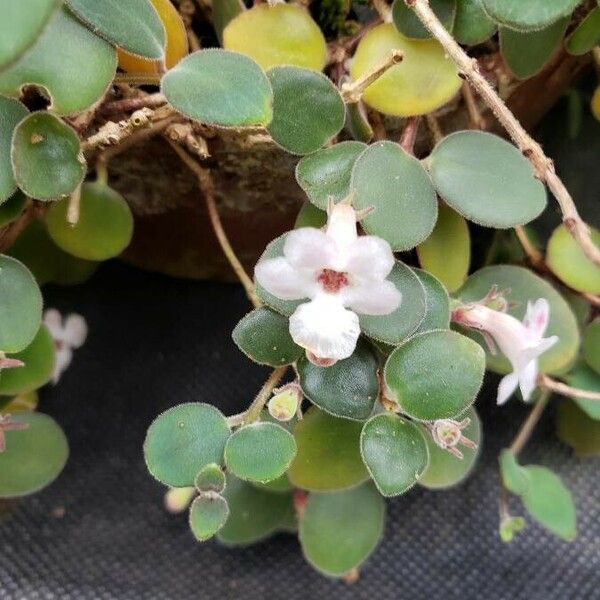
Plant Overview
Known for its dainty white bells and its secret friendship with forest ants, Codonanthe devosiana is a Brazilian beauty that feels right at home in a hanging basket. Often called the "Ant Plant," it transforms into a lush cascade of waxy green leaves and sweet-scented blooms. It is the perfect choice for an indoor gardener looking for a "Goldfish Plant" relative that offers a more delicate, ethereal aesthetic.
🔍 How to Identify
- 🍃 Fleshy Foliage: The leaves are small, oval, and slightly succulent, possessing a waxy sheen that helps the plant retain moisture.
- 🔔 Tubular Blooms: It produces charming, trumpet-shaped white flowers, often featuring a tiny splash of yellow or pink deep inside the "throat."
- 🟠 Bright Berries: After flowering, the plant often produces small, round, neon-orange berries that contrast beautifully against the dark green leaves.
🏡 In Your Garden
- 🌳 Epiphytic Roots: In the wild, this plant grows on tree branches rather than in the ground. Because of this, it hates "wet feet"—always use a chunky, well-draining mix like orchid bark or perlite to keep the roots breathing.
- ☀️ Dappled Light: Think of the rainforest canopy; it loves bright, indirect light. If the leaves start to turn a deep reddish-purple, it's often a sign it is getting a bit too much sun and is "tanning" to protect itself.
- 💧 Humidity Lover: While it is hardier than many tropicals, it thrives when the air is moist. Misting or a nearby humidifier will encourage more frequent blooming and prevent the leaf tips from browning.
⚠️ Safety & Toxicity
- ✅ Safe Status: Codonanthe devosiana is generally considered non-toxic.
- 🐾 Pet Friendly: It is a wonderful choice for households with curious cats or dogs, as it does not contain the harsh toxins found in many other trailing tropicals like Pothos or Philodendrons.
✨ Fun Fact
In its native Brazilian habitat, this plant lives in a "symbiotic" relationship with ants. It provides the ants with sugary nectar and seeds that look like ant larvae, and in return, the ants carry the seeds to their nests (filled with rich organic waste), giving the plant a perfect place to grow!

Detailed Care Instructions
| Humidity | Normal |
| Lighting | Part Sun |
| Difficulty | Medium |
| Hibernation | Cold Period |
| Temperature | 20°C - 27°C |
| Hardiness Zones | 11 - 12 |
To grow Codonanthe devosiana, follow these steps:
- Propagation: The easiest way to grow Codonanthe devosiana is through stem cuttings. Take a 4 to 6-inch cutting from a healthy plant during spring or summer. Ensure that the cutting has at least two leaf nodes.
- Potting: Fill a small pot with well-draining soil mix, such as a combination of peat moss, perlite, and potting soil. Make a hole in the soil and insert the cutting, burying it up to the second leaf node. Gently firm the soil around it.
- Light: Codonanthe devosiana thrives in bright, indirect light. Place the potted cutting in a spot that receives filtered sunlight or partial shade. Avoid direct sun exposure as it can scorch the leaves.
- Temperature and humidity: Maintain temperatures between 65-75°F (18-24°C). Provide a humid environment by placing the pot on a tray filled with water and pebbles. The water in the tray will increase humidity as it evaporates.
- Watering: Water the plant when the top inch of soil feels dry. Keep the soil evenly moist but not waterlogged. Codonanthe devosiana prefers slightly moist conditions, so avoid overwatering.
- Fertilizing: Feed the plant once a month during the growing season (spring and summer) using a balanced, water-soluble fertilizer. Follow the instructions on the fertilizer package for proper dilution and application.
- Pruning and maintenance: Trim back any leggy or straggly growth to maintain a compact shape and encourage bushiness. Remove any dead or yellowing leaves regularly to keep the plant healthy.
- Repotting: As the plant grows, you may need to repot it into a slightly larger container. Choose a pot with drainage holes to prevent waterlogging. Repot during the spring season, using a well-draining potting mix.
Remember to observe the plant closely to ensure it remains healthy and address any issues like pests or diseases promptly. With proper care and attention, your Codonanthe devosiana should thrive and grow into a beautiful plant.

Place in a window with dappled sun or a spot in the middle of a room. Or directly in a window facing west or east.

Codonanthe Devosiana is a species of tropical plant that requires careful attention when watering. You should ensure that you do not overwater or underwater this plant.
To water Codonanthe Devosiana, you need to establish a regular schedule that works for your plant. Most indoor plants require watering once a week, but this may vary depending on the climate, type of soil, and size of the pot. It is recommended that you water your plant in the morning or during the day to allow excess water to evaporate before nightfall.
Before watering, it is advisable to check the soil moisture level. Stick your finger about an inch deep into the soil, and if it is dry, it is time to water. If it is moist, wait for another day or two before watering.
When watering, pour water slowly and steadily around the base of the plant until the soil is saturated. Be careful not to wet the leaves as it can cause fungal diseases. Allow the excess water to drain out of the pot through the drainage holes.
In case you accidentally overwater your Codonanthe Devosiana, you can remedy the situation by gently tipping the pot to remove excess water. You should also consider repotting the plant in well-draining soil and a larger pot to prevent waterlogging.
To fertilize Codonanthe Devosiana plant, follow these instructions:
- Choose a water-soluble, balanced fertilizer with a ratio of 10-10-10 or 20-20-20, which indicates the proportions of nitrogen (N), phosphorus (P), and potassium (K) respectively. This will provide a well-rounded nutrient mix.
- Dilute the fertilizer according to the manufacturer's instructions. Typically, you'll mix about 1 teaspoon of fertilizer with 1 gallon of water.
- Water the Codonanthe Devosiana plant thoroughly using plain water to moisten the soil. This step will help prevent fertilizer burn and ensure the plant's roots can easily absorb nutrients.
- Pour the diluted fertilizer mixture evenly over the soil surface until it begins to drain from the bottom of the pot. Avoid getting the fertilizer on the plant's leaves as it may cause damage or burns.
- Repeat the fertilization process once a month during the growing season, which is typically spring and summer. However, always check the specific instructions for your fertilizer brand as it may vary.
Remember, it's crucial to monitor your plant's response to fertilization and adjust the frequency or concentration as needed. Over-fertilizing can harm the plant, so it's better to provide slightly less than recommended if unsure.
The ideal soil for the Codonanthe Devosiana plant should be well-draining, with a pH level of about 5.5 to 6.5. The soil should be rich in organic matter, containing elements such as peat moss, perlite, and vermiculite. The plant requires a soil that is moderately moist but not waterlogged, and the soil should be allowed to dry out slightly between watering sessions to prevent the roots from rotting. The soil should also be fertile and able to support the growth of the plant's delicate roots, so the addition of a balanced fertilizer with micronutrients such as iron, calcium, and magnesium is recommended. It's essential to maintain good soil quality for this plant to thrive, so regular soil amendments and timely watering will help ensure healthy growth.
Codonanthe Devosiana is a tropical plant that can be successfully propagated through various methods. Here are the detailed steps to propagate Codonanthe Devosiana:
- Select a healthy and mature Codonanthe Devosiana plant: Choose a well-established plant with strong stems, lush foliage, and without any signs of disease or pests. This will ensure that the propagated plant inherits all the desirable traits from its parent.
- Prepare the propagating container: Fill a small pot or tray with a well-draining potting mix. The mix should be lightweight, moisture-retentive, and rich in organic matter.
- Take stem cuttings: Identify a healthy stem on the Codonanthe Devosiana plant that is about 4-6 inches long. Using a sterilized sharp knife or scissors, make a clean diagonal cut just below a node. Nodes are the points on the stem from which leaves or branches emerge.
- Remove lower leaves: Remove the lower leaves close to the cut end of the stem, leaving a few sets of leaves at the top. This will prevent excessive moisture loss during rooting and encourage the growth of new roots.
- Apply a rooting hormone (optional): Dip the cut end of the stem in a rooting hormone powder or gel. This helps stimulate root development and increases the chances of successful propagation. However, it is not always necessary, and Codonanthe Devosiana can root without the use of a rooting hormone as well.
- Plant the stem cutting: Make a small hole in the prepared potting mix using a pencil or your finger. Gently insert the cut end of the stem into the hole, ensuring that at least half of the stem is buried in the mix. Press the soil gently around the stem to provide stability.
- Provide appropriate conditions: Place the pot or tray in a warm, bright location with indirect sunlight. Avoid direct sunlight, as it can cause the cutting to dry out quickly. Maintain a temperature of around 70-75°F (21-24°C) to promote root development.
- Watering and misting: Keep the potting mix slightly moist but not soggy. Water the cutting from the base and avoid wetting the foliage excessively. To increase humidity around the cutting, you can also mist the plant regularly or cover it with a transparent plastic bag.
- Monitor growth and root development: Within a few weeks, you should start seeing new growth emerging from the top of the cutting. This indicates that the Codonanthe Devosiana cutting has successfully rooted. Gently tug on the base of the stem to check for resistance, which indicates the formation of roots.
- Transplanting: Once the cutting has rooted and developed a small root system, usually after 6-8 weeks, it can be carefully transplanted into a slightly larger pot. Use a well-draining potting mix and provide the plant with suitable care as it continues to grow.
By following these propagation steps, you can successfully multiply your Codonanthe Devosiana plant and enjoy its unique beauty in your home or garden. Remember to be patient and provide the right conditions, as it may take some time for the cutting to establish and grow into a full-sized plant.
Common pests of the codonanthe devosiana include Mealybugs, aphids. Make a habit of checking your codonanthe devosiana frequently for pests so that any infestations can be caught and managed early.








