Plant Overview
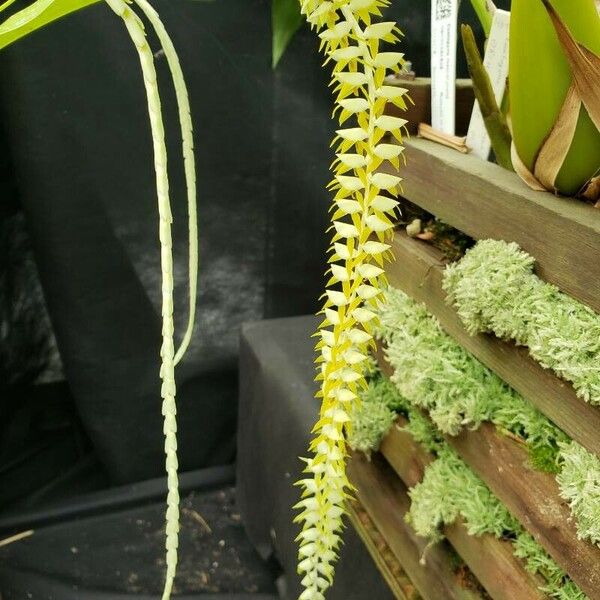
Hailed as a "Grand Orchid" of the Southeast Asian highlands, Coelogyne magna is a majestic epiphyte native to the misty, high-altitude forests of Borneo. Often found clinging to moss-covered trees, this orchid is famous for its cascading "chandeliers" of large, crystalline flowers. It is a prized jewel for collectors who enjoy recreating the cool, humid atmosphere of a tropical cloud forest right at home.
🔍 How to Identify
- 🍐 The Pseudobulbs: Look for large, glossy, egg-shaped bulbs at the base. these act as water reservoirs, allowing the plant to survive between tropical rain showers.
- 🌿 The Foliage: Two broad, deeply pleated (plicate) leaves emerge from the top of each bulb, resembling delicate green fans that capture filtered sunlight.
- 🌸 The "Magna" Bloom: It produces long, drooping stems holding several star-shaped flowers. The petals are usually a creamy off-white, featuring a complex "lip" (labellum) intricately patterned with veins of burnt orange or chocolate brown.
🏡 In Your Garden
- 🌬️ Airy Roots: Because this plant grows on trees in the wild, it despises "wet feet." It thrives best in open wooden baskets or mounted on cork bark, where its roots can breathe and its long flower spikes can dangle freely.
- ☁️ Cloud Forest Vibes: This species is a "cool-to-intermediate" grower. It struggles in stagnant heat and craves high humidity and constant air movement to mimic the mountain breezes of its homeland.
- 💧 The Thirsty Season: While it loves frequent misting during the growing season, it appreciates a slight reduction in water during the winter months to trigger its spectacular blooming cycle.
⚠️ Safety & Toxicity
- ✅ Pet Safe: Like the vast majority of orchids, Coelogyne magna is considered non-toxic to cats, dogs, and humans.
- 🚫 Chemical Sensitivity: While not "poisonous," the plant is highly sensitive to salt buildup from tap water. Using distilled or rainwater prevents "tip burn," where the ends of the leaves turn black and dry.
✨ Fun Fact
The name Coelogyne is derived from the Greek words koilos (hollow) and gyne (woman), referring to the deeply recessed, hollow-looking reproductive organ (the stigma) found in the center of the flower!

Detailed Care Instructions
To successfully grow a Coelogyne Magna plant, follow these steps:
- Light: Coelogyne Magna plants prefer bright, indirect light. Place them near a window that receives filtered or indirect sunlight. Avoid placing them in direct sunlight, as it can scorch their leaves.
- Temperature: Coelogyne Magna plants prefer moderate temperatures around 60-75°F (15-24°C). Avoid exposing them to extreme temperatures or drafts.
- Humidity: These plants prefer high humidity, so consider using a humidifier or placing a humidity tray nearby. Mist the leaves with water regularly to increase humidity levels.
- Watering: Coelogyne Magna plants like to be kept consistently moist but not waterlogged. Water thoroughly when the top inch of soil feels dry. Ensure good drainage to prevent root rot.
- Fertilizer: Use a balanced orchid fertilizer, diluted to half-strength, and feed the plant every other week during its growing season (spring to fall). Reduce frequency in winter.
- Potting: Coelogyne Magna plants prefer a well-draining orchid mix. Repot them every 2-3 years into a slightly larger pot with fresh orchid potting mix.
- Air circulation: Good air circulation is essential for Coelogyne Magna plants. Avoid placing them in stagnant or poorly ventilated areas to prevent fungal diseases.
- Pruning: Remove any dead or yellowing leaves and spent blooms to improve the overall appearance of the plant.
- Reproduction: Coelogyne Magna plants can be propagated through division. Carefully divide the plant during repotting, ensuring that each division has several healthy pseudobulbs.
With proper care and the right growing conditions, your Coelogyne Magna plant should thrive and produce beautiful blooms.
Coelogyne Magna is an orchid species native to Southeast Asia. When it comes to watering this plant, there are several important considerations to keep in mind:
- Watering frequency: Coelogyne Magna generally prefers to have consistently moist but not soggy growing medium. It is important to provide water when the top inch of the potting mix feels dry to the touch. However, avoid letting the plant sit in standing water, which can lead to root rot.
- Water quality: Like other orchids, Coelogyne Magna is sensitive to the quality of water used for irrigation. It is best to use water that is free from chlorine, fluoride, or excessive minerals. Collecting rainwater or using filtered water is often preferred.
- Soaking vs. misting: To ensure adequate hydration, consider using the soaking method. Place the potted plant in a basin or sink filled with water, allowing the potting mix to soak for around 10-15 minutes. This allows the roots to have access to moisture directly. Alternatively, misting the plant with water can help increase humidity levels around the plant.
- Pot drainage: Proper drainage is crucial for preventing waterlogged roots. Make sure the pot used for Coelogyne Magna has drainage holes at the bottom to facilitate excess water drainage. This ensures better air circulation and prevents the accumulation of stagnant water.
- Seasonal variations: Coelogyne Magna, like many orchids, may have slightly different watering requirements depending on the season. During the plant's active growing phase in spring and summer, it may require more frequent watering. In fall and winter, when the plant is entering a dormant phase, watering can be reduced to avoid overhydration.
Overall, it is essential to observe and monitor the plant's specific water needs, as environmental factors such as humidity, temperature, and light levels can influence its watering requirements. Regularly checking the moisture levels of the potting medium and adjusting the watering routine accordingly will help ensure the healthy growth of Coelogyne Magna.
To properly fertilize the Coelogyne Magna plant, follow these instructions:
- Select a balanced fertilizer: Opt for a water-soluble fertilizer with equal amounts of nitrogen, phosphorus, and potassium (NPK). This balanced mixture ensures overall growth and development of the plant.
- Dilute the fertilizer: Follow the package instructions to dilute the fertilizer. Typically, a ratio of 1/4 to 1/2 teaspoon per gallon of water is recommended. Adjust the ratio accordingly if using a different concentration.
- Water the plant: Before applying fertilizer, thoroughly water the Coelogyne Magna plant. This ensures that the roots are well-hydrated and ready to absorb the nutrients.
- Apply the fertilizer: Pour the diluted fertilizer solution directly onto the soil around the base of the plant, avoiding contact with the leaves or pseudobulbs. Be cautious not to over-fertilize, as it may cause damage to the plant.
- Frequency and timing: Fertilize the Coelogyne Magna plant every two to four weeks during the active growth period, which usually occurs in spring and summer. Reduce the frequency to once every four to six weeks during the plant's dormant period in fall and winter.
- Monitor the plant: Observe the plant for any signs of nutrient deficiencies or excesses. Adjust the fertilizer amount or frequency if necessary.
Remember, fertilization is only one aspect of plant care. Providing adequate light, temperature, humidity, and regular watering are equally important to ensure the Coelogyne Magna plant thrives.
Coelogyne Magna plant prefers a specific type of soil to ensure optimal growth and health. The ideal soil type for this plant is a well-draining mix that retains some moisture but does not become waterlogged. It should have a slightly acidic to neutral pH level, typically ranging between 6 and 7.
A recommended soil composition for Coelogyne Magna would consist of a blend of different components. One common choice is a mix of orchid bark, perlite, and sphagnum moss. Orchid bark provides excellent drainage and allows air circulation around the roots, preventing waterlogging. Perlite further promotes drainage and aeration, maintaining a healthy root system. Sphagnum moss helps retain some moisture while also providing additional acidity to the soil.
You can create a suitable soil mix by combining these ingredients in fairly equal proportions. A typical ratio could be 50% orchid bark, 30% perlite, and 20% sphagnum moss. However, the specific ratios may vary depending on your environment and the moisture requirements of your specific plant.
It is important to note that Coelogyne Magna plants have specific moisture needs, and overwatering can lead to root rot. Therefore, it is crucial to ensure proper drainage in the soil mix. Additionally, regularly monitoring the moisture levels and adjusting watering frequency accordingly will help maintain the plant's health.
By providing the appropriate soil conditions, you can help support the growth and overall well-being of your Coelogyne Magna plant.
To propagate the Coelogyne Magna plant, you can follow these steps:
- Select a healthy and mature plant: Choose a parent plant that is disease-free and has robust growth. This will ensure that the propagated offspring will be healthy and resilient.
- Identify suitable plant parts for propagation: The Coelogyne Magna plant can be propagated through various methods such as division, pseudobulb cuttings, or backbulb propagation. Each method requires different plant parts.
- Division: Carefully remove the plant from its pot and separate the clumps into individual sections, ensuring that each section has healthy roots and pseudobulbs attached. Plant the divided sections in separate pots or containers with a suitable well-draining potting medium.
- Pseudobulb cuttings: Select a healthy pseudobulb that is at least partially matured. Cut the pseudobulb into smaller sections, ensuring that each section has at least one viable eye (leaf bud) and some healthy roots. Dust the cut ends with a rooting hormone to promote root growth. Plant the cuttings in a suitable potting mix, burying them partially and maintaining high humidity until new growth emerges.
- Backbulb propagation: This method is suitable when the plant has matured pseudobulbs that have not produced new growth for a while. Gently remove the backbulb from the parent plant, ensuring that it has healthy roots. Plant the backbulb in a well-draining potting medium with its upper surface partially exposed. Provide high humidity and indirect light to encourage the development of new growth.
- Provide appropriate growing conditions: Regardless of the propagation method chosen, it is important to provide the Coelogyne Magna plant with suitable growing conditions. This includes indirect or filtered light, high humidity, and a well-draining potting medium. Maintain consistent moisture levels without overwatering.
- Monitor and care for the propagated plants: Regularly inspect the propagated plants for signs of pests, diseases, or nutrient deficiencies. Make sure to adjust the watering and light levels according to the plant's requirements. Provide support such as stakes or trellises as needed to help the plants establish and grow properly.
Following these steps should help you successfully propagate the Coelogyne Magna plant, allowing you to grow new plants and expand your collection.







