Plant Overview
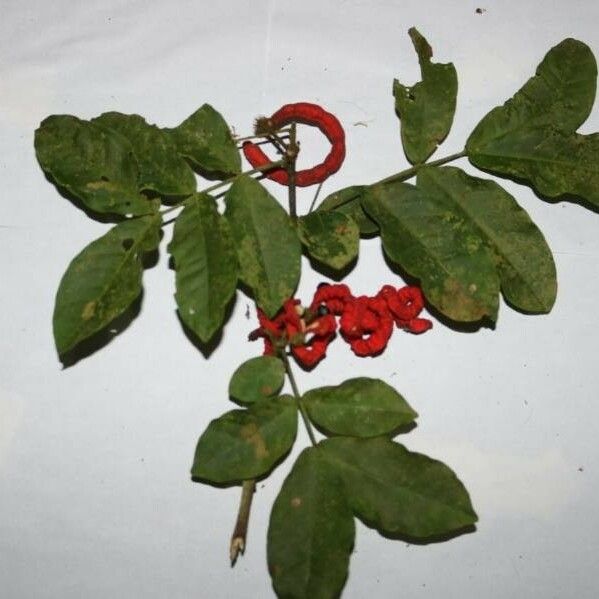
Known as "Snakewood" or the "Red Cojoba," Cojoba rufescens is a tropical showstopper hailing from the rainforests of Central and South America. While its fern-like foliage is elegant, it is best known for its bizarre, twisted red seed pods that look remarkably like coiled snakes or exotic caterpillars. This plant is a prized "rarity" for collectors who want a touch of the prehistoric in their indoor or tropical garden.
🔍 How to Identify
- 🌿 Fern-Like Foliage: The leaves are bipinnate and delicate, resembling a mimosa or a large fern, giving the plant a soft, airy texture.
- ☁️ Puffball Blooms: It produces small, spherical white or cream-colored flowers that look like tiny pom-poms tucked among the leaves.
- 🐍 The "Snakepods": The most striking feature is the bright red, fleshy seed pods that twist into spirals, eventually splitting open to reveal shiny black seeds.
- 🍂 Velvety Texture: The name rufescens refers to the reddish-brown, velvety hairs that often cover the young stems and new growth.
🏡 In Your Garden
- ☁️ Humidity is Key: Coming from the humid understory of Panama and Colombia, this plant thrives in high humidity; dry indoor air will quickly lead to crispy, brown leaf tips.
- 💧 Thirsty but Picky: It prefers consistently moist soil but is highly susceptible to root rot if the pot doesn't have excellent drainage. It "breathes" through its roots, so airy soil is a must.
- 🌱 Slow and Steady: This isn't a fast grower. It takes its time to establish a sturdy trunk, making it an excellent candidate for long-term "specimen" planting or even high-end bonsai experimentation.
⚠️ Safety & Toxicity
- 🐾 Mild Concern: While not listed as a high-hazard poison, most members of the Cojoba genus contain alkaloids in their seeds and bark that can cause stomach upset if ingested.
- 👶 Keep Out of Reach: Because the bright red pods look like candy or toys to curious children, it is best kept in a spot where the "snakes" can be admired but not touched.
✨ Fun Fact
The genus name Cojoba comes from a Caribbean indigenous word for a hallucinogenic snuff, though Cojoba rufescens itself is primarily used for its beautiful wood and ornamental value rather than its chemistry!

Detailed Care Instructions








