Plant Overview
Known globally as the original source of caffeine for the world's most famous soft drink, Cola acuminata—commonly called the Kola Nut—is much more than just a flavor profile. In its native West Africa, this evergreen tree is a powerful symbol of hospitality and social harmony, often shared during weddings and tribal ceremonies to signify friendship and respect.
🔍 How to Identify
- 🍃 Lustrous Foliage: The leaves are thick, leathery, and dark green, usually growing in an oblong shape with a distinct pointed tip.
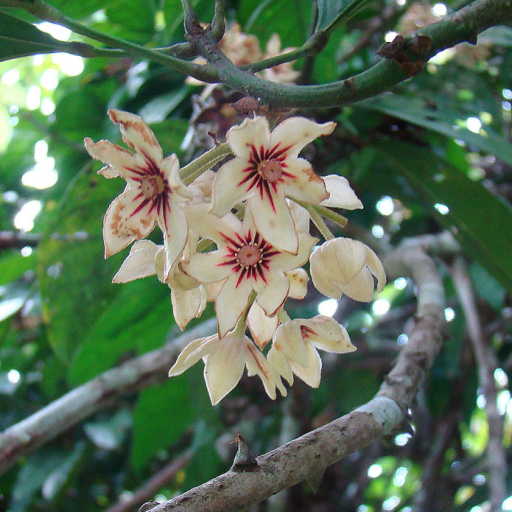
- 🌸 Starry Blooms: It produces small, waxy, star-shaped flowers that are cream or pale yellow, often featuring delicate reddish-purple stripes in the center.
- 🌰 The Bumpy Pod: The fruit consists of large, heavy, rough-textured green pods. When ripe, they split open to reveal the "nuts"—which are actually large, fleshy seeds that can be white, pink, or red.
🏡 In Your Garden
- 🌡️ Rainforest Requirements: This is a true tropical species; it thrives in high humidity and temperatures that stay consistently above 60°F (15°C). It is best suited for conservatories or tropical zones.
- 🌱 The Taproot Trap: Like many tropical trees, it develops a deep taproot early in its life. This makes it very sensitive to transplanting, so it is best to plant it in its permanent location while it is still a small sapling.
- ☁️ Filtered Light: While it grows into a tall canopy tree in the wild, young plants prefer "dappled" sunlight, mimicking the protection they would receive from larger trees in the jungle.
⚠️ Safety & Toxicity
- 🐾 Toxic to Pets: The seeds contain high concentrations of caffeine and theobromine. These stimulants are dangerous for dogs, cats, and horses, potentially causing heart palpitations or tremors if ingested.
- ☕ Human Stimulant: While the nuts are traditionally chewed by humans for an energy boost, the high caffeine content can cause insomnia, restlessness, or increased heart rate in sensitive individuals.
✨ Fun Fact
The original recipe for Coca-Cola, created by pharmacist John Pemberton in the 1880s, used real extracts from the Cola acuminata nut combined with coca leaf extracts to create its signature stimulating effect!

Detailed Care Instructions
To grow Cola Acuminata or Cola nut plants, you can follow these steps:
- Obtain seeds: Purchase Cola Acuminata seeds from a reputable seed supplier, or harvest them from fresh Cola nuts.
- Prep seeds: Soak the seeds in water for 24 hours to speed up the germination process.
- Choose a pot: Select a pot with good drainage and fill it with a well-draining potting mix. You can use a mix of peat moss, perlite, and organic compost.
- Plant the seeds: Plant the Cola Acuminata seeds about 1 inch deep in the potting mix. Plant multiple seeds to increase the chances of germination.
- Watering: Water the seeds thoroughly after planting and keep the soil consistently moist but not waterlogged. Avoid overwatering as it may lead to root rot.
- Temperature and light: Place the pot in a warm location with temperatures around 70-85°F (21-29°C). Cola Acuminata prefers bright, indirect sunlight. Avoid direct sunlight as it can scorch the leaves.
- Germination: Cola Acuminata seeds typically take 2-4 weeks to germinate. Keep the pot covered with a plastic sheet or plastic bag to maintain a warm and humid environment for better germination.
- Transplanting: Once the seedlings have grown their first set of true leaves, usually after 2-3 months, you can transplant them into larger pots or directly into the garden if the climate allows.
- Soil and fertilizer: Cola Acuminata prefers well-draining soil that is rich in organic matter. Fertilize regularly with a balanced organic fertilizer according to the package instructions.
- Pruning: As the plant grows, you may need to prune back any overcrowded or dead branches to encourage healthy growth.
- Maintenance: Provide adequate water, sunlight, and nutrition to the plant. Protect the plant from extreme temperatures, frost, and strong winds.
- Harvesting: Depending on the growing conditions, it may take 3-5 years for the Cola Acuminata plant to produce nuts. Harvest the nuts when they turn yellowish-brown or when they start splitting open.
By following these steps, you can successfully grow and enjoy your own Cola Acuminata plant.
To water this plant, you should ensure that the soil is moist but not waterlogged. Keep an eye on the soil and only water it when it starts to dry out. When watering, make sure to water the soil around the base of the plant, rather than the leaves or stems. You can use a watering can or hose to water the plant. Avoid overwatering as it can lead to root rot. Additionally, ensure that the plant is not exposed to standing water. If you notice the plant leaves start to droop or turn brown, it may be a sign of underwatering or overwatering, adjust your watering schedule accordingly.
To fertilize this plant, mix a balanced fertilizer with equal amounts of nitrogen, phosphorus, and potassium. Apply the fertilizer to the soil around the base of the plant, taking care not to get any on the leaves or stem. Water the plant thoroughly after fertilizing. Repeat fertilization every two weeks during the growing season, but reduce frequency during winter months.
The ideal type of soil for Cola Acuminata plant should be well-draining, slightly acidic, and nutrient-rich. It should be composed of a mixture of organic matter, such as compost or aged manure, and mineral elements like sand or perlite. The soil should have a pH level between 5.5 and 6.5, which is optimal for the plant's growth and ability to absorb nutrients.
When planting Cola Acuminata, it is essential to avoid soils that are too heavy, compacted, or waterlogged, as this can lead to root rot and other problems. Additionally, soils that are too alkaline can cause nutrient deficiencies, adversely affecting the plant's growth and development.
It is recommended to amend the soil with organic matter before planting to enhance its fertility and structure. This will improve soil water retention, drainage, and aeration, which are essential for the plant's healthy development.
Overall, the key characteristics of soil for Cola Acuminata plant are adequate drainage, nutrient-richness, and a slightly acidic pH. It is essential to choose a suitable soil type and amend it appropriately before planting to ensure the best possible growing conditions for this plant.
Cola Acuminata is a plant that belongs to the family of plants known as Malvaceae. It is a type of plant that can be propagated through various methods such as cuttings, air-layering, and seed propagation.
To propagate Cola Acuminata using cuttings, first select a healthy and mature plant and take a cutting that is about 10 to 15 centimeters long and has several healthy leaves attached. Remove the lower leaves to expose a clean stem for planting.
Next, prepare a rooting hormone and dip the cut end of the stem into it before planting it in a container with well-draining soil. Water the soil thoroughly and place the container in a shaded area to allow the plant to grow.
To propagate Cola Acuminata using air-layering, select a healthy and mature plant and cut a small section of the bark about 2-3cm wide in the middle of a stem. Apply a rooting hormone to the exposed stem and wrap it with a damp moss or peat mixture to promote rooting. After a few weeks, the root systems should have formed, and you can cut the rooted section and plant it directly into well-draining soil.
Seed propagation can be achieved by collecting fresh seeds from the fruits of the plant and soaking them in water for a few hours to separate them from the fruit's pulp. After that, plant the seeds in well-draining soil and water them regularly until germination occurs.
Propagation of Cola Acuminata is a delicate process that requires careful attention to the plants and proper techniques to ensure a high rate of success. But with proper care and patience, you can easily propagate the plant and have a beautiful and healthy new plant.








