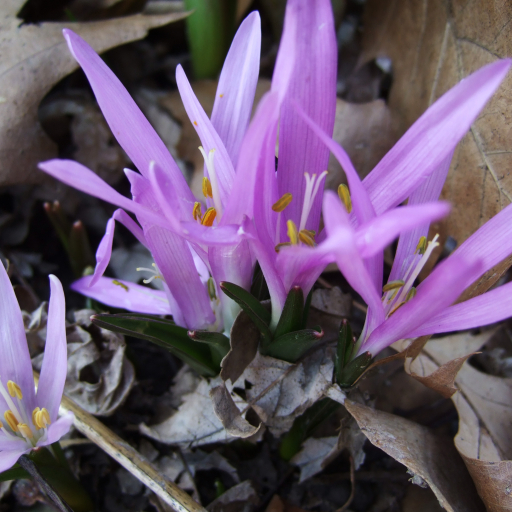
Plant Overview
Often called the Spring Meadow Saffron or the Slender-leaved Colchicum, this alpine gem is a master of disguise. While it looks remarkably like a common Crocus, it actually belongs to a completely different botanical family. It is a hardy survivor, often poking its vibrant lilac-pink head through the melting snow to signal the very first days of spring.
🔍 How to Identify
- 🌸 Star-Shaped Blooms: The flowers are a delicate pink to deep lilac, featuring six long, narrow petals that spread out into a distinct star shape rather than a cup.
- 🍃 Emerging Leaves: Unlike many of its "Naked Lady" cousins that bloom without leaves in the fall, this species sends up its narrow, strap-like green leaves at the same time as the flowers.
- 📏 Low Stature: It is a diminutive plant, usually reaching only 3 to 4 inches in height, making it look like a glowing jewel tucked into the soil.
🏡 In Your Garden
- 🏔️ Alpine Roots: Originating from the mountains of Europe, this plant thrives in rock gardens or well-drained borders. It absolutely hates "wet feet," so ensuring your soil is gritty and porous is the key to preventing the bulb from rotting.
- ☀️ Sun Seeker: To get the flowers to open wide, place them in a spot that receives full early-spring sunshine. Once the foliage dies back in early summer, the plant goes dormant and prefers to be left undisturbed in dry soil until the following year.
⚠️ Safety & Toxicity
- 🚫 Highly Toxic: Every part of the Colchicum bulbocodium contains colchicine, a potent and dangerous alkaloid. It should never be consumed under any circumstances.
- 🐾 Pet & Child Safety: Ingestion can cause severe illness in humans, dogs, and cats. Because the bulbs can look like onions to the untrained eye, it is vital to keep them clearly labeled and away from vegetable patches.
✨ Fun Fact
- ⏳ The Spring Rebel: While most members of the Colchicum genus are famous for blooming in the autumn (earning them the name "Autumn Crocus"), Colchicum bulbocodium is the rebel of the family, choosing to wake up months earlier than its relatives!

Detailed Care Instructions
To grow Colchicum Bulbocodium plants, follow these steps:
- Obtaining the Bulbs: Purchase Colchicum Bulbocodium bulbs (also known as "Meadow Saffron" or "Naked Ladies") from a reputable nursery or online supplier. Look for healthy, firm bulbs.
- Planting Time: Plant the bulbs during the late summer or early autumn, typically from August to October, before the first frost arrives. This plant is hardy to USDA zones 5-8.
- Location: Choose a sunny to partially shaded location with well-draining soil. Colchicum Bulbocodium can tolerate a wide range of soil types but prefers a slightly acidic to neutral soil pH.
- Preparing the Soil: Prior to planting, amend the soil with organic matter such as compost or well-rotted manure to improve drainage and fertility. Remove any weeds or debris from the planting area.
- Planting Depth: Dig holes that are approximately 4 to 6 inches (10 to 15 cm) deep and space them about 4 to 6 inches (10 to 15 cm) apart.
- Planting the Bulbs: Place each bulb into the holes with the pointed end facing up. Ensure that the soil covers the bulbs completely.
- Watering: After planting, water the area thoroughly to settle the soil. Provide regular watering during dry spells, especially during the growth period in spring.
- Fertilizing: Apply a balanced granular fertilizer, such as a 10-10-10 or 14-14-14, during the spring when foliage begins to emerge. Follow the package instructions for the correct amount to use.
- Mulching: Apply a layer of organic mulch, such as straw or shredded bark, to help retain soil moisture and reduce weed growth. Avoid placing the mulch directly on top of the bulbs.
- Care: Colchicum Bulbocodium plants are low-maintenance. Keep the area free of weeds, and avoid excessive moisture as it can cause the bulbs to rot. The foliage will die back after flowering, and the bulbs will remain dormant until the following season.
- Propagation: As the plants establish, they will produce offsets or small bulblets around the mother bulb. These can be carefully removed and replanted to propagate new plants during their dormant season.
- Enjoy the Show: Colchicum Bulbocodium plants produce stunning pink, lavender, or white flowers in early autumn, often without any foliage. They will add a splash of color to your garden or containers during this time.
Remember, Colchicum Bulbocodium contains toxic compounds and should be kept away from children and pets.

Place in a bright room that is sun drenched almost all day. Or directly in a south-facing window.

To water this plant, it is important to give it consistent moisture while also allowing the soil to dry out slightly between waterings. When watering, aim to saturate the soil completely without letting water pool on the surface. It may be helpful to water from below by placing the pot in a saucer filled with water, allowing the soil to soak up the moisture. Additionally, avoid getting water on the foliage, as this can increase the risk of fungal diseases. Finally, during dormant periods (such as in the winter), water sparingly to prevent rotting of the bulbs.
To fertilize this plant, you should first prepare the soil by mixing in a slow-release fertilizer. Apply the fertilizer around the base of the plant, being careful not to get any on the leaves or bulbs. Water the plant well after fertilizing to help the fertilizer penetrate the soil. Repeat fertilization once or twice per growing season, following package instructions for the specific fertilizer you are using. Avoid over-fertilization, as this can damage the plant.
The ideal soil to use with this plant is one that is well-draining and rich in organic matter. It should have a slightly acidic to neutral pH level. A sandy loam soil mix with added perlite and coarse sand would be highly recommended. The soil should be moist but not waterlogged, as this can lead to rotting of the bulb. It is important to avoid using heavy, clay soils or soils that are prone to waterlogging, as this can cause damage to the bulb and hinder its growth. Additionally, adding a slow-release fertilizer to the soil before planting can help provide the necessary nutrients for the plant to thrive.
To propagate this plant, you will need to wait until the bulb has finished flowering and then allow it to dry out completely. Once the bulb is dry, carefully separate any offsets that have formed and plant them in well-draining soil. Make sure that the offsets are planted at a depth of approximately 3 times their own height. Water the newly planted offsets sparingly until they have established themselves, and then gradually increase the amount of water that you give them. It may take a year or two for the offsets to reach flowering size, but once they do, they will produce beautiful blooms.








