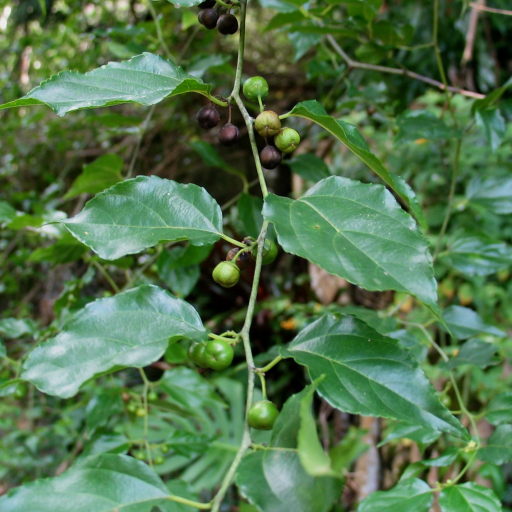
Plant Overview
Known as Gregg’s Snakewood or Sierra Colubrina, this resilient evergreen is a hidden gem of the Chihuahuan Desert and South Texas. It often earns praise from landscapers for being "bulletproof" in the heat, maintaining its lush, glossy green foliage even when the sun is at its most punishing. It is a favorite for those looking to add structure to a water-wise garden without sacrificing a vibrant, tropical look.
🔍 How to Identify
- 🍃 The Quilted Leaf: The leaves are ovate and shiny, featuring very deep, prominent veins that give the surface a "quilted" or textured appearance.
- 🌼 Starry Blooms: It produces clusters of tiny, star-shaped flowers that are a subtle greenish-yellow, blending into the foliage but emitting a light, honey-like scent.
- 🎋 Serpentine Stems: As the plant matures, its branches can take on a slightly twisting, zig-zag growth pattern, which contributes to its "Snakewood" nickname.
🏡 In Your Garden
- 🪨 Limestone Lover: This plant is specifically adapted to alkaline, rocky soils. It thrives in "difficult" spots because its root system is designed to find moisture in limestone crevices where other plants might wither.
- 🦋 Pollinator Hub: While the flowers are small, they are a high-energy nectar source. In a garden setting, it acts as a magnet for rare butterflies and native bees, making it a cornerstone for local ecology.
⚠️ Safety & Toxicity
- 🐾 Pet & Child Safety: Gregg’s Snakewood is generally considered non-toxic to humans and common household pets. It lacks the aggressive thorns found on many other desert shrubs, making it a "friendly" choice for high-traffic areas.
- 🧺 General Caution: While not known to be poisonous, the berries and leaves are not edible for humans and should not be consumed.
✨ Fun Fact
When the seed capsules of the Snakewood dry out in the sun, they become pressurized. They eventually "explode" with an audible pop, launching their seeds several feet away to ensure the next generation doesn't have to compete with the parent plant for water!

Detailed Care Instructions

To water this plant, you should first ensure that the soil is dry to the touch before watering. When ready to water, thoroughly saturate the soil around the base of the plant without getting water on the leaves or stem. Allow any excess water to drain out of the pot or soil before placing the plant back in its desired location. It is important not to overwater this plant as it can lead to root rot and other issues. A general rule of thumb is to water when the top 1-2 inches of soil are dry.
The recommended soil for this plant is a well-draining soil mix with a pH range of 6.0-7.0. The soil should be rich in organic matter and contain a balanced amount of nutrients to support the growth of the plant. It should not be too sandy or too clayey, as this can affect the drainage and aeration of the soil. Instead, the soil should have the right texture, which is loamy, containing both sand, silt, and clay in equal proportions. This type of soil provides optimal water retention while allowing adequate oxygen circulation in the roots. The plant prefers a slightly acidic soil environment, which can be maintained by adding peat moss or pine needle mulch to the soil mix. Additionally, the soil should be kept moist but not waterlogged to avoid damaging the delicate roots of the plant.







