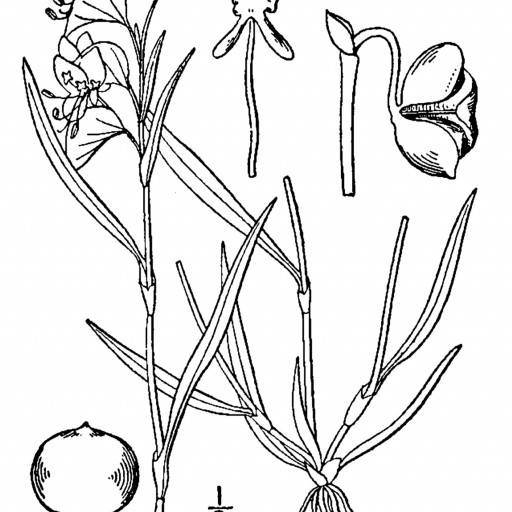
Plant Overview
Often called the Whitemouth Dayflower, this delicate wildflower is like a fleeting piece of the sky fallen into your garden. It is a resilient perennial native to the Americas, cherished for its striking cobalt-blue blooms that greet the morning sun and vanish by early afternoon. While it is often seen as a charming addition to a native plant garden, its ability to thrive in poor, sandy soil means it can sometimes wander further than you might expect.
🔍 How to Identify
- 🌸 Petal Play: Features two large, bright blue upper petals and one much smaller, inconspicuous white petal at the bottom, giving it its "whitemouth" nickname.
- 🍃 Leaf Structure: Narrow, lance-shaped leaves that clasp the stem, creating a sleek, slightly fleshy, and grassy appearance.
- 🚤 The Spathe: Look for a distinct, boat-shaped green leaf (called a spathe) from which the flowers emerge. This "leaf-pocket" protects the delicate buds until they are ready to bloom.
🏡 In Your Garden
- 🌱 Opportunistic Growth: This plant is a specialist in "disturbed" soil. It loves rocky or sandy areas where more finicky plants fail, making it an excellent choice for xeriscaping or native restoration projects.
- ☀️ Light Management: While it can handle full sun, it is happiest in partial shade. In intense heat, the flowers will melt away even faster, so planting them where they get morning light and afternoon shade is ideal.
- 🚜 Resilient Spreader: Be mindful that Commelina erecta can spread via seeds and its creeping root system. It’s perfect for filling in gaps, but you may need to pull it back if it starts crowding out smaller neighbors.
⚠️ Safety & Toxicity
- 🌿 Non-Toxic Status: Commelina erecta is generally considered non-toxic to humans, cats, and dogs. It is often grazed by deer and turtles in the wild.
- 🤚 Minor Irritation: While safe, the succulent stems contain a watery sap. Those with very sensitive skin might experience mild redness if they handle broken stems excessively during pruning.
✨ Fun Fact
- 🎭 A Botanical Insult: The genus Commelina was named by the famous botanist Carl Linnaeus after the three Commelin brothers. The two large, showy blue petals represent the two brothers who became famous botanists, while the tiny, hidden white petal represents the third brother who Linnaeus claimed "accomplished nothing" in the field of science!

Detailed Care Instructions
| Humidity | Normal |
| Lighting | Part Sun |
| Difficulty | Easy |
| Hibernation | Cold Period |
| Hardiness Zones | 8 - 11 |
To grow Commelina Erecta, also known as the Whitemouth dayflower, you can follow these steps:
- Climate and soil conditions: Commelina Erecta prefers warm climates and well-drained soil. It can be grown in USDA hardiness zones 8-11. If you live in a colder region, you can grow it indoors or treat it as an annual plant.
- Location: Choose a spot in your garden that receives full sun to partial shade, as this plant prefers bright light. Ensure that it is protected from strong winds.
- Planting: sow the seeds directly into the soil or start them indoors for early growth. If starting indoors, sow seeds in small pots filled with a good quality seed-starting mix. Press the seeds lightly into the soil and cover them with a thin layer of the mix. Maintain a temperature of around 70°F (21°C) until the seedlings emerge.
- Transplanting: Once the seedlings have grown a few inches tall and the risk of frost has passed, you can transplant them outdoors. Space the seedlings about 12-18 inches apart, as Commelina Erecta can grow to be around 12-24 inches tall and spreads quite a bit.
- Watering: Commelina Erecta requires moderate watering. Keep the soil evenly moist, but avoid overwatering, as it can cause root rot. Allow the top inch of soil to dry out before watering again. During hot and dry periods, increase the frequency of watering.
- Fertilizing: Use a balanced, slow-release fertilizer once every two to three months during the growing season.
- Care: Remove any weeds or competing plants around the Commelina Erecta to allow proper growth. Prune back any dead or damaged foliage to maintain a tidy appearance and promote new growth.
- Propagation: Whitemouth dayflower can be propagated by division. Dig up the plant and carefully separate the root sections. Replant the divisions in desired locations.
- Pests and diseases: Commelina Erecta is generally not prone to major pest or disease issues. However, keep an eye out for common garden pests such as aphids or spider mites. Treat these infestations promptly using organic pest control methods.
- Harvesting: Commelina Erecta produces small, delicate blue flowers. Enjoy their beauty in your garden or use them for floral arrangements.
Remember, care requirements and growth habits may vary slightly depending on your specific climate and conditions.

Place in a bright room that is sun drenched almost all day. Or directly in a south-facing window.

To properly water this plant, one must first assess its soil moisture levels by inserting their finger into the soil to a depth of around one inch. If the soil feels damp, then the plant does not need watering yet. However, if the soil feels dry to the touch, then it is time to water the plant. When watering, it is best to use room temperature water and pour it slowly onto the soil around the base of the plant, being careful not to get water on the leaves. It is important to allow the excess water to drain out of the bottom of the pot or container to prevent waterlogging, which can lead to root rot. The frequency of watering will depend on a variety of factors, including the humidity and temperature of the room, the size of the pot, and the amount of light the plant receives. As a general rule, it is better to underwater than overwater this plant, as it is more tolerant of dry conditions than soggy soil.
To fertilize this plant, use a balanced fertilizer with equal parts nitrogen, phosphorus and potassium. Apply once a month during the growing season, which typically occurs in spring and summer. Avoid fertilizing during the dormant season, as the plant will not benefit from the added nutrients. Follow the package instructions for proper application rates. Water the plant before and after fertilizing to avoid burning the roots.
For optimum growth and health of the plant, it is recommended to use a well-draining soil mix that is rich in organic matter. The soil should have a pH range of 6.0 to 7.5. A mix of peat moss, compost, and perlite or coarse sand can be used.
The plant prefers moist soil, so the soil should retain moisture but not be waterlogged. Overwatering can lead to root rot. The plant can tolerate sandy soils and loamy soils but may struggle in heavy clay soils.
Regular fertilization with a balanced fertilizer can promote healthy growth. Slow-release fertilizers or a liquid fertilizer can be used. It is important to fertilize the plant during the growing season, which is usually from spring to fall.
If the plant is grown in a container, make sure the container has drainage holes to avoid waterlogging. The container size should be proportional to the plant size and allow room for growth.
- Select a healthy and mature plant: To propagate Commelina Erecta, you need to start with a healthy and mature plant. Choose a parent plant that is disease-free, has strong stems and healthy foliage.
- Cut stems: Once you have selected the parent plant, cut 3-4 inches long stems from it using scissors or a sharp knife. Make sure to cut the stems at an angle to minimize any damage to the plant.
- Remove leaves: Once you have your stem cuttings, remove all the leaves from the lower part of the stem. This will allow the plant to focus on root development instead of supporting leaves.
- Dip ends in rooting hormone: After cutting the stems and removing the leaves, dip the ends of the stem in rooting hormone. This will stimulate root growth and help ensure that the plant successfully takes root.
- Plant in soil: Fill a pot with a well-draining potting mix and make a small hole in the center. Insert the base of the cutting into the hole, and gently push it in. Water the soil around the cutting to moisten it, but do not overwater it.
- Keep soil moist: Place the pot in a warm and brightly lit area. Water the soil regularly to keep it moist, but do not overwater the cutting. Overwatering can lead to root rot and may cause the plant to die.
- Monitor growth: Over time, you should start to see new growth emerging from the cutting. As the plant grows, transplant it into a larger pot or garden bed.
- Maintain: Once the plant has fully established, it is important to maintain it properly. This includes regular pruning, fertilization, and pest control. Follow these steps, and you can easily propagate Commelina Erecta and enjoy its beauty in your garden or home.
Common pests of the white mouth dayflower include Spider mites, aphids, thrips. Make a habit of checking your white mouth dayflower frequently for pests so that any infestations can be caught and managed early.








