Plant Overview
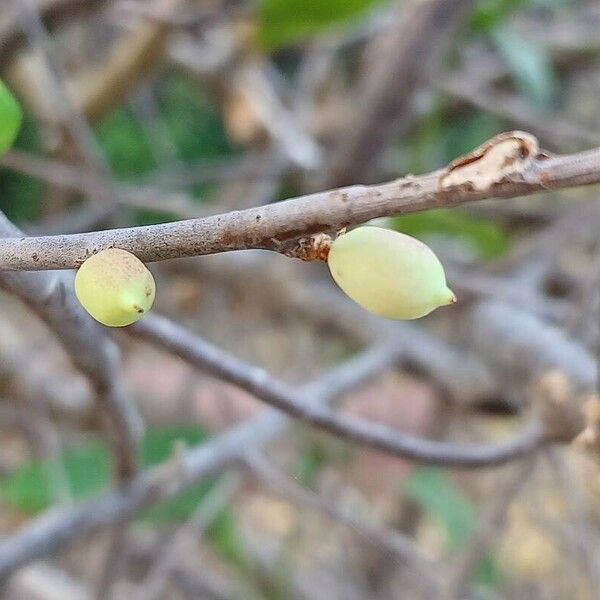
Known as the "Guggul" tree or Indian Bdellium, Commiphora wightii is a desert survivor famous for its "liquid gold" resin. For over 3,000 years, this rugged shrub has been a cornerstone of Ayurvedic medicine, prized for its ability to produce a fragrant, medicinal gum. In the wild, it looks like a piece of living sculpture, perfectly adapted to the harsh, arid landscapes of India and Pakistan.
🔍 How to Identify
- 🌵 The Bark: The bark is thin, papery, and often peels away in silvery, ash-colored flakes, revealing a greenish underlayer that can actually perform photosynthesis.
- 🍃 Small Leaves: It features tiny, oval-shaped leaves that are usually found in clusters of three. They have a waxy texture and jagged (serrated) edges to help conserve moisture.
- ⚔️ Spiny Branches: The branches are crooked and end in sharp, woody thorns, protecting the plant from thirsty desert animals.
- 🌸 Tiny Blooms: In late spring, it produces very small, inconspicuous four-petaled flowers that range from brownish-red to pale pink.
🏡 In Your Garden
- ☀️ Desert Logic: This plant is the ultimate "low-maintenance" choice for rock gardens or xeric landscapes. It thrives on neglect and requires intense sunlight to produce its signature resin.
- 💧 Dry Feet Only: Because it has evolved for rocky, arid soils, it is extremely sensitive to overwatering. It is best to treat it like a desert cactus; if the soil is damp to the touch, do not water it.
- 🪵 Slow and Steady: It is a very slow grower. If you are growing it from a cutting or seedling, do not expect rapid height; it focuses its energy on developing a thick, resinous trunk and deep roots.
⚠️ Safety & Toxicity
- 🟢 Non-Toxic: The plant is generally considered non-toxic to humans and pets if touched.
- 🧴 Resin Sensitivity: While the resin (Guggul) is used medicinally, direct contact with the raw sap may cause mild skin irritation or contact dermatitis in sensitive individuals.
- 🐕 Pet Note: While not listed as a major toxin, the sharp thorns pose a physical "puncture" risk to curious dogs or cats exploring the garden.
✨ Fun Fact
The Guggul tree is currently an endangered species in the wild. This is largely because the traditional method of "tapping" the tree for its resin involves making deep cuts that often lead to infections, killing these slow-growing desert sentinels. Conservationists are now working to teach "non-invasive" tapping to save the species from extinction.

Detailed Care Instructions







