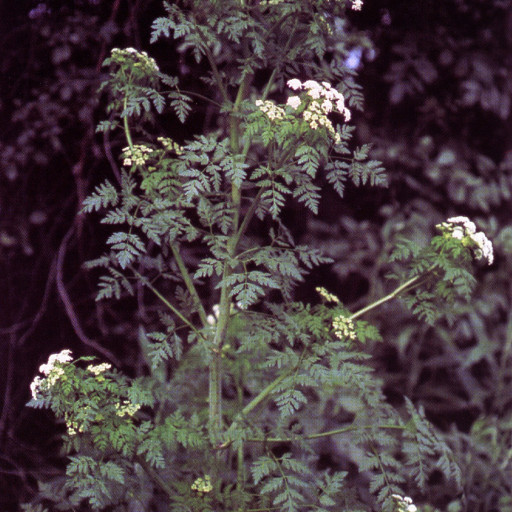
Plant Overview
Commonly known as Poison Hemlock, this tall, lacy plant carries a dark reputation that dates back to Ancient Greece. While it might look like a delicate wildflower or a giant version of garden parsley, it is one of the most famously toxic plants in the world. Often called "Beaver Poison" or "Deadly Hemlock," it is a master of disguise that every nature lover should learn to recognize from a distance.
🔍 How to Identify
- 🩸 The Spotted Stem: The most reliable giveaway is the smooth, hairless green stem splashed with distinctive purple or reddish spots and splotches (maculatum literally means "spotted").
- 🌿 Fern-like Foliage: The leaves are bright green, triangular, and deeply divided, looking very similar to carrot or parsley leaves.
- ⚪ White Umbrella Flowers: In early summer, it produces large, flat-topped clusters of tiny white flowers, known as umbels, which can reach heights of 6 to 10 feet.
- 👃 The Warning Scent: When the leaves or stems are crushed, they emit a strong, unpleasant odor often described as "mousy" or like parsnips.
🌿 In the Wild & Landscape
- 🛣️ A Master Colonizer: Poison Hemlock thrives in disturbed soils, meaning you will frequently spot it in ditches, along roadsides, near fences, and at the edges of marshes.
- 🌱 Biennial Growth: In its first year, it stays low to the ground as a leafy rosette. In its second year, it rapidly shoots upward (bolts) to flower and spread thousands of seeds, often outcompeting native plants.
- 🚜 Lookalike Danger: It is frequently confused with edible members of the carrot family, such as Wild Carrot (Queen Anne’s Lace) or Wild Parsnip. Remember: Queen Anne has a hairy stem; Hemlock is always hairless and spotted.
⚠️ Safety & Toxicity
- 💀 Lethal Status: EXTREMELY TOXIC. All parts of the plant—roots, seeds, and leaves—contain alkaloids (coniine) that cause respiratory failure. There is no known antidote.
- 🚫 No Touching: While ingestion is the primary danger, the toxins can occasionally be absorbed through the skin or mucous membranes. Never weed this plant without heavy gloves and long sleeves.
- 🐾 Pets & Livestock: This plant is deadly to horses, cattle, and dogs. If you find it in your yard or pasture, do not mow it without a mask, as inhaling the pulverized particles can be hazardous.
✨ Fun Fact
Poison Hemlock is most famous for its role in the execution of the philosopher Socrates in 399 BC. He was sentenced to death by drinking a potent infusion of this very plant, a method of execution chosen because it was thought to "freeze" the body from the feet upward until it reached the heart.

Detailed Care Instructions
To grow Conium Maculatum, commonly known as Poison Hemlock, follow these steps:
- Obtain seeds: You can order Conium Maculatum seeds online or harvest them from mature plants in the wild. Ensure the seeds are fresh and viable.
- Prepare soil: Conium Maculatum prefers moist, loamy soil with good drainage. Prepare the planting area by removing any weeds and debris and loosening the soil.
- Sow seeds: Scatter the seeds on top of the soil and lightly press them into the surface. Alternatively, you can start the seeds indoors 6-8 weeks before the last frost date and transplant them outdoors later.
- Watering: Keep the soil consistently moist but not waterlogged. Water regularly, especially during dry periods.
- Sunlight: Conium Maculatum prefers full sun to partial shade. Ensure the plants receive at least 6-8 hours of direct sunlight every day.
- Thin seedlings: Once the seedlings have grown to a height of a few inches, thin them out to provide space for each plant to grow. Leave about 12-18 inches between plants.
- Mulch: Apply a layer of organic mulch around the plants to help retain moisture and prevent weed growth.
- Fertilization: Conium Maculatum generally does not require heavy fertilization. However, if the soil is poor, you can incorporate some compost or a balanced fertilizer into the planting area.
- Maintenance: Regularly monitor the plants for signs of pests or diseases and take appropriate action if necessary. Poison Hemlock is a toxic plant, so take precautions when handling it or removing any damaged or unwanted parts.
- Harvest: If you want to harvest Conium Maculatum for any reason, wear protective gloves and use caution, as all parts of the plant are poisonous. Harvest young plants before they reach maturity for the tenderest leaves or flowers.
Remember, Poison Hemlock is considered a dangerous plant due to its toxicity. Ensure you handle it with care and keep it away from children, pets, or livestock. If you have any doubts or concerns, consult with a local gardening expert or horticulturist.

Place in a window with dappled sun or a spot in the middle of a room. Or directly in a window facing west or east.

The best way to water this plant is to allow the soil to dry out slightly before watering. This can be determined by sticking your finger about an inch into the soil and feeling for moisture. If the soil feels dry at that depth, it's time to water.
When watering, be sure to thoroughly soak the soil until water runs out of the drainage holes at the bottom of the pot or container. Avoid getting water on the leaves as this can cause damage or disease.
During hot or dry spells, the plant may require more frequent watering, so it's important to check the soil regularly and adjust your watering schedule accordingly.
Additionally, it's a good idea to use rainwater or distilled water for watering this plant, as it can be sensitive to chlorine and other chemicals found in tap water.
To fertilize this plant, use a slow-release, balanced fertilizer in the spring or early summer. Apply according to the package instructions and water deeply after application. Avoid fertilizing during the fall or winter months.
For best growth and health, it is recommended to use a well-draining soil that is rich in nutrients and organic matter. It should have a pH level between 6.0 and 7.0. Additionally, it is important to ensure that the soil is moist but not waterlogged, as this can lead to rotting of the roots. A soil mix that contains perlite, vermiculite, and peat moss can be a good option.
One way to propagate this plant is through seed germination. Collect mature seeds from the plant and sow them in well-draining soil. Keep the soil moist and in a warm, bright location. The seeds should germinate in 2-3 weeks.
Another method is through stem cuttings. Select a healthy stem and cut it at an angle. Remove the lower leaves and dip the cut end in rooting hormone powder. Plant the stem in well-draining soil and keep it moist and in a warm, bright location. The cutting should root in about 2-3 weeks.
Alternatively, this plant can be propagated through division. Carefully dig up the plant and separate the root clumps into smaller sections, making sure each section has some roots and leaves. Plant the divisions in well-draining soil and keep them moist and in a warm, bright location. The divisions should establish quickly and start growing new shoots.
Common pests of the poison hemlock include Spider mites, thrips. Make a habit of checking your poison hemlock frequently for pests so that any infestations can be caught and managed early.








