Plant Overview
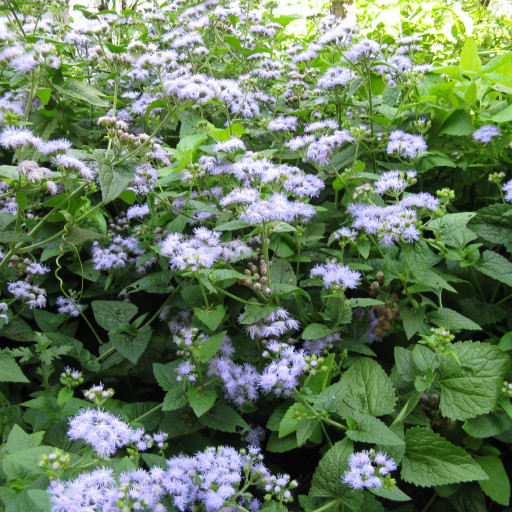
Often called "Blue Mistflower" or "Wild Ageratum," this plant creates a soft, hazy carpet of azure in the late summer heat. It is a favorite among native plant enthusiasts for its ability to provide a "blue sky" aesthetic at ground level just as other summer blooms begin to fade. It is the ultimate choice for a "dreamy" garden look.
🔍 How to Identify
- 🌸 Fuzzy Blooms: Clusters of tiny, disk-shaped flowers that lack traditional petals. Instead, they feature long, thread-like styles that give the flower heads a fringed, "misty" appearance.
- 🍃 Toothed Leaves: The foliage is triangular or heart-shaped with coarsely blunt teeth along the edges. The leaves are arranged in pairs directly across from one another on the stem.
- 🌿 Reddish Stems: The stems are sturdy and often take on a dark, wine-red or purple hue, providing a beautiful contrast to the bright green leaves and blue flowers.
🏡 In Your Garden
- 🏃 The Social Spreader: This plant moves through the garden via underground rhizomes. While it creates a stunning groundcover, it can be "pushy" in small spaces. It is best used in areas where it has room to roam or in rain gardens where it can compete with other vigorous species.
- 🦋 Pollinator Magnet: It is a vital late-season nectar source. You will often find it covered in various butterflies, particularly Hairstreaks and Monarchs, as well as native bees who are stocking up for winter.
- 💧 Moisture Lover: In the wild, it thrives in meadows and near streambanks. It is a "thinner-leaved" plant, meaning it doesn't store water well; if it gets too dry, it will wilt dramatically to let you know it needs a drink.
⚠️ Safety & Toxicity
- ✅ Non-Toxic: Conoclinium coelestinum is generally considered safe and non-toxic for humans, dogs, and cats.
- 🦌 Deer Resistant: While not 100% "deer-proof," the bitter taste of its foliage usually keeps it low on the menu for foraging deer and rabbits.
✨ Fun Fact
The species name coelestinum translates to "sky-blue" or "heavenly," a nod to the unique shade of its flowers which is rarely found in the late-season plant world. It is so similar in appearance to the common garden annual Ageratum that many people are shocked to find out it is a hardy perennial that returns year after year!

Detailed Care Instructions
| Color | Blue, Purple |
| Soil Ph | Acidic, Neutral |
| Humidity | Dry |
| Lighting | Full Sun |
| Toxicity | Non-Toxic |
| Soil Type | Loamy, Sandy, Clay, Moist |
| Bloom Time | Summer, Fall |
| Difficulty | Easy |
| Plant Type | Perennial |
| Hibernation | Cold Period |
| Mature Size | 2-3 Ft. Tall, 1-2 Ft. Wide |
| Native Area | North America |
| Temperature | 20°C - 30°C |
| Sun Exposure | Full, Partial |
| Hardiness Zones | 5-10 |
To grow Conoclinium coelestinum, also known as Blue Mistflower or Hardy Ageratum, follow these steps:
- Choose the right location: Blue Mistflower prefers full sun to partial shade. Find a location in your garden or landscape that receives at least 6 hours of direct sunlight per day.
- Prepare the soil: Blue Mistflower grows well in a variety of soil types, but it prefers well-draining soil. Amend the soil with organic matter such as compost to improve drainage and fertility.
- Planting: Dig a hole that is slightly larger than the root ball of the plant. Place the plant in the hole, making sure it is at the same level as it was in the container. Backfill the hole with soil, gently firming it around the roots. Water thoroughly after planting.
- Watering: Keep the soil consistently moist but not waterlogged. Water deeply and infrequently, allowing the soil to dry out slightly between waterings. During hot and dry periods, provide additional watering to prevent wilting.
- Mulching: Apply a layer of organic mulch around the base of the plant to conserve moisture, suppress weeds, and regulate soil temperature. Leave a small gap around the stem of the plant to prevent rot.
- Fertilizing: Blue Mistflower generally does not require heavy fertilization. If desired, you can apply a balanced, slow-release fertilizer in spring or use a water-soluble fertilizer monthly during the growing season.
- Pruning: In early spring, cut back the plant to a few inches above the ground to encourage fresh growth. Deadhead spent flowers regularly to promote continuous blooming and prevent self-seeding.
- Pests and diseases: Blue Mistflower is generally resistant to most pests and diseases. However, keep an eye out for aphids, spider mites, and powdery mildew. If problems occur, treat them with appropriate organic controls.
- Propagation: Blue Mistflower can be propagated through stem cuttings or division. Take stem cuttings in early summer and root them in moist potting soil. Divide mature plants in spring or fall, ensuring each division has healthy roots.
- Winter care: Conoclinium coelestinum is mostly hardy and can survive winters in USDA hardiness zones 5-9. Mulch around the base of the plant to protect the roots from freezing temperatures. In colder regions, consider providing additional protection, such as a layer of straw or moving the containers indoors.
With proper care, your Conoclinium coelestinum plant should thrive and produce beautiful blue flowers throughout the growing season.

Place in a bright room that is sun drenched almost all day. Or directly in a south-facing window.

To water this specific plant, it is important to keep the soil consistently moist, but not overly saturated. This can be achieved by watering deeply once or twice a week, depending on weather conditions and the size of the plant. It is important to water at the base of the plant, avoiding wetting the leaves or flowers, as this can lead to fungal diseases. Mulching around the base of the plant can help retain moisture in the soil and reduce watering frequency. Additionally, in times of drought or extreme heat, supplemental watering may be necessary to keep the plant healthy.
To fertilize this plant, apply a balanced slow-release fertilizer in early spring. Avoid using high-nitrogen fertilizers as it may cause the plant to produce more foliage than flowers. Follow the instructions on the fertilizer packaging for recommended application rates. Additionally, incorporating compost or well-aged manure into the soil can also provide essential nutrients. Water the plant thoroughly after fertilizing to help distribute the nutrients evenly.
When planting Conoclinium coelestinum, it is recommended to use well-draining soil that has a slightly acidic to neutral pH level between 6.0 and 7.0. This plant prefers soil that is moist but not waterlogged, and it will not thrive in soil that is too dry or too wet. Additionally, it is important to avoid using heavy clay soils or sandy soils without any organic matter, as this can create drainage issues or nutrient deficiencies. Some suitable soil amendments include compost, peat moss, and perlite, which can help to improve soil structure and water retention. Overall, it is important to select a soil that provides good drainage and adequate moisture to promote healthy growth in Conoclinium coelestinum.
To propagate this plant, you can take stem cuttings during the spring or early summer months. Select a healthy stem from the main plant and make a clean cut using a sharp knife or gardening shears. The cutting should be about 4-6 inches in length with a few leaves attached. Remove the lower leaves from the stem and dip the end in rooting hormone powder. Plant the cutting in a well-draining potting mix and keep it in a warm and humid area with indirect sunlight. Water the soil regularly and mist the plant occasionally to maintain moisture levels. After a few weeks, the cutting should start developing roots and new growth. Once the roots are established, you can transplant the new plant to a larger container or outdoors in a suitable location.
Common pests of the blue mistflower include Spider mites, aphids. Make a habit of checking your blue mistflower frequently for pests so that any infestations can be caught and managed early.








