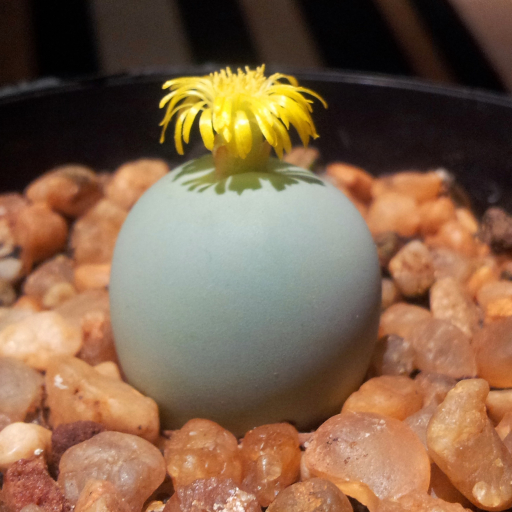
Plant Overview
Known affectionately as the "Living Pebble" or "Marble Plant," Conophytum calculus is one of nature’s most convincing masters of disguise. Hailing from the arid Knersvlakte region of South Africa, this succulent has evolved to look exactly like the smooth, water-worn stones it nestled among. For plant collectors, it is prized as a living sculpture that embodies the "less is more" philosophy of the desert.
🔍 How to Identify
- 🟢 The Body: Unlike most plants with distinct leaves, this succulent consists of two fused leaves that form a perfect, seamless sphere or "button." Its skin is incredibly smooth and matte, usually a pale chalky green or grayish-white.
- 👄 The Fissure: At the very top of the sphere is a tiny, delicate slit or "mouth." This is where the flower emerges and where the plant occasionally breathes.
- 🌼 The Bloom: In autumn, a single, clove-scented flower—usually golden yellow or orange—bursts through the central slit, often opening at night to attract specialized pollinators.
🏡 In Your Garden
- 💤 Summer Slumber: This plant follows a strict winter-growing cycle. During the hot summer months, it goes into deep dormancy and develops a dry, papery "sheath" that looks like dead skin. Resist the urge to peel this off! It protects the new succulent body forming inside from the sun.
- 💧 The "Sip" Method: Because it is a desert specialist, its biggest enemy is overwatering. It stores nearly its entire water supply within its rounded body; watering should only happen when the sphere begins to show slight wrinkles during its active growing season (autumn and winter).
- ☀️ Light & Air: It thrives in bright, indirect light. In the wild, it survives by being half-buried in quartz pebbles, so it appreciates a gritty, well-draining mineral soil that mimics its rocky home.
⚠️ Safety & Toxicity
- ✅ Non-Toxic: Conophytum calculus is generally considered non-toxic to both humans and common household pets like cats and dogs.
- 🌵 Handle with Care: While not poisonous, the plant is physically delicate. Its smooth skin can be easily scarred by fingernails or rough handling, and because it grows so slowly, these marks will remain for a full year until the plant sheds its skin.
✨ Fun Fact
The name calculus is Latin for "small pebble." This is the same root word used for "calculation," because ancient Romans used small stones—pebbles—on counting boards to perform math. When you grow this plant, you are literally keeping a "living calculator" on your windowsill!

Detailed Care Instructions
To grow Conophytum Calculus plants, you can follow these steps:
- Select a pot: Choose a pot with good drainage and a depth of at least 2-3 inches (5-7.5 cm) to allow for root growth.
- Soil: Use a well-draining and porous soil mix, such as a cactus or succulent soil mix. You can also make your own mix by combining equal parts of perlite, sand, and regular potting soil.
- Planting: Fill the pot with the soil mix, leaving enough space for the plant's roots. Gently tap the pot on a flat surface to settle the soil.
- Propagation: Conophytum Calculus can be propagated from seeds. Sow the seeds on top of the soil, but do not bury them as they require light for germination. Mist the soil surface lightly with water.
- Placement: Place the pot in a bright location with indirect sunlight. These plants prefer bright, filtered light rather than direct sun.
- Watering: Water the plants sparingly, as they are adapted to arid conditions. Allow the soil to dry out completely between waterings, but do not let the plant become completely desiccated.
- Temperature: Conophytum Calculus plants prefer temperatures between 60-80°F (15-27°C). Avoid exposing them to extreme temperature fluctuations.
- Humidity: These plants prefer low humidity levels. Avoid misting or placing them in a humid environment, as it can lead to rot or fungal diseases.
- Fertilizer: Fertilize sparingly, using a diluted, water-soluble succulent or cactus fertilizer during the growing season. Follow the instructions on the fertilizer packaging for application rates.
- Maintenance: Remove any dead or decaying leaves to prevent the spread of diseases and rot. Monitor the plants regularly for signs of pests, such as mealybugs or aphids, and treat them accordingly.
Remember that Conophytum Calculus is a slow-growing plant, so be patient and allow it time to establish and grow.

Place in a window with dappled sun or a spot in the middle of a room. Or directly in a window facing west or east.

Conophytum Calculus is a succulent plant that requires a unique watering routine to thrive. Here's how to water it properly:
1. Assessment: Before watering, examine the soil's moisture level. Insert your finger about an inch into the soil to check if it feels dry. If the soil is still damp, avoid watering as over-watering can lead to root rot.
2. Watering Frequency: Conophytum Calculus requires infrequent watering. Generally, it is recommended to water the plant every 2-3 weeks during its active growing season. However, the frequency may vary depending on factors like humidity, temperature, and pot size.
3. Watering Technique: When watering, make sure to do it slowly and carefully to prevent waterlogging. Pour water gradually around the base of the plant, allowing it to reach the deeper roots. Avoid wetting the foliage as prolonged moisture can cause damage.
4. Drainage: It is crucial to provide proper drainage to avoid water accumulation in the pot. Ensure that the planting container has drainage holes and that the soil is well-draining. Excess water should be able to flow out freely.
5. Seasonal Adjustments: Conophytum Calculus has a natural dormancy period during winter. During this time, the plant's water requirements decrease significantly. Reduce watering to a minimum, keeping the soil on the drier side. However, still occasionally check the soil's moisture level to prevent complete dehydration.
6. Observing the Plant: Pay attention to the overall appearance of the plant. If the leaves appear shriveled or the plant looks limp, it may indicate under-watering. In such a case, watering more frequently might be necessary. However, if the leaves become mushy or discolored, it could indicate over-watering. Reduce watering and adjust accordingly.
Remember, these guidelines are general. Always prioritize the unique needs of your individual Conophytum Calculus plant. It is essential to maintain a balance to avoid both under-watering and over-watering, ensuring optimal health and growth.
To fertilize Conophytum Calculus plants, follow these instructions:
- Use a balanced fertilizer with equal amounts of nitrogen, phosphorus, and potassium.
- Dilute the fertilizer with water according to the manufacturer's instructions. Use a weaker solution than recommended as these plants are sensitive to excess nutrients.
- Apply the diluted fertilizer to the soil around the plant's base during the active growing season, which is typically from spring to fall.
- Water the plant thoroughly after fertilizing to ensure the nutrients are absorbed properly.
- Avoid fertilizing during the plant's dormant period, which usually occurs during winter.
- Monitor the plant's response to the fertilizer. If the leaves become pale or show signs of burning, decrease the amount or frequency of fertilization.
- Ensure proper drainage in the pot or container, as these plants prefer well-draining soil.
- Regularly remove any excess fertilizer or salts that accumulate on the soil surface to prevent salt buildup.
- Adjust the fertilizer application rate and frequency based on the specific needs of your Conophytum Calculus plant.
When cultivating Conophytum Calculus plants, it is important to choose the appropriate soil to provide the best growing conditions for this particular species. These plants thrive in well-draining soil that mimics their natural habitat. The ideal soil composition should be gritty, sandy, and porous to prevent waterlogging and promote healthy root development.
A suitable soil mixture for Conophytum Calculus plants can be created by combining components such as coarse sand, perlite, and pumice. These materials aid in ensuring that excess water drains away quickly, preventing the risk of root rot. This soil mixture also offers sufficient aeration, allowing roots to access oxygen and preventing them from suffocating.
Furthermore, it is advisable to avoid using soil that contains a high content of organic matter, as this could retain moisture for longer periods, potentially leading to root rot or other fungal diseases. Instead, opt for a mineral-based soil that mimics the natural growing conditions of these plants, promoting healthy growth and longevity.
Regularly monitoring the moisture level of the soil and adjusting watering accordingly is crucial when working with Conophytum Calculus plants. By ensuring that the soil is appropriate and well-draining, you can create an optimal environment to support the growth and well-being of these plants.
Conophytum Calculus is primarily propagated through division or from seed. Here is a detailed explanation of both methods:
- Division:
a. Select a mature and healthy Conophytum Calculus plant that has several leaf pairs.
b. Gently remove the plant from its pot, being careful not to damage the roots or foliage.
c. Gently separate the plant into individual clusters by carefully pulling apart the leaf pairs.
d. Ensure that each division has healthy roots and several leaf pairs.
e. Prepare a well-draining potting mix suitable for succulents.
f. Plant each division in its own pot, making sure the roots are covered and the plant is stable.
g. Water the newly potted divisions lightly and place them in a location with bright but indirect sunlight.
h. Gradually increase watering as the plants establish roots, but be cautious not to overwater, as Conophytum Calculus prefers a dry environment.
i. Monitor the divisions closely and provide them with the appropriate care, ensuring they receive adequate sunlight, proper watering, and occasional fertilization.
- From Seed:
a. Collect seeds from a mature Conophytum Calculus plant. The seeds are typically contained within small capsules that appear after the plant flowers.
b. Fill a seed tray or small pots with a well-draining soil mixture suitable for succulents.
c. Sow the seeds on the soil surface, ensuring they are evenly distributed.
d. Lightly cover the seeds with a thin layer of fine gravel or sand.
e. Water the seeds gently to moisten the soil, using a spray bottle or a fine mist.
f. Place the tray or pots in a warm and bright location, away from direct sunlight.
g. Ensure the soil remains consistently moist but not overly saturated.
h. Germination can vary, but it typically takes around 2-4 weeks.
i. Once the seedlings have developed several leaf pairs and have grown in size, gently transplant them into individual pots or a larger container with suitable succulent potting mix.
j. Provide the young plants with appropriate care, including bright indirect sunlight, moderate watering while avoiding overwatering, and occasional fertilization to support their growth.
Propagation can take some time and patience, but with proper care and attention to the plants' needs, new Conophytum Calculus plants can be successfully propagated and grown.








