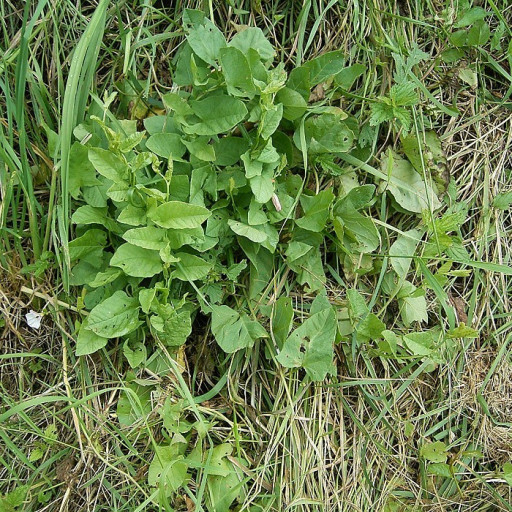
Plant Overview
Often called the "Wild Morning Glory" or "Creeping Jenny," Convolvulus arvensis is the ultimate survivor of the plant world. While its delicate, trumpet-shaped blossoms look like they belong in a fairytale cottage garden, this plant is actually one of the most persistent and successful "hitchhikers" on the planet. Originating in Europe and Asia, it has now woven its way into landscapes globally, earning a reputation for being nearly indestructible.
🔍 How to Identify
- 🌸 The Flowers: Elegant, funnel-shaped blooms that are usually white or pale pink. They are about 1 inch wide and often have subtle pink stripes radiating from the center.
- 🍃 The Leaves: Distinctly shaped like an arrowhead or a spade, with two pointed lobes at the base. They grow alternately along the stem.
- 🌀 The Growth Habit: A low-growing vine that twists counter-clockwise. It will aggressively climb up fences, stems of other plants, or simply carpet the ground in a dense green mat.
🏡 In Your Garden
- ⚓ The Deep Anchor: This plant is famous for its massive root system. Its taproot can descend up to 20 feet underground, making it incredibly drought-tolerant and nearly impossible to pull out entirely by hand.
- 🤺 The Master Competitor: In a garden setting, it acts like a "strangler." It uses other plants as scaffolding, often shading them out or weighing them down. If you find it in your flower beds, it’s best to address it early before it entwines with your prized perennials.
- 🌱 The Soil Indicator: It thrives in disturbed soils and loves full sun. Seeing it in your yard often indicates that the soil is hardy and mineral-rich, as it rarely settles for poor, compacted ground.
⚠️ Safety & Toxicity
- 🐾 Mildly Toxic: While not usually fatal, Convolvulus arvensis contains alkaloids that can be harmful if ingested in large quantities.
- 🐎 Livestock Warning: It is particularly problematic for horses and grazing animals, as it can cause digestive upset or more serious intestinal issues if it makes up a large portion of their forage.
- 👶 Human Precaution: It is best to keep children from picking and eating the flowers or leaves, as they can cause vomiting or stomach pain.
✨ Fun Fact
Convolvulus arvensis is a true time traveler. Its seeds are incredibly hardy and can remain dormant in the soil for over 50 years, waiting for the perfect moment to sprout and reclaim the garden!

Detailed Care Instructions
To grow Convovulus arvensis, commonly known as field bindweed, follow these steps:
- Soil preparation: Choose a site with well-drained, fertile soil. Field bindweed can tolerate various soil types but thrives in loamy or sandy soil. Remove any debris, weeds, or rocks from the area.
- Planting: Sow the seeds directly in the ground in spring after the frost has passed. Scatter the seeds on the soil surface, then gently press them into the soil to ensure good seed-to-soil contact. Alternatively, you can start the seeds indoors 4-6 weeks before the last expected frost date and transplant the seedlings outdoors when they are around 4-6 inches tall.
- Watering: Keep the soil consistently moist, but not waterlogged, during the germination period. Once the plants are established, water deeply but infrequently, allowing the soil to dry between waterings. Field bindweed is drought-tolerant and can survive with minimal water.
- Sun exposure: Choose a spot that receives full sun, as field bindweed prefers bright sunlight. Ensure the plants get at least 6-8 hours of direct sunlight each day.
- Mulching: Apply a layer of organic mulch, such as wood chips or straw, around the plants. Mulching helps retain soil moisture, suppresses weeds that may compete with the bindweed, and protects the plant's roots.
- Pruning and training: As field bindweed is a climbing vine, you may need to provide some support, such as stakes or trellises, for the plants to climb. Train the vines to climb the desired structure. Additionally, regularly prune or trim the plants to promote bushier growth and prevent excessive spreading.
- Weed management: Field bindweed can be invasive, so it's crucial to manage it to prevent it from overpowering other plants. Carefully remove any bindweed shoots or roots that emerge outside of the designated area to control its spread. Avoid allowing bindweed to grow and spread in areas where it is unwanted.
Remember that field bindweed can be aggressive and challenging to eradicate once established. Therefore, consider growing it with caution, especially in gardens where indigenous plants may be affected.

Place in a bright room that is sun drenched almost all day. Or directly in a south-facing window.

Convolvulus Arvensis plant requires regular watering to maintain its growth and development. Proper watering techniques are essential for the plant's health and well-being. When watering this plant, ensure that the soil is moist but not waterlogged. Overwatering can lead to root rot and fungal diseases, which can be fatal to the plant.
To water Convolvulus Arvensis plant, first, check the soil's moisture level by sticking your finger into the soil up to the first knuckle. If the soil is dry, it's time to water the plant. The best time to water is early morning or late afternoon when the temperatures are cooler.
Use a watering can or hose with a gentle flow to water the plant. Direct the water towards the base of the plant, avoiding the leaves as much as possible. Water deeply until the soil is thoroughly saturated, but avoid creating standing water around the roots.
In hot weather or dry conditions, the Convolvulus Arvensis plant may require more frequent watering. Pay close attention to the soil's moisture level and adjust your watering schedule accordingly. Avoid watering during periods of heavy rain or high humidity.
In summary, water Convolvulus Arvensis plant regularly, but be careful not to overwater. Check soil moisture levels regularly and adjust watering as necessary. Direct water towards the base of the plant and avoid saturating the leaves. Water in the early morning or late afternoon, and avoid watering during periods of high humidity or heavy rainfall.
To fertilize this plant, it is recommended to use a balanced fertilizer with equal amounts of nitrogen, phosphorus, and potassium. The fertilizer should be applied in the early spring, at the beginning of the growing season. It is important to follow the instructions on the fertilizer label, as over-fertilization can lead to damage to the roots and leaves of the plant. Additionally, it is recommended to water the plant thoroughly after fertilization to ensure that the nutrients are absorbed into the soil and roots.
When growing this plant, it is recommended to use a well-draining soil that is rich in organic matter. The soil pH level should be slightly acidic to neutral, with a range of 6.0 to 7.0. It is important to avoid using heavy or compacted soil, as the roots need room to spread out and breathe. A sandy loam mixture is often preferred, as it provides good drainage while also retaining some moisture. This plant prefers to grow in full sun to partial shade, so it is best to plant it in an area that receives plenty of direct sunlight for most of the day. To help the soil retain moisture, it is recommended to mulch around the base of the plant with a layer of organic matter such as compost or bark chips. When watering, it is important to avoid overwatering as this can lead to root rot or other diseases. Instead, water the plant deeply once or twice a week, depending on the conditions in your area. Overall, providing this plant with the right soil and growing conditions can help it thrive and produce beautiful flowers throughout the growing season.
To propagate this plant, you will need to obtain stem cuttings from a mature plant. Cut a stem that is approximately 4-6 inches in length, making sure to remove any leaves from the bottom of the stem. Dip the cut end of the stem into rooting hormone powder to encourage root growth. Then, plant the stem cutting in moist soil and keep it in a location with indirect sunlight. Mist the soil regularly to keep it moist and be patient as the stem begins to develop roots and grow into a new plant.








