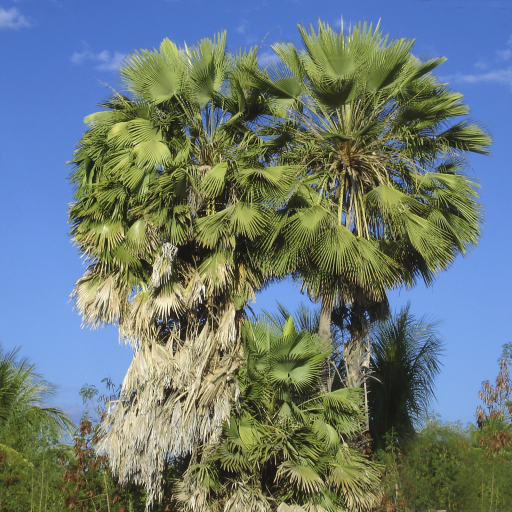
Plant Overview
Known as the "Tree of Life" in its native Brazil, the Copernicia prunifera, or Carnauba Palm, is a symbol of resilience. It thrives in the semi-arid climates of South America by producing a thick, protective wax on its leaves to lock in moisture during the blistering dry season. This "queen of waxes" isn't just a survival mechanism; it’s a global commodity used in everything from high-end car polish to the shiny coating on your favorite candies.
🔍 How to Identify
- 🍃 The Foliage: Look for stiff, fan-shaped (palmate) leaves that spread out in a circular crown. The leaves often have a distinctive blue-green or "glaucous" hue due to the heavy wax coating.
- 🦷 The Petioles: The stalks connecting the leaves to the trunk are armed with short, sharp, recurved teeth (spines) along the edges—a clear "keep away" sign for herbivores.
- 🪵 The Trunk: Young trees have a trunk covered in a "criss-cross" pattern of old leaf bases. As the tree matures, the trunk becomes smooth, slender, and light gray, reaching heights of up to 40 feet.
🏡 In Your Garden
- ☀️ Sun & Heat Lover: This palm is built for the sun. It requires full light to produce its characteristic wax and will struggle in shady or damp, cool corners.
- 💧 Drought Specialist: Once established, the Carnauba is incredibly drought-tolerant. It prefers well-draining, sandy soil and hates "wet feet." In a landscape setting, it’s best for xeriscaping or coastal gardens where salt spray might be an issue.
- 🐢 Slow and Steady: Don't expect a privacy screen overnight. This palm grows very slowly, making it a great long-term structural plant that won't quickly outgrow its space.
⚠️ Safety & Toxicity
- 🟢 Non-Toxic: The Carnauba palm is generally considered non-toxic to humans, dogs, and cats. In fact, many parts of the tree are traditionally used for food.
- ⚔️ Physical Hazard: While not poisonous, the sharp spines along the leaf stalks can cause painful scratches or puncture wounds. Always wear heavy gloves when pruning or handling fronds.
✨ Fun Fact
The Carnauba wax harvested from this tree is the hardest natural wax known to man. It has such a high melting point that it’s used to coat pharmaceutical pills and even "shiny" chocolates like M&Ms to keep them from melting in your hands!

Detailed Care Instructions
Growing Copernicia prunifera, commonly known as the Carnauba Palm, requires understanding its native habitat and mimicking those conditions as closely as possible. Here is a step-by-step guide to help you grow this remarkable palm:
1. Seed Selection and Preparation:
- Acquire seeds: Purchase fresh seeds from a reputable supplier, as Carnauba Palm seeds have a better germination rate when they are fresh.
- Soak seeds: Soak the seeds in warm water for 48 hours to soften their hard outer shell. You can change the water daily to keep it fresh.
2. Germination:
- Prepare the soil: Use a well-draining soil mix, such as a combination of river sand and peat moss. Ensure the soil is loose and airy.
- Plant seeds: Sow the seeds about 1 inch deep in the prepared soil mix.
- Maintain moisture: Keep the soil consistently moist but not waterlogged. Use a spray bottle to mist the soil surface regularly.
- Provide warmth: Create a warm environment with temperatures between 75-85°F (24-29°C). Using a seedling heat mat can help maintain consistent warmth.
3. Transplanting Seedlings:
- Wait for sprouting: Germination can take several weeks to a few months. Be patient and keep the soil moist and warm.
- Transplant once sprouted: When the seedlings have grown a few inches tall and developed a few leaves, you can transplant them into individual pots.
- Use appropriate soil: Use a well-draining potting mix, preferably designed for palms or cacti.
4. Care and Maintenance:
- Light requirements: Carnauba Palms prefer full sunlight. Place the plant where it can receive at least 6-8 hours of direct sunlight daily.
- Watering: Water the plant regularly but allow the soil to dry out between watering sessions. Overwatering and poor drainage can lead to root rot.
- Fertilization: Feed the palm with a balanced, slow-release fertilizer designed for palms. Follow the manufacturer’s recommendations for application frequency and dosage.
- Temperature and humidity: Carnauba Palm thrives in warm temperatures and moderate to high humidity. It is suitable for USDA hardiness zones 10-11.
5. Long-Term Care:
- Pruning: Remove dead or damaged fronds to maintain the plant’s appearance and health.
- Pest management: Monitor for common pests such as spider mites, mealybugs, and scale insects. Treat infestations promptly with appropriate insecticidal soap or neem oil.
- Repotting: Repot the plant every 2-3 years or when it outgrows its pot. Select a slightly larger pot with good drainage.
Tips:
- Outdoor planting: If you live in a suitable climate (USDA zones 10-11), you can plant Carnauba Palm directly in the ground. Ensure the site has well-draining soil and receives full sun.
- Cold protection: If you live in a colder climate, grow the palm in a container that can be moved indoors during winter.
By providing the right conditions and care, you can successfully grow a healthy Carnauba Palm. This slow-growing palm will reward you with its striking appearance and resilience over time.

Place in a bright room that is sun drenched almost all day. Or directly in a south-facing window.

Watering Copernicia prunifera, a type of palm tree, involves careful attention to its natural preferences and environmental conditions. Here are the detailed guidelines for watering it successfully:
1. **Initial Establishment**:
- When the plant is newly planted, water it deeply to help establish its root system. During the first few weeks, maintain a consistent watering schedule to keep the soil moist but not waterlogged.
2. **Watering Frequency**:
- **Young Plants**: For young specimens, regular watering is essential. Water them 2-3 times per week, ensuring the soil remains consistently moist.
- **Mature Plants**: Once the plant is established (after about one year), it becomes more drought-tolerant. Water it more sparingly, perhaps once a week, depending on the climate and soil conditions.
3. **Soil Moisture**:
- Use well-draining soil to prevent water from pooling around the roots. Sandy or loamy soils are ideal.
- Check the soil moisture by inserting your finger about 2 inches into the soil. If it feels dry at this depth, it’s time to water.
4. **Watering Method**:
- Water the base of the plant thoroughly to ensure the roots receive sufficient moisture. Avoid watering the foliage to prevent fungal diseases.
- Use a soaker hose or drip irrigation system for more efficient watering, particularly in arid climates.
5. **Environmental Factors**:
- **Temperature**: In hotter climates, increase the frequency of watering to prevent dehydration. Conversely, in cooler climates, reduce watering frequency.
- **Humidity**: In areas with high humidity, reduce water frequency as the plant can draw moisture from the air.
- **Rainfall**: Adjust your watering schedule based on seasonal rainfall. If there has been significant rain, reduce supplemental watering.
6. **Signs of Overwatering or Underwatering**:
- **Overwatering**: Signs include yellowing leaves and root rot. Ensure adequate drainage and reduce watering frequency.
- **Underwatering**: Symptoms may include wilting or browning leaf tips. Increase watering frequency, especially during dry spells.
7. **Mulching**:
- Apply a layer of mulch around the base of the plant. Mulching helps retain soil moisture, reduce evaporation, and moderate soil temperature. Use organic mulch like wood chips or bark.
By following these guidelines, you can provide optimal watering care for Copernicia prunifera, ensuring healthy growth and development.
Copernicia prunifera, a type of palm, thrives with the right care regimen. Here are fertilizing instructions tailored for it:
- Type of Fertilizer: Use a slow-release, balanced palm fertilizer with essential micronutrients such as magnesium, manganese, and iron. A typical NPK ratio suitable for palms is 8-2-12 or 8-4-12.
- Frequency: Fertilize the plant three to four times a year—preferably in the growing seasons (spring and summer). Avoid fertilizing in late fall and winter when the plant's growth naturally slows.
- Application Method:
- Granular Fertilizer: Spread the fertilizer evenly on the soil around the base of the plant, extending slightly beyond the canopy (drip line) to cover the entire root zone. Avoid direct contact with the trunk to prevent burning.
- Water Soluble Fertilizer: If using a liquid fertilizer, dilute it according to the manufacturer's instructions and apply it directly to the soil or as a foliar spray.
- Granular Fertilizer: Spread the fertilizer evenly on the soil around the base of the plant, extending slightly beyond the canopy (drip line) to cover the entire root zone. Avoid direct contact with the trunk to prevent burning.
- Quantity: Follow the specific instructions on the fertilizer packaging for dosage recommendations. Generally, for slow-release fertilizers, 1 to 1.5 pounds per 100 square feet of planting area is a good starting point.
- Watering: Water the plant thoroughly after applying fertilizer to help it absorb the nutrients. Ensure that the soil is well-draining to prevent nutrient leaching and root rot.
- Soil Testing: Conduct soil tests periodically to monitor soil pH and nutrient levels. Adjust fertilizer composition based on test results to address any specific deficiencies or imbalances.
- Observation: Regularly monitor the health and growth of the plant. Signs of nutrient deficiency, such as yellowing leaves, can indicate the need for additional fertilization or adjustments in the type of fertilizer used.
Consistent and appropriate fertilization, combined with proper watering and care, will help ensure the vigorous growth and health of Copernicia prunifera.
Copernicia prunifera thrives in soils that offer adequate drainage and aeration, which are essential for its root health. Ideally, this plant prefers sandy or loamy soils with a neutral to slightly acidic pH range, typically between 6.0 and 7.5. These soil types allow for optimal water infiltration and root penetration, which are crucial for the plant's overall growth and vigor.
To enhance soil fertility and structure, incorporating organic matter such as compost or well-rotted manure can be beneficial. This addition not only provides essential nutrients but also improves soil texture and moisture retention capacity. If the soil in your area is heavy clay or compacted, amending it with sand or perlite can help to increase its permeability and prevent waterlogging, which can be detrimental to Copernicia prunifera.
Regular soil testing is recommended to monitor nutrient levels and pH, ensuring that any deficiencies or imbalances can be promptly addressed. Mulching around the base of the plant can also help retain soil moisture, regulate temperature, and suppress weed growth, contributing to a healthier growing environment for Copernicia prunifera.
Propagating Copernicia prunifera can be an interesting and rewarding process. It typically involves using seeds. Here are the steps to propagate this plant:
Seed Collection
- Fruit Harvesting: Collect mature fruits from a healthy parent plant. These fruits usually turn brown or black when fully ripe.
- Seed Extraction: Remove the flesh from the fruit to obtain the seeds. This can be done by soaking the fruits in water to soften the pulp, then scrubbing it off to reveal the seeds.
Seed Preparation
- Cleaning: Clean the seeds thoroughly to remove any remaining fruit pulp. This helps prevent fungal infections and increases the chances of successful germination.
- Drying: Allow the seeds to dry in a shaded area for a few days to improve their viability.
Germination
- Soil Preparation: Prepare a well-draining germination mix. A combination of sand, perlite, and peat moss works well.
- Sowing: Plant the seeds about 1 cm deep in the germination mix. Ensure the seeds are covered lightly with soil.
- Watering: Water the seeds gently but thoroughly. Keep the soil consistently moist but not waterlogged.
- Temperature: Maintain a warm environment with temperatures around 25-30°C (77-86°F).
Seedling Care
- Light: Place the containers in a location where they receive filtered sunlight. Avoid direct sunlight as it can scorch the young seedlings.
- Watering: Continue to keep the soil moist. Use a spray bottle for gentle watering to avoid disturbing the seeds.
- Transplanting: Once the seedlings have grown a few leaves and are large enough to handle, transplant them into individual pots with well-draining soil.
Growing On
- Location: Eventually, move the young plants to a sunny location and gradually acclimate them to full sun.
- Soil: Plant in a well-draining soil mixture, ideally sandy or loamy soil.
- Watering: Water the plants regularly, especially during dry periods. Ensure the soil dries out between watering to prevent root rot.
Continued Care
- Fertilization: Feed the plants with a balanced fertilizer during the growing season to encourage healthy growth.
- Pruning: Remove any dead or damaged fronds to maintain the plant's appearance and health.
- Pest and Disease Management: Monitor for common pests and diseases, and treat them promptly if they occur.
By following these steps, you can successfully propagate and cultivate Copernicia prunifera plants from seeds.








