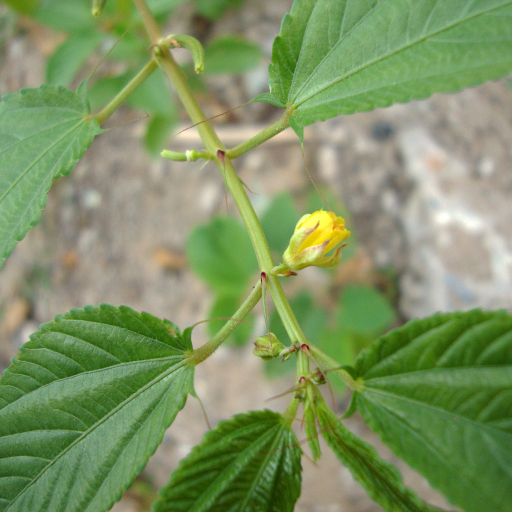
Plant Overview
Known as the "King's Vegetable" or "Molokhia," this ancient leafy green has been a staple in Middle Eastern and African diets for millennia. Legend has it that a soup made from these leaves once cured an Egyptian ruler of a mysterious illness, earning it a reputation as a royal superfood. While gardeners love it for its nutritious foliage, the world knows its tougher side as one of the primary sources of jute fiber used to make burlap and rope.
🔍 How to Identify
- 🍃 Leaf Base Bristles: Look closely at the base of the serrated, oval leaves. You will find two distinct, hair-like bristles (auricles) protruding from the bottom—a signature "ID card" for this species.
- 🌼 Golden Blooms: It produces small, inconspicuous yellow flowers with five petals. These usually appear in small clusters in the junctions where the leaf meets the stem.
- 📏 Cylindrical Pods: After flowering, it develops long, upright seed pods that look like skinny, ribbed okra. This distinguishes it from its cousin, Corchorus capsularis, which has round pods.
🏡 In Your Garden
- ☀️ Heat Lover: This is a true summer crop. While spinach and lettuce wither in the heat, Corchorus olitorius thrives. It requires full sun and warm nights to reach its full height, which can top six feet in ideal conditions.
- ✂️ The "Cut and Come Again" Method: To keep the leaves tender for cooking, pinch off the top 6–8 inches of the plant regularly. This prevents the plant from getting "leggy" and encourages it to grow bushier and more productive.
- 💧 Thirsty Roots: While it is relatively hardy, the leaves can become bitter and the stems can turn woody if the plant is stressed by drought. Keeping the soil consistently moist ensures a "silky" texture for culinary use.
⚠️ Safety & Toxicity
- 🥗 Safe for Humans: The leaves are entirely edible and highly nutritious, packed with vitamins A, C, and E. When cooked, they create a viscous, okra-like texture.
- 🐾 Pet Safety: It is generally considered non-toxic to cats and dogs. However, as with any garden plant, if a pet consumes a large quantity, they may experience mild digestive upset.
- 🌾 Maturation Note: As the plant matures, the stems become incredibly fibrous and indigestible. If growing for food, always harvest the young, tender tips.
✨ Fun Fact
🏺 A Pharaoh's Feast: In ancient Egypt, "Molokhia" was so highly prized for its health benefits that certain Caliphs reportedly banned the general public from eating it, reserving the plant exclusively for the nobility and the royal court!

Detailed Care Instructions
To grow Corchorus Olitorius, also known as Jute Leaves or Molokhia, you can follow these steps:
- Climate and soil requirements: Corchorus Olitorius thrives in warm and tropical climates. It requires well-drained soil with good organic matter content.
- Seeds: Obtain fresh Corchorus Olitorius seeds from a reputable supplier or garden store.
- Seed preparation: Soak the seeds in clean water for 24 hours before planting. This helps to soften the seed coat and improve germination.
- Planting: Plant the seeds in small pots or directly in the ground. Place multiple seeds in each pot or create rows if planting in the ground. Plant the seeds about 1 cm deep.
- Sunlight: Place the pots or choose a planting location that receives full sun to partial shade.
- Watering: Keep the soil consistently moist but not waterlogged. Water the plants regularly, especially during dry periods.
- Growth and care: Corchorus Olitorius typically grows quickly. Once the seedlings emerge, thin them out to allow space for the remaining plants to grow. Apply a balanced organic fertilizer once a month to promote healthy growth.
- Pruning: Maintain the plants at a manageable height by pruning the top growth as needed.
- Weed control: Regularly remove any weeds that compete with the Corchorus Olitorius plants for nutrients and water.
- Pests and diseases: Keep an eye out for common pests like aphids and spider mites. Treat any infestations promptly with organic or chemical pest control methods. Corchorus Olitorius is relatively disease-resistant, but if you spot signs of diseases, consult a professional for appropriate treatment.
- Harvesting: Harvest the leaves when they are young and tender, usually about 4 to 6 weeks after planting. Cut the leaves a few inches above the base of the plant, allowing it to regrow. Regular harvesting will promote continuous growth and a higher yield.
- Storage: Use the harvested leaves immediately, as they tend to wilt quickly. If needed, you can store them in the refrigerator for a few days.
Remember, the specific requirements for growing Corchorus Olitorius may vary, so it's always a good idea to research and adapt the instructions to your specific growing conditions.

Place in a bright room that is sun drenched almost all day. Or directly in a south-facing window.

To water the plant, make sure to check the soil moisture levels by inserting a finger or hand into the soil at least two inches deep. If the soil feels dry, water the plant deeply until the water runs from the drainage holes. Offer water to the plant 2-3 times per week depending on the temperature and humidity of the environment. Avoid getting water on the foliage as this can lead to fungal growth.
- Begin fertilizing the plant after the seedlings have established themselves.
- Use a balanced fertilizer with a ratio of 10-10-10 or 20-20-20.
- Apply fertilizer to the soil around the base of the plant, taking care not to get any on the leaves.
- Water the plant immediately after fertilizing to help distribute the nutrients throughout the soil.
- Apply fertilizer every 4-6 weeks during the growing season, starting in spring and ending in fall.
- Monitor the plant for signs of over-fertilization, such as yellowing of the leaves or stunted growth.
- Adjust the amount and frequency of fertilization as needed based on the plant's response and the soil conditions.
The ideal soil for Corchorus Olitorius plants should be well-draining and rich in organic matter. It should have a pH level between 6.0 and 7.5. Sandy loam or loamy soil that has good water retention properties is suitable for this plant. The soil should be fertile, and the addition of compost or well-rotted manure can improve soil fertility. The soil should also be free from any harmful substances or chemicals that may harm the plant. It is recommended to loosen the soil before planting to ensure good root growth and development. Additionally, the plant should be watered regularly, but excessive watering should be avoided as it can lead to water-logging of the soil.
Corchorus Olitorius plant can be propagated through asexual methods such as stem cuttings or layering. To propagate through stem cuttings, select a healthy mature stem from the parent plant and cut it at a 45-degree angle using a sharp, sterile knife. Remove the lower leaves, leaving only a few near the tip of the cutting. The cutting should be approximately 4-6 inches long.
Dip the cut end of the stem into a rooting hormone powder and plant it in a pot filled with well-draining soil. Water the cutting thoroughly and place it in a bright, indirect light area. Keep the soil moist and the cutting should start rooting within a few weeks.
To propagate through layering, select a low-growing branch from the parent plant and bend it down towards the ground. Make a small cut or nick on the underside of the branch where it will come in contact with the soil. Cover this cut with a layer of soil and anchor the branch down with a garden staple or rock. Water the area regularly and the branch should start rooting within a few weeks. Once the new roots have formed, cut the branch from the parent plant and transplant it to a new location.
It is important to note that asexual propagation only produces clones of the parent plant and may limit genetic diversity. Therefore, it is recommended to also propagate through sexual methods such as seed propagation.
Common pests of the jew's-mallow include Spider mites, aphids, thrips. Make a habit of checking your jew's-mallow frequently for pests so that any infestations can be caught and managed early.








