Plant Overview
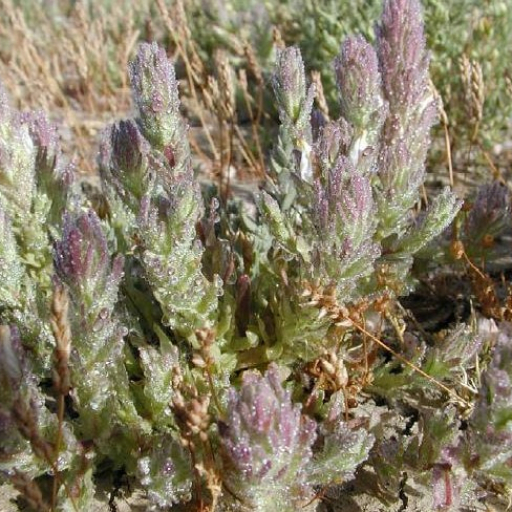
Known as the Palmate-bracted bird's beak, this rare California native is a master of survival in harsh, salty "alkali sinks." It is a botanical rebel that often looks like it has been dusted with a light frost, but that "frost" is actually salt excreted by the plant itself. Currently listed as an endangered species, spotting this plant in the wild is like finding a living piece of California’s ancient landscape.
🔍 How to Identify
- 🌿 The Foliage: The leaves are grayish-green and typically covered in tiny, glistening salt crystals that the plant "sweats" out to survive its environment.
- 🖐️ Palmate Bracts: Just below the flowers, you'll find "bracts" (specialized leaves) that are deeply lobed and spread out like the fingers on a palm.
- 🐦 Bird’s Beak Flowers: The blossoms are fuzzy, white to pale yellow, and have a distinct curved shape that looks remarkably like the open beak of a baby bird.
🏜️ Habitat & Ecology
- 💧 The Salt Specialist: This plant thrives in alkali flats—areas where water evaporates and leaves behind heavy concentrations of salt and minerals that would kill most other vegetation.
- 🔗 A "Half" Parasite: It is technically hemiparasitic. While it has green leaves and performs photosynthesis, it uses specialized roots called haustoria to "plug into" the roots of neighboring plants like saltgrass to steal extra water.
- ☀️ Summer Bloomer: While most California wildflowers bloom in the spring, the Bird's Beak waits for the intense heat of May through October to show off its flowers.
⚠️ Safety & Toxicity
- 🟢 Status: This plant is non-toxic to humans and pets; however, its status as a federally endangered species is its most important "safety" feature.
- 🚫 Legal Protection: It is strictly protected by law. It is illegal to pick, move, or disturb this plant in the wild.
- 🧤 Handling: Because it is so specialized and fragile, even the oils from human skin or the trampling of soil near its roots can be detrimental to its survival.
✨ Fun Fact
This plant has a "biological desalinization" system. It drinks salty water that would dehydrate other plants, filters the salt through specialized glands, and pushes the crystals out onto its surface. This actually helps the plant stay cool by reflecting the intense desert sun!

Detailed Care Instructions








