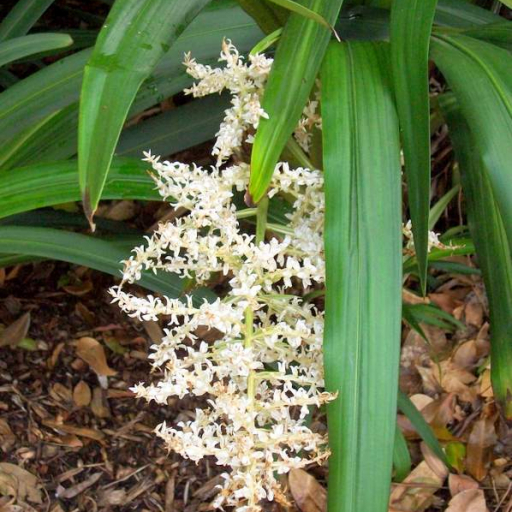
Plant Overview
Often called the Narrow-leaved Palm Lily, this elegant Australian native brings a touch of wild rainforest sophistication to any garden or bright indoor space. Unlike its broader-leaved cousins, this species is prized for its slender, fountain-like appearance and its ability to thrive in the deep shade of the forest understory. It is a slow-growing storyteller of the coastal scrubs, offering a timeless, architectural look.
🔍 How to Identify
- 🍃 Slender Foliage: The leaves are remarkably narrow and sword-shaped, often reaching up to 20 inches in length but staying very thin, giving the plant a delicate, airy texture.
- 🌸 Summer Blooms: It produces branched clusters of tiny, fringed flowers that range from white to a soft, misty purple.
- 🍒 Bright Berries: After flowering, the plant develops small, succulent berries that turn a vivid orange or deep red, providing a sharp contrast against the green foliage.
🏡 In Your Garden
- 🌦️ Shade Specialist: Because its ancestors evolved on the rainforest floor, this plant is a champion of low-light areas. It hates the harsh afternoon sun, which can quickly bleach or scorch its narrow leaves.
- 🪴 Drainage is Key: While it loves a humid environment and consistent moisture, it is sensitive to "wet feet." It prefers a rich, organic soil mix that allows excess water to move away from the roots quickly to prevent rot.
- ✂️ Growth Habit: It tends to grow as a multi-stemmed shrub. If it becomes too "leggy" or tall, you can safely prune the tops to encourage a bushier, more compact shape from the base.
⚠️ Safety & Toxicity
- 🐾 Toxic to Pets: Caution is necessary. This plant contains saponins, which are toxic to dogs and cats. If nibbled, it can cause drooling, vomiting, and loss of appetite.
- 👶 Human Safety: While not considered deadly to humans, the berries are not edible and should be kept away from curious children. The sap may also cause mild skin irritation in sensitive individuals.
✨ Fun Fact
The "congesta" in its scientific name refers to the way the flowers and leaves are "congested" or tightly packed together on the stems, a unique trait that helps distinguish it from other Palm Lilies in the wild!

Detailed Care Instructions
To properly water the Cordyline Congesta plant, you should first assess the soil moisture level by inserting your finger into the soil up to about one inch deep. If it feels dry, it is time to water the plant. Fill a watering can or pitcher with room temperature water and slowly pour it onto the soil around the base of the plant until the water starts to run out of the bottom of the pot or container. Be sure not to overwater the plant as it can lead to root rot. You should water the plant whenever the soil feels dry, but always allow the top inch of soil to dry out before watering again. Avoid getting water on the leaves or stem of the plant as it can lead to fungal diseases.
For optimal growth and health of the Cordyline Congesta plant, it is recommended to use a well-draining soil that is rich in organic matter. The ideal composition of the soil should be a mixture of sand, perlite, and peat moss or coconut coir. This allows for proper aeration and moisture retention, while also providing the necessary nutrients for the plant to thrive. It is important to avoid using heavy, clay soils or soils that retain too much moisture, as this can lead to root rot and other fungal diseases. Additionally, adding a layer of mulch around the base of the plant can help to retain soil moisture and regulate temperature.








