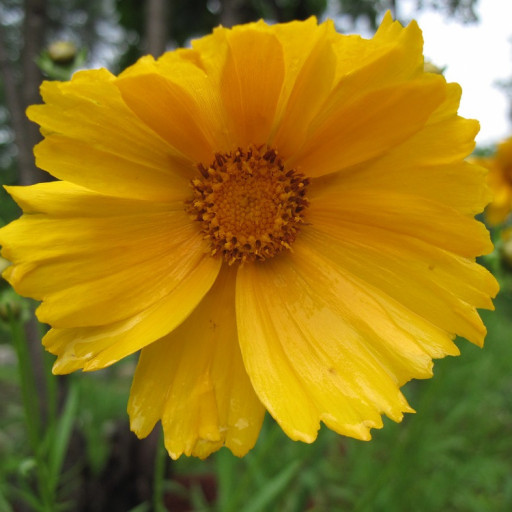
Plant Overview
Commonly known as the Large-flowered Tickseed, this North American native is like a concentrated burst of sunshine for your flower bed. Its name, Coreopsis, comes from the Greek words for "bug" and "view," a nod to its small, dark seeds that look remarkably like tiny ticks. Despite the unglamorous name, it is a champion of the summer garden, loved for its ability to bloom tirelessly through heat and drought.
🔍 How to Identify
- 🌼 The Blooms: Large, daisy-like flowers that are typically a brilliant, golden yellow. The petals feature distinctively notched or "toothed" tips, giving them a fringed appearance.
- 🍃 The Foliage: Deep green leaves that are narrow and lance-shaped. The lower leaves are often deeply lobed, creating a lush, textured mound beneath the flowers.
- 🌱 Growth Habit: It grows in tidy, bushy clumps. While it looks delicate, the stems are surprisingly wiry and tough, designed to withstand summer breezes.
🏡 In Your Garden
- ☀️ The Sunshine Rule: This plant is a sun-worshiper. While it can tolerate a little shade, it needs full sun to prevent its stems from becoming "leggy" or flopping over.
- ✂️ The Deadheading Trick: To keep the golden show going all summer, you must remove spent flowers. If you let it go to seed too early, the plant will stop producing new buds.
- 🏜️ Tough Love: Coreopsis grandiflora actually prefers "lean" soil. If you give it too much rich compost or fertilizer, it grows too fast and loses its sturdy shape. It is highly drought-tolerant once established.
⚠️ Safety & Toxicity
- ✅ Safe for All: This plant is considered non-toxic to humans, dogs, and cats.
- 🦋 Wildlife Friendly: While safe for pets, it is a magnet for "good" visitors. It is an essential nectar source for native bees and butterflies, making it a perfect choice for an ecological or "pollinator" garden.
✨ Fun Fact
In the language of flowers, Coreopsis represents "always cheerful." Historically, some indigenous North American tribes used the flowers to create a bright mahogany-red dye for blankets and clothing.

Detailed Care Instructions
| Humidity | Normal |
| Lighting | Full Sun |
| Difficulty | Medium |
| Temperature | 21°C - 26°C |
| Hardiness Zones | 1 - 11 |
To grow Coreopsis Grandiflora, follow these steps:
- Location: Choose a sunny location for planting the Coreopsis Grandiflora. It requires at least 6 to 8 hours of direct sunlight each day.
- Soil Preparation: The soil should be well-draining and fertile. If your soil is heavy or clayey, consider adding organic matter such as compost to improve drainage and provide nutrients.
- Planting: Dig a hole slightly larger than the root ball of the plant. Place the Coreopsis Grandiflora in the hole, making sure the top of the root ball is level with the soil surface. Fill the hole with soil, gently pressing it down to eliminate air pockets.
- Watering: Water the newly planted Coreopsis Grandiflora thoroughly, saturating the soil. Maintain regular watering to keep the soil moist but not waterlogged during the plant's establishment period. Once established, Coreopsis Grandiflora is drought-tolerant and requires minimal watering.
- Fertilizing: Apply a balanced slow-release fertilizer at the beginning of the growing season. Follow the package instructions for the recommended dosage. Avoid excessive use of nitrogen-rich fertilizers, as this can promote excessive foliage growth at the expense of flower production.
- Mulching: Apply a layer of organic mulch around the base of the plant to conserve moisture, suppress weed growth, and regulate soil temperature.
- Pruning: To encourage continuous blooming, deadhead the faded flowers regularly by removing them at the base of the stem. This will redirect energy to new flower production.
- Division: Every few years, Coreopsis Grandiflora may become overcrowded, leading to reduced blooming. To rejuvenate the plant, divide it in early spring or fall. Dig up the clump and separate it into smaller sections, making sure each section has roots and shoots. Replant the divided sections in well-prepared soil.
- Pest and Disease Control: Coreopsis Grandiflora is generally resistant to pests and diseases. However, watch out for aphids, snails, slugs, and powdery mildew. Promptly treat any infestations or diseases using appropriate organic or chemical controls.
By following these steps, you can successfully grow Coreopsis Grandiflora and enjoy its beautiful flowers throughout the growing season.

Place in a bright room that is sun drenched almost all day. Or directly in a south-facing window.

To water this plant, it is important to provide a deep and thorough watering regimen that reaches the entire root system. Ensure that the soil is well-draining and does not become water-logged as this can lead to root rot. Water the plant regularly and monitor soil moisture levels, especially during periods of drought or high temperatures. Avoid spraying water directly on the foliage as this can increase the risk of fungal diseases. Additionally, consider using a layer of mulch around the base of the plant to help retain soil moisture and prevent weeds.
To fertilize this plant, you should first wait until it is visibly growing and producing new shoots. Then, mix a balanced fertilizer that is high in nitrogen, phosphorus, and potassium. Apply this fertilizer to the soil around the base of the plant, taking care not to get any on the foliage. Water the plant thoroughly after fertilizing to help the nutrients absorb into the soil. Reapply fertilizer every four to six weeks throughout the growing season. Be sure to follow the manufacturer's instructions for the fertilizer you choose, as application rates may vary depending on the product.
For optimal growth and health, a well-draining soil mixture is recommended for this plant. The soil mixture should include a combination of organic matter such as compost and peat moss, along with sand or perlite to improve drainage. It is important to avoid using heavy clay soils, as they can retain excess moisture and cause root rot. Additionally, the soil should be slightly acidic to neutral in pH, with a range of 6.5-7.5. Fertilization can also be beneficial, using a balanced NPK fertilizer during the growing season.
To propagate this plant, you will need to:
- Prepare the soil: Choose a well-draining and fertile soil mix. Use a pot or a seedling tray with drainage holes.
- Take cuttings: Cut 3 to 4 inch long sections of the stems using a sharp knife or pruning shears. Choose healthy stems with leaves and nodes.
- Remove the leaves: Remove the bottom leaves of the cutting, leaving only the top 2-3 leaves.
- Dip the cuttings in rooting hormone: Dip the cuttings in rooting hormone powder to promote root growth.
- Plant the cuttings: Make a small hole in the soil mix, and insert the cutting into it. Press the soil gently around the stem to secure it in place.
- Water the cuttings: Water the cuttings thoroughly, and place them in a warm, bright, and humid location. Cover the pot or tray with a clear plastic bag to increase humidity levels.
- Wait for roots to form: Roots usually form in 3 to 4 weeks. Check for root growth by gently tugging at the stem. If it resists, it has rooted.
- Transplant the rooted cuttings: Once the cuttings have rooted, transplant them into a larger pot or into the garden. Gradually expose them to direct sunlight over a few days. Water them regularly to keep the soil moist.
Common pests of the large-flowered tickseed include Aphids. Make a habit of checking your large-flowered tickseed frequently for pests so that any infestations can be caught and managed early.








