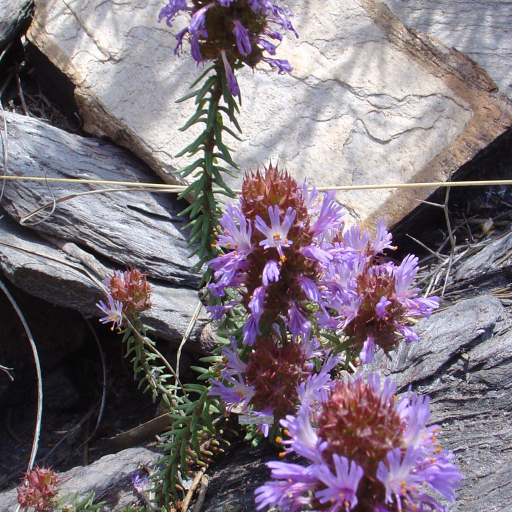
Plant Overview
Known as the "Montpellier Coris" or "Mediterranean Lila," this hardy little survivor paints the rocky slopes of Southern Europe in shades of purple and gold. While it might look like a delicate herb at first glance, it is a tough subshrub that thrives where other plants wither—clinging to sun-scorched limestone cliffs and dry coastal scrublands.
🔍 How to Identify
- 🌸 Floral Clusters: The small, two-lipped flowers range from lilac to deep violet, often featuring bright orange-yellow anthers that stand out like tiny sparks in the center.
- 🌿 Needle-like Foliage: The leaves are small, narrow, and crowded along the stem, closely resembling thyme or heather to help the plant retain moisture in dry heat.
- 🪵 Woody Base: It grows as a "subshrub," meaning it develops a tough, woody base over time with soft, upright herbaceous growth reaching about 10–30 cm high.
🏡 In Your Garden
- ☀️ Sun Worshiper: This plant is a true Mediterranean native; it craves intense, full sun and will quickly lose its compact shape or fail to bloom if kept in even partial shade.
- 🪨 The "Anti-Mud" Rule: In a garden setting, it is the perfect candidate for rockeries or xeriscaping. It despises "wet feet," so ensure your soil is sandy, gritty, and exceptionally well-draining to prevent root rot during winter.
⚠️ Safety & Toxicity
- ✅ Low Risk: Coris monspeliensis is not considered a high-risk toxic plant for humans.
- 🐾 Pet Caution: While not famously poisonous, it contains saponins which can cause mild stomach upset or nausea if pets ingest the foliage. As with most ornamental plants, it is best kept away from curious chewers.
✨ Fun Fact
🧬 A Surprising Relative: Despite looking almost exactly like a member of the Thyme or Mint family, the Montpellier Coris is actually a member of the Primrose family (Primulaceae). It is a rare example of a primrose relative that has evolved to survive harsh, salty, and arid coastal conditions.

Detailed Care Instructions
| Humidity | Normal |
| Lighting | Part Sun |
| Difficulty | Medium |
To grow Coris monspeliensis (Mediterranean Mock Purslane) plant, follow these steps:
- Climate and Soil: This plant prefers a Mediterranean-like climate with mild winters and hot, dry summers. It thrives in full sun to partial shade. The soil should be well-draining and sandy or loamy.
- Seeds or Seedlings: You can start growing Coris monspeliensis from seeds or purchase young seedlings from a nursery.
- Sowing from Seeds:
- Sow the seeds in early spring after the last frost date or in early fall.
- Prepare a seedbed by removing any weeds and loosening the soil.
- Scatter the seeds over the soil surface and lightly press them into the soil.
- Water gently to keep the soil moist but not waterlogged.
- Germination should occur within 2-4 weeks.
- Thin the seedlings to allow adequate space for growth.
- Sow the seeds in early spring after the last frost date or in early fall.
- Transplanting Seedlings:
- If you choose seedlings, ensure they are healthy and about 4-6 inches tall.
- Dig holes in the prepared soil, spaced 6-8 inches apart.
- Gently remove the seedlings from their containers and place them in the holes.
- Backfill with soil and firm it around the roots.
- Water thoroughly after transplanting to help establish the plants.
- If you choose seedlings, ensure they are healthy and about 4-6 inches tall.
- Watering and Care:
- Water the plants regularly during their first growing season to establish a good root system.
- Once established, reduce watering and let the soil dry out between waterings.
- Avoid overwatering, as this plant is drought-tolerant.
- Apply a layer of mulch around the plants to help retain moisture and suppress weeds.
- Prune back any dead or damaged growth in late winter or early spring.
- Water the plants regularly during their first growing season to establish a good root system.
- Pest and Disease Control:
- Coris monspeliensis is generally disease and pest resistant.
- However, keep an eye out for aphids, slugs, or snails, and take appropriate measures if necessary.
- Coris monspeliensis is generally disease and pest resistant.
- Propagation:
- Coris monspeliensis can also be propagated by dividing established clumps in early spring.
- Dig up the clump carefully, separate it into smaller sections, and replant them in well-prepared soil.
With proper care, Coris monspeliensis should thrive and produce attractive, pink flowers that will add beauty to your garden.
- Coris monspeliensis can also be propagated by dividing established clumps in early spring.

Place in a bright room that is sun drenched almost all day. Or directly in a south-facing window.

To water Coris Monspeliensis, it is important to follow certain guidelines to ensure the proper hydration of the plant:
1. Observe Moisture Levels: Before watering the plant, check the moisture levels of the soil. Insert your finger about an inch deep into the soil near the base of the plant to feel for moisture. If the soil feels dry, it's time to water. However, if it is still moist, wait a few more days before watering.
2. Watering Container Plants: If your Coris Monspeliensis is potted, gently pour water into the soil until it starts to drain out of the bottom. This ensures that water reaches the roots thoroughly. Avoid letting the plant sit in standing water, as it can lead to root rot.
3. Watering Outdoor Plants: If your Coris Monspeliensis is planted in a garden bed or outdoor area, you can provide water by using a watering can or hose. Aim the water towards the base of the plant, ensuring it gets deep into the soil rather than just wetting the surface.
4. Consider the Surrounding Environment: Coris Monspeliensis prefers to grow in well-draining soil. If your plant is placed in a container, make sure it has drainage holes to prevent waterlogging. If growing in a garden bed, ensure the soil is adequately aerated and doesn't retain excessive moisture.
5. Frequency of Watering: Coris Monspeliensis requires regular watering, especially during hot and dry periods. However, it is crucial to avoid overwatering, as this can lead to root rot and other issues. Water the plant when the soil feels dry to touch, but do not let the soil completely dry out between watering sessions.
6. Adjust Watering during Seasons: Tailor the watering frequency based on the season. During the warmer months, when the plant is actively growing, it may require more frequent watering. In colder months or during dormancy, reduce the amount of water given, as the plant's water requirements decrease.
7. Monitor the Plant's Response: Regularly observe your Coris Monspeliensis for signs of underwatering or overwatering. Wilting leaves, yellowing, or browning of foliage could indicate under watering, while mushy roots, leaf drop, or a foul odor may indicate overwatering. Adjust your watering practices accordingly.
Remember that these guidelines may vary depending on your specific climate, soil type, and other environmental factors. Adjust watering practices accordingly and ensure you provide the appropriate amount of water to keep your Coris Monspeliensis plant healthy and thriving.
To fertilize Coris Monspeliensis, follow these instructions:
- Choose a balanced, water-soluble fertilizer with an NPK (Nitrogen, Phosphorus, Potassium) ratio of around 10-10-10 or similar. This will provide essential nutrients for the plant's growth and overall health.
- Dilute the fertilizer according to the manufacturer's instructions. Typically, you'd mix a specific amount of fertilizer with a certain volume of water.
- Apply the diluted fertilizer to the soil around the base of the plant. Take care not to directly pour the fertilizer onto the leaves or stem, as this may cause damage.
- Use enough fertilizer solution to moisten the soil, but avoid over-fertilization. Too much fertilizer can lead to nutrient imbalances or burn the roots. If using a granular fertilizer, lightly scratch it into the soil around the plant before watering.
- Avoid fertilizing during the plant's dormant period or when it's experiencing stress, such as extreme heat or cold. Generally, it's best to fertilize during the growing season, which is typically spring through summer.
- Monitor the plant's growth and appearance after fertilization. If you notice any signs of over- or under-fertilization, such as yellowing leaves or stunted growth, adjust the frequency or amount of fertilization accordingly.
- Regularly water the plant, especially after fertilization, to help distribute the nutrients and prevent any potential build-up in the soil.
Remember, each plant has specific requirements, so observing how Coris Monspeliensis responds to fertilization will give you valuable information on fine-tuning your fertilizing routine.
The ideal soil type to use for Coris Monspeliensis plants is well-draining and slightly acidic. It should have a loose texture that allows for good airflow and root aeration. The soil should also be rich in organic matter to provide essential nutrients for the plant's growth and development. Additionally, a sandy loam soil with good water retention properties is beneficial, as it prevents excessive drying out of the plant's roots.
It is important to avoid using heavy clay soils, as they tend to retain too much water and can lead to root rot. Similarly, using a soil that is too compacted or dense can restrict root growth and hinder the overall health of the plant.
To enhance the soil quality further, you can incorporate organic amendments such as compost, well-rotted manure, or peat moss. These additions improve the soil's fertility, moisture-holding capacity, and overall structure.
Regularly monitoring and adjusting the pH of the soil is crucial, as Coris Monspeliensis plants prefer a slightly acidic environment, with a pH range of around 5.5 to 6.5. You can use pH testing kits to determine the soil's acidity level and adjust it accordingly using appropriate products available at gardening centers.
Remember to maintain proper watering practices, as overwatering or underwatering can negatively impact the plant's health. By ensuring the soil is well-draining, you can prevent waterlogging and promote adequate moisture levels, leading to optimal growth conditions for the Coris Monspeliensis plant.
Propagation of the Coris Monspeliensis plant can be achieved through various methods, including seed propagation and vegetative propagation. Here are some detailed steps on how to propagate this plant:
- Seed Propagation:
- Collect ripe seeds from a healthy and mature Coris Monspeliensis plant. Wait until the seeds are fully developed.
- Clean the seeds by removing any debris or remaining fruit pulp.
- Prepare a well-draining seed raising mix by combining equal parts of sterile potting soil and coarse sand or perlite.
- Fill small seed trays or pots with the seed raising mix, leaving some space at the top for watering.
- Sow the Coris Monspeliensis seeds evenly on the surface of the mix. Do not bury them as they need light to germinate.
- Gently press the seeds into the mix to ensure good contact between the seed and the soil.
- Mist the surface of the tray or pot with water to moisten the soil.
- Cover the tray or pot with a plastic dome or place it in a clear plastic bag to create a mini greenhouse effect.
- Place the tray or pot in a warm location with indirect light, maintaining a temperature between 70-80°F (21-27°C).
- Ensure the soil remains consistently moist but not waterlogged.
- Germination typically occurs within 2-4 weeks. Once the seedlings have developed 2-3 sets of true leaves, they can be transplanted into individual pots.
- Collect ripe seeds from a healthy and mature Coris Monspeliensis plant. Wait until the seeds are fully developed.
- Vegetative Propagation:
- Choose a healthy Coris Monspeliensis plant with well-developed stems.
- Use a clean and sharp knife or pruning shears to cut a 4-6 inch (10-15 cm) stem from the parent plant.
- Remove any leaves from the bottom of the stem, leaving only a few at the top.
- Dip the cut end of the stem in a rooting hormone powder to encourage root formation (optional).
- Prepare a well-draining potting mix using a combination of sterile potting soil and perlite or sand.
- Make a hole in the mix using a pencil or your finger.
- Insert the stem into the hole and gently press the soil around it to provide stability.
- Mist the soil surface with water to settle it around the cutting.
- To create a greenhouse-like environment, place a clear plastic bag or a plastic dome over the pot to maintain high humidity.
- Position the pot in a bright but indirect light location, avoiding direct sunlight.
- Mist the cutting occasionally to keep the humidity levels up.
- After a few weeks, gently tug on the cutting to check for resistance, indicating the development of roots.
- Once the cutting has developed a healthy root system, it can be carefully transplanted into a larger pot or into the ground.
Remember to provide appropriate care and maintenance for the new plants, such as regular watering, suitable lighting conditions, and proper nutrition, to ensure their healthy growth and development.
- Choose a healthy Coris Monspeliensis plant with well-developed stems.








