Plant Overview
Hailing from the mountainous regions of Northern China, Cornus bretschneideri is a master of seasonal transitions. Often called the Bretschneider’s Dogwood, this elegant deciduous shrub is a favorite for those who want their garden to look alive even in the dead of winter. It is a "living painting" that shifts its palette from lush greens to deep purples and reds as the temperatures drop.
🔍 How to Identify
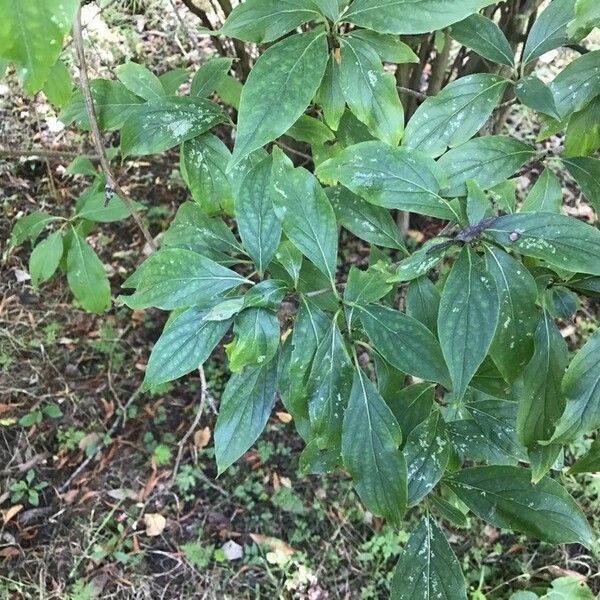
- 🌿 The Foliage: Look for elliptic to ovate leaves with distinct, deeply impressed veins that curve toward the tip—a classic Dogwood trait.
- 🌼 The Blooms: In early summer, it produces dense, flat-topped clusters (cymes) of creamy-white flowers that lack the large, showy bracts of the Flowering Dogwood but offer a delicate, lacy texture.
- 🍒 The Fruit: As autumn approaches, the flowers turn into small, spherical drupes that transition from green to a deep, glossy black.
- 🍷 The Winter Stems: Once the leaves fall, the young branches reveal a stunning purplish-red or reddish-brown bark that stands out beautifully against white snow or grey winter skies.
🏡 In Your Garden
- 💧 Thirsty Roots: This species thrives in moist, well-drained soil rich in organic matter. It is particularly useful for those "damp spots" in the garden where other shrubs might struggle with root rot.
- ✂️ Pruning for Color: The most vibrant stem color occurs on new growth. To keep your garden glowing in winter, many gardeners practice "coppicing" (cutting the oldest stems to the ground) every few years to encourage fresh, colorful shoots.
- 🐦 Wildlife Magnet: While the flowers attract various pollinators, the black berries are a high-energy snack for migratory birds during the fall.
⚠️ Safety & Toxicity
- 🟢 General Status: Cornus bretschneideri is considered non-toxic to humans and common pets like dogs and cats.
- 👅 Mild Irritation: While not poisonous, the berries are bitter and can cause mild stomach upset if ingested in large quantities by curious children or pets. The leaves may also cause very minor skin irritation in people with highly sensitive skin during pruning.
✨ Fun Fact
This plant is named after Emil Bretschneider, a famous 19th-century Russian physician and botanist who served at the Russian Legation in Beijing. He was responsible for introducing dozens of unique Chinese species to Western botanical gardens!

Detailed Care Instructions
To grow Cornus Bretschneideri, also known as Chinese dogwood or Bretschneider's dogwood, follow these steps:
- Choose a suitable location: Cornus Bretschneideri prefers partially shaded areas with moist, well-draining soil. It can tolerate full sun but may require more watering in hot weather.
- Prepare the soil: Ensure the soil is rich in organic matter and well-draining. Amend the soil with compost or well-rotted manure before planting to improve its fertility and drainage.
- Planting: Dig a hole that is wide and deep enough to accommodate the plant's root ball. Place the plant in the hole and backfill it with soil, firming gently around the base. Ensure the plant is at the same level as it was in the pot or nursery.
- Watering: Water the newly planted Cornus Bretschneideri thoroughly to settle the soil. Keep the soil consistently moist but not waterlogged. Water deeply once a week during dry periods or as needed.
- Mulching: Apply a layer of organic mulch, such as wood chips or bark, around the base of the plant. This helps retain moisture, suppress weeds, and keep the soil temperature stable.
- Pruning: Prune Cornus Bretschneideri during the dormant season (late winter or early spring). Remove any dead or damaged branches and shape the plant as desired. Pruning is generally minimal, as Cornus Bretschneideri has an attractive natural growth habit.
- Fertilization: Apply a balanced slow-release fertilizer in early spring to promote healthy growth. Follow the dosage instructions on the fertilizer package.
- Pests and diseases: Cornus Bretschneideri is relatively pest and disease resistant. However, it may occasionally be susceptible to diseases like powdery mildew or pests like aphids. Monitor the plant regularly and take necessary measures, such as using organic insecticides or fungicides if needed.
- Winter protection: Cornus Bretschneideri is hardy in USDA zones 5-8. In colder areas, provide winter protection by mulching the base of the plant with a thick layer of organic mulch or covering it with burlap if needed.
Remember to research and consider the specific growing conditions in your region to ensure the best care for your Cornus Bretschneideri plant.
To properly water this plant, check the moisture level of the soil every few days by using your finger to feel the top layer of soil. If it feels dry to the touch, it is time to water. Use a watering can or hose to water the plant at the base, being careful not to get water on the leaves or flowers. Water the plant deeply, making sure the soil is thoroughly saturated. Allow the soil to drain before replacing the plant in its container or bed. During periods of hot weather or extended dry periods, increase the frequency of watering to prevent the soil from becoming too dry.
To fertilize this plant, apply a balanced fertilizer at a rate of 1 tablespoon per square foot around the base of the plant in early spring before new growth appears. Water the plant thoroughly after fertilizing to ensure that the nutrients are absorbed by the roots. Repeat this process every 4-6 weeks during the growing season. Avoid over-fertilizing as this can cause damage to the plant.
Cornus Bretschneideri is a deciduous shrub that requires a well-draining soil that is rich in nutrients. The soil should be loamy, with a pH range between 5.5 to 7.5. Clay soils should be avoided as they can become waterlogged, depriving the roots of oxygen.
It is recommended to use a soil mix that contains a blend of peat moss, perlite, and vermiculite to improve drainage. Adding organic matter like composted bark or leaf mold will help retain moisture and promote healthy root growth. The soil should be kept consistently moist, but not waterlogged.
The plant prefers a soil that is slightly acidic, so adding some soil acidifier is recommended if the soil is alkaline. Nitrogen-rich fertilizers should be applied in the spring to promote healthy foliage growth. The plant prefers full sun to partial shade and should be planted in an area that receives at least six hours of direct sunlight per day.
Cornus Bretschneideri can be propagated through the process of stem cuttings. The first step is to take a cutting from a healthy and mature plant. The cutting should be about 6 inches long and should contain at least 3 nodes.
The next step is to prepare the rooting medium. A mix of peat moss and perlite or vermiculite is ideal for this purpose. The mix should be moist but not too wet.
Remove the lower leaves from the cutting and dip the end in rooting hormone powder. Insert the cutting into the rooting medium, making sure that at least one node is buried in the mix.
Cover the pot with a plastic bag or a clear plastic dome to create a mini greenhouse effect. Place the pot in a warm and bright place, but avoid direct sunlight.
After a few weeks, check for rooting by carefully pulling on the cutting. If you feel resistance, it means that roots have started to grow. At this point, remove the plastic covering and gradually acclimate the new plant to its surroundings.
Transplant the new plant into a larger pot or into the garden when it has several sets of leaves and a strong root system.








