Plant Overview
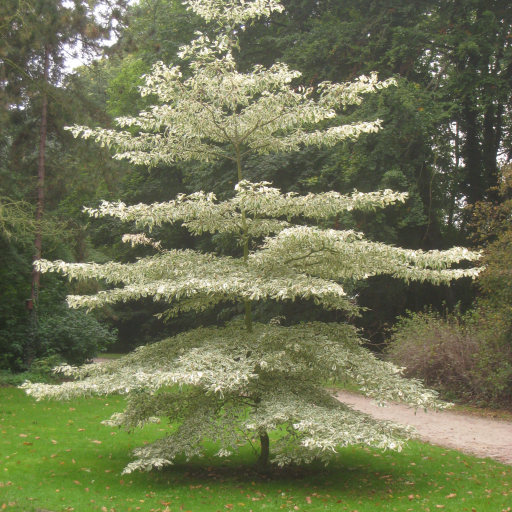
Often called the "Wedding Cake Tree," Cornus controversa is the architect of the garden. Its perfectly level, horizontal branches create a striking tiered effect that looks like a masterpiece of botanical engineering. Native to the mountain forests of East Asia, it brings a sense of Zen-like calm and structural drama to any landscape it inhabits.
🔍 How to Identify
- 🌳 Layered Branching: The most iconic feature is its growth habit; branches grow in distinct, flat horizontal tiers that resemble the layers of a grand cake.
- 🍃 Alternate Leaves: Most dogwoods have leaves that grow in pairs (opposite), but this species is unique because its broad, oval leaves grow one at a time along the stem (alternate).
- ☁️ Creamy Clusters: In late spring, the tree is covered in flat, lacy clusters of tiny creamy-white blossoms that sit upright on top of the leafy branches like a dusting of snow.
🏡 In Your Garden
- 💧 Moisture & Soil: This tree is a "thirsty" beauty. It thrives in rich, acidic, well-draining soil that stays consistently moist. It will show its displeasure with drooping leaves if the ground dries out during summer heat.
- 🌍 Space to Spread: Because its beauty lies in its horizontal "arms," it needs plenty of room. Planting it in a cramped corner or too close to a wall will ruin its symmetrical, tiered silhouette.
- ✂️ Hands-off Pruning: The best advice for this tree is to put the shears away. Its natural architecture is its greatest asset, and heavy pruning often destroys the very tiers that make it famous.
⚠️ Safety & Toxicity
- 🐾 Low Toxicity: The tree is generally considered non-toxic to humans, but the small blue-black berries can cause mild stomach upset if ingested by children or pets.
- 🧤 Skin Sensitivity: Some gardeners find the fine hairs on the leaves slightly irritating to the skin, so wearing gloves during light maintenance is recommended for those with sensitive skin.
✨ Fun Fact
The Latin name controversa was given to the tree because it caused a botanical "scandal" when discovered. At the time, all dogwoods were defined by having opposite leaves; this tree’s alternate leaf arrangement was so controversial it forced scientists to rethink the entire genus!

Detailed Care Instructions
To grow Cornus controversa, also known as the Wedding Cake Tree or Giant Dogwood, you can follow these steps:
- Climate and Location: Ensure that your gardening zone is suitable for Cornus controversa. It generally grows well in temperate regions with evenly distributed rainfall. Choose a location with partial shade to full sun exposure.
- Soil Preparation: Cornus controversa prefers well-draining soil. Amend the soil with organic matter, such as compost, to improve its fertility and drainage capacity.
- Planting: Select a healthy sapling from a reputable nursery. Dig a hole twice as wide and as deep as the root ball of the plant. Place the sapling in the hole, ensuring that the top of the root ball is level with the ground. Backfill the hole with soil, gently pressing it down to eliminate air pockets. Water the sapling thoroughly after planting.
- Watering: Cornus controversa prefers moist soil but not waterlogged conditions. Water the plant regularly, especially during dry periods. A layer of organic mulch around the base of the plant will help conserve moisture and suppress weeds.
- Pruning: Prune dead, damaged, or diseased branches as necessary. Additionally, you can selectively trim branches to maintain the desired shape of the tree. Pruning is typically done in late winter or early spring.
- Fertilization: Apply a balanced organic fertilizer in early spring and again in late spring if needed. Follow the manufacturer's instructions for dosage and application.
- Pests and Diseases: Cornus controversa is generally resistant to pests and diseases. However, common issues may include aphids, powdery mildew, or root rot. Monitor your plant regularly and take appropriate measures, such as using organic insecticidal soap for aphids or fungicides for mildew, if necessary.
- Winter Protection: In areas with harsh winter conditions, it may be necessary to provide mulch or additional protection to the root zone to prevent damage or frost heaving.
Remember to consult local gardening resources or experts for specific regional considerations and recommendations for growing Cornus controversa.

Place in a bright room that is sun drenched almost all day. Or directly in a south-facing window.

To water this plant, it is recommended to check the soil moisture level regularly. This can be done by inserting a finger into the soil, about an inch deep. If the soil feels dry, it is time to water the plant. When watering, it is important to give the plant a deep watering, rather than a light one. This will help the roots to grow deeper, making the plant stronger and more resilient. It is also important to water the plant at the base rather than from above, as this can help prevent fungal diseases. Additionally, it is advisable to avoid overwatering, as this can cause root rot and damage the plant.
To fertilize this plant, use a balanced granular fertilizer with equal parts nitrogen, phosphorus, and potassium. Apply the fertilizer in early spring before new growth emerges and again in early summer. Spread the fertilizer evenly around the drip line of the plant and then water deeply. Avoid fertilizing late in the growing season as this can encourage late growth that is susceptible to winter damage.
The best soil for the Cornus Controversa plant is one that is well-draining and moderately fertile. It should be slightly acidic to neutral, with a pH ranging from 5.5 to 7.5. Ideally, the soil should be rich in organic matter and have a good balance of nutrients, including nitrogen, phosphorus, and potassium. In terms of texture, a loamy soil is recommended, as it offers a good balance of water retention and drainage. Soil should be moist, but not waterlogged, and should never be allowed to dry out completely. Additionally, the plant prefers full sun to partial shade, and should be planted in an area that is protected from strong winds.
Cornus Controversa can be propagated through cutting or layering methods. For cutting, take a 6-inch stem cutting in late spring or early summer from a healthy plant. Remove the lower leaves and dip the cut end in rooting hormone powder. Plant the cutting in a well-draining soil mixture and keep moist but not waterlogged. Place the cutting in a bright, shaded area and wait for roots to form in 4 to 6 weeks.
For layering, select a healthy and flexible branch from the parent plant and strip off the leaves at the bottom 12 inches of the branch. Bury the stripped section in a well-draining soil mixture, leaving only the top of the branch exposed. Secure the branch in place with a stake or wire. Keep the soil moist but not waterlogged and wait for roots to form from the section buried in soil. Once roots have formed, cut the branch off from the parent plant and transplant into a larger container or directly into the ground.
Propagation through seed is also possible, but can take several years before the plant reaches maturity and blooms.








