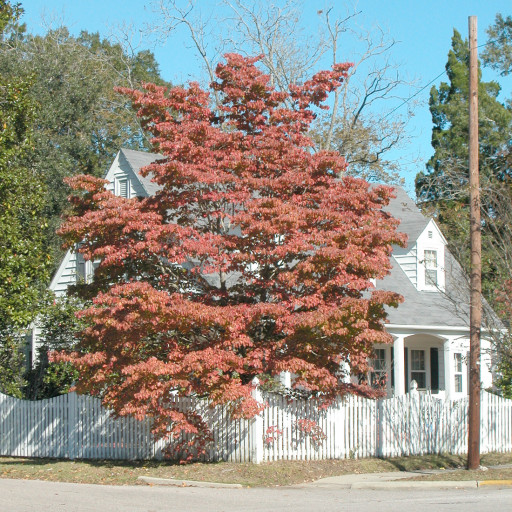
Plant Overview
Known as the jewel of the Eastern North American forest, the Flowering Dogwood is a four-season superstar. From its "clouds" of spring blossoms to its vibrant crimson autumn foliage and unique "alligator skin" bark, it is a favorite for home landscapes. Beyond its beauty, it holds a deep place in folklore, with many legends suggesting its cross-shaped blooms were designed to carry ancient symbolic meanings.
🔍 How to Identify
- 🌸 The "False" Flowers: What look like four large white or pink petals are actually modified leaves called bracts. Look for the distinct, dark "notches" at the tip of each bract that look like tiny bite marks.
- 🍃 Curving Veins: The oval-shaped leaves feature a "pinnate" vein pattern where the veins curve inward, gracefully following the leaf's edge toward the tip.
- 🐊 Alligator Bark: As the tree matures, the greyish-brown bark breaks into small, square blocks, creating a texture remarkably similar to alligator scales.
🏡 In Your Garden
- 🌳 The Understory King: Naturally growing beneath larger oaks and maples, this tree prefers "dappled sunlight." While it can handle sun, harsh afternoon heat may scorch the leaves, while deep shade will result in fewer flowers.
- 💧 Sensitive Roots: The Dogwood has a relatively shallow root system. It thrives in acidic, well-drained soil but is very sensitive to drought. A thick layer of mulch is its best friend, as it helps keep the root zone cool and moist.
- 🌬️ Airflow is Key: This species is susceptible to powdery mildew and anthracnose. To keep it healthy, avoid "crowding" it with other shrubs and never water the leaves directly; focus your irrigation at the base of the trunk.
⚠️ Safety & Toxicity
- 🐾 Pet Safety: Cornus florida is generally considered non-toxic to dogs and cats, though chewing on the hard wood or consuming large amounts of foliage can cause mild stomach upset.
- 🍒 Bitter Berries: The bright red autumn fruits are a vital food source for songbirds but are not for humans. If eaten by people, they can cause rashes, nausea, and vomiting.
✨ Fun Fact
The showy white "petals" are actually a clever survival strategy! Because the true flowers (the tiny green bunch in the center) are so small, the tree grew these massive white bracts to act as "landing pads" to flag down passing bees and butterflies from a distance.

Detailed Care Instructions
| Humidity | Normal |
| Lighting | Part Sun |
| Difficulty | Medium |
| Hibernation | Cold Period |
| Temperature | 10°C - 30°C |
| Hardiness Zones | Min 5A |
To grow a Cornus Florida plant, also known as flowering dogwood, follow these steps:
- Choose a suitable location: Cornus Florida plants prefer partial shade or full sun, but they need protection from strong winds. They also prefer fertile, well-drained soil.
- Planting: Dig a hole that is wider and deeper than the root ball of the plant. Place the plant in the hole, making sure the top of the root ball is level with or slightly above the soil surface. Backfill the hole with the soil, firming it gently around the roots.
- Watering: Irrigate the plant regularly during the first growing season to establish a strong root system. After that, water deeply but infrequently, allowing the soil to dry out slightly between waterings.
- Mulching: Apply a layer of organic mulch around the base of the plant to help retain moisture, regulate soil temperature, and suppress weed growth. Make sure the mulch does not touch the trunk of the plant, as it can cause rot.
- Pruning: Prune the Cornus Florida plant in late winter or early spring, before it begins to bud. Remove any dead or damaged branches and thin out any crowded areas to improve air circulation and overall plant health.
- Fertilizing: Feed the plant with a balanced, slow-release fertilizer in early spring and again in late spring. Follow the manufacturer's instructions for application rates.
- Pest and disease control: Monitor the plant regularly for pests such as aphids, scale insects, and borers. Treat any infestations promptly using appropriate insecticides. Also, keep an eye out for diseases like powdery mildew or spot anthracnose and treat them accordingly.
- Propagation: Cornus Florida can be propagated through seeds, stem cuttings, or by layering. Seeds should be collected in fall and planted immediately or stored in a cool, dry place until spring. Stem cuttings can be taken in summer and rooted in potting soil, while layering involves bending a branch to the ground and partially burying it until it develops roots.
By following these steps and providing the necessary care, you can successfully grow a Cornus Florida plant.

Place in a window with dappled sun or a spot in the middle of a room. Or directly in a window facing west or east.

To water this plant, first ensure that the soil is well-draining and doesn't become waterlogged. Water the plant deeply, ensuring that the soil is moist up to around six inches deep. It's important to water this plant consistently, particularly during periods of drought. However, at the same time, be careful not to overwater it as this can lead to root rot. It's best to monitor the moisture levels of the soil regularly to avoid any problems. In general, this plant prefers to be watered in the mornings or evenings when temperatures are cooler, rather than in the heat of the day.
To properly fertilize this plant, use a balanced fertilizer with equal amounts of nitrogen, phosphorus and potassium. Apply the fertilizer in early spring just before new growth begins, and again in early summer. Follow the manufacturer's instructions for the amount of fertilizer to use per square foot of area. Spread the fertilizer evenly around the base of the plant and water thoroughly. Avoid applying fertilizer late in the growing season, as it can stimulate new growth that may not have time to harden off before winter.
Cornus Florida prefers a soil that is well-draining and slightly acidic. A pH level between 5.5 and 6.5 is ideal. The soil should be rich in organic matter and nutrients, but not too heavy or compacted. A mix of peat moss, compost, and sand can be used to improve drainage and provide nutrients. It is important to ensure that the soil is kept consistently moist but not waterlogged, as this can lead to root rot. Mulching around the base of the plant can help to maintain moisture levels and suppress weed growth. Regular fertilization with a balanced, slow-release fertilizer can also help promote healthy growth and blooming.
There are several ways to propagate the Cornus Florida plant. One method is by taking stem cuttings during the summer months. Carefully select a healthy stem with no damage or signs of disease. The cutting should be around 6 inches long and have at least three leaves. Remove the bottom set of leaves and dip the cut end in rooting hormone before planting the cutting in a pot filled with well-draining soil. Keep the pot in a warm, humid place and water regularly until roots form.
Another method is by layering the plant by bending a low-growing branch to the ground and covering a section of it with soil. After a few months, roots should form and a new plant can be separated from the parent plant and transplanted.
The Cornus Florida plant can also be propagated by collecting seeds in the fall. After the fruit has ripened and turned red, remove the seeds and clean them. The seeds can then be planted in a pot filled with well-draining soil and kept in a cool, dark place. In the spring, the seedlings can be transplanted outdoors.
Regardless of the propagation method, it is important to keep the new plants well-watered and protected from extreme temperatures and sunlight. With proper care, the new plants should establish themselves and grow into healthy, mature plants.
Common pests of the flowering dogwood include Scale insect, larvae. Make a habit of checking your flowering dogwood frequently for pests so that any infestations can be caught and managed early.








