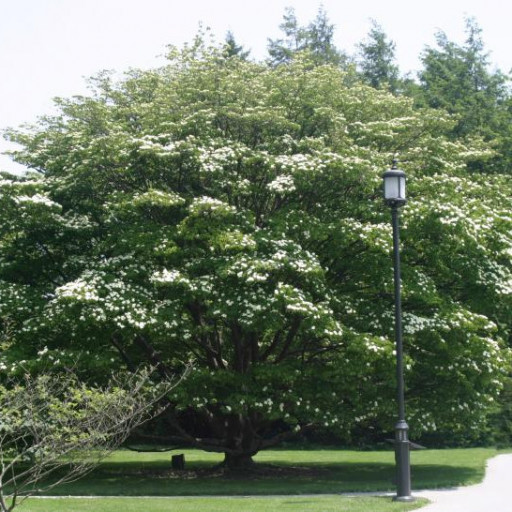
Plant Overview
Often called the Japanese Dogwood, Cornus kousa is the elegant, resilient cousin of the traditional American Dogwood. It is a true four-season showstopper, offering a "snowy" white canopy in early summer and a fiery crimson display in autumn. In many East Asian cultures, its late-season bloom and hardy nature are celebrated as symbols of endurance and refined beauty.
🔍 How to Identify
- 🌸 Pointed Bracts: Unlike the notched, rounded petals of other dogwoods, the Kousa features four sharply pointed, star-shaped creamy white "petals" (which are actually modified leaves called bracts).
- 🍓 The Fruit: In late summer, the tree produces round, bumpy, pinkish-red fruits that look like oversized raspberries or alien strawberries dangling from long, slender stems.
- 🧩 Puzzle-Piece Bark: As the tree matures, the bark begins to exfoliate (peel), creating a beautiful camouflage-like pattern of tan, gray, and rich brown patches.
🏡 In Your Garden
- 🛡️ Disease Resistance: This species is a favorite among landscapers because it is highly resistant to dogwood anthracnose and powdery mildew, two diseases that often claim other dogwood varieties.
- 🍂 Multi-Seasonal Interest: The Kousa doesn't just "quit" after spring; its deep green leaves turn a stunning purple-red in the fall, and its architectural branch structure looks striking even in the winter snow.
- 💧 Moisture Balance: It prefers well-drained, acidic soil. It is more drought-tolerant than its cousins once established, but it hates "wet feet," so avoid planting it in areas where water pools.
⚠️ Safety & Toxicity
- ✅ Generally Safe: The Cornus kousa is considered non-toxic to humans, dogs, and cats.
- 😋 Edible Fruit: Surprisingly, the bumpy red fruits are edible! The skin is tough and bitter, but the inner pulp is sweet and creamy, often compared to the flavor of a mango or apricot.
- 👶 Choking Hazard: While the fruit is safe, the seeds inside are hard; parents should supervise small children to prevent choking if they decide to try a "wild snack."
✨ Fun Fact
The "flowers" of the Kousa Dogwood are masters of deception. The large white petals aren't actually flowers at all—they are "bracts" designed to lure pollinators. The true flowers are the tiny, inconspicuous yellowish-green clusters located right in the very center of the star!

Detailed Care Instructions
| Color | White, Pink And Red |
| Soil Ph | Slightly Acidic |
| Humidity | Normal |
| Lighting | Part Sun |
| Toxicity | Non-Toxic |
| Soil Type | Rich, Well-Drained Soil |
| Bloom Time | May To June |
| Difficulty | Medium |
| Plant Type | Tree |
| Hibernation | Cold Period |
| Mature Size | 15-30 Ft. Tall And Wide |
| Native Area | China, Japan, Korea |
| Sun Exposure | Full To Part Shade |
| Hardiness Zones | 5-8 |
To grow a Cornus kousa plant, also known as the Japanese dogwood, follow these steps:
- Select a suitable planting location: Choose a spot that receives full or partial sunlight and has well-draining soil. Cornus kousa prefers slightly acidic soil but can tolerate a wide range of soil types.
- Prepare the soil: Loosen the soil in the planting area and amend it with compost or well-rotted manure to improve its fertility and drainage. This step is especially crucial if your soil is heavy clay.
- Obtain a healthy plant: Purchase a healthy Cornus kousa sapling from a reputable nursery or garden center. Look for a plant with well-developed roots and no signs of disease or pest damage.
- Planting process: Dig a hole slightly larger and deeper than the plant's root ball. Place the sapling into the hole, making sure the crown (where the stem meets the roots) is level with the soil surface. Backfill the hole with soil, firming it gently around the roots. Water thoroughly after planting.
- Watering: Keep the soil consistently moist but not waterlogged. Water deeply to encourage the roots to grow down into the soil, but avoid overwatering as it can lead to root rot.
- Mulching: Apply a layer of organic mulch around the base of the plant, such as wood chips or bark. Mulching helps retain moisture, suppresses weeds, and insulates the roots from extreme temperatures.
- Pruning: Prune the Cornus kousa plant during its dormant season, typically in late winter or early spring. Remove any dead or diseased branches and thin out any crowded growth to improve airflow and sunlight penetration.
- Fertilizing: Feed the plant with a balanced slow-release fertilizer in spring, following the manufacturer's instructions. Avoid excessive nitrogen fertilizers, as they can promote leafy growth at the expense of flower production.
- Pest and disease control: Monitor the plant regularly for common pests like aphids or scale insects. Treat any infestations promptly using appropriate insecticidal sprays. Cornus kousa is generally resistant to diseases, but occasional issues like powdery mildew may arise. If necessary, treat affected plants with fungicides.
- Winter protection: Young Cornus kousa plants might benefit from winter protection in colder climates. Apply a layer of mulch around the base of the plant and consider covering it with burlap or a similar material to shield it from harsh winter winds and frost.
By following these care guidelines, your Cornus kousa plant should thrive and provide you with beautiful flowers and attractive foliage.

Place in a window with dappled sun or a spot in the middle of a room. Or directly in a window facing west or east.

To water this plant, make sure to saturate the soil around the base of the plant. Watering deeply once or twice a week is better for the plant than frequent shallow watering. Check the moisture level of the soil by sticking your finger about an inch into the soil. If the soil feels dry, it's time to water. Avoid getting water on the leaves, as this can lead to fungal growth. Use a watering can or a hose with a gentle stream to water the plant slowly and evenly. Adjust the frequency of watering based on weather conditions, as the plant may require more water during hot and dry periods.
- Apply an all-purpose fertilizer in early spring before new growth emerges.
- Use a balanced fertilizer, such as a 10-10-10 or 20-20-20 blend.
- Apply the fertilizer at a rate of approximately one pound per 100 square feet of soil.
- Scatter the fertilizer evenly around the plant, avoiding direct contact with the stem or branches.
- Water the plant thoroughly after fertilizing to ensure the nutrients reach the roots.
- Repeat the fertilizer application every three to four weeks throughout the growing season.
- Stop fertilizing in late summer to allow the plant to prepare for winter dormancy.
The ideal soil for the Cornus Kousa plant should be well-drained, fertile, and loamy. Soil with a pH level of 5.5 to 7 is recommended. The plant prefers slightly acidic to neutral soil. The soil should be rich in organic matter and nutrients, with high levels of nitrogen and potassium. A soil that retains moisture is also beneficial for the plant's growth. Avoid using heavy clay soils or soils that are prone to waterlogging. It is suggested to perform a soil test before planting to determine the specific nutrient requirements of the soil.
To propagate this plant, start by taking semi-ripe hardwood cuttings from the plant during the summer months. These cuttings should be about 6 inches (15 cm) long and have several nodes. Remove the leaves from the bottom half of the cutting and dip the cut end in rooting hormone.
Fill a pot with a mixture of equal parts perlite and peat moss and water it well. Make a hole in the center of the pot and insert the cutting. Fill the pot with more of the perlite and peat moss mixture so that the cutting is stable.
Water the cutting regularly and keep it in a warm, humid location with indirect sunlight. You can cover the pot with plastic wrap or a plastic bag to help create a humid environment around the cutting.
After about 2-3 months, the cutting should have developed roots. You can then transplant it into a larger pot or into the ground. Keep the new plant well-watered and protected from direct sunlight until it is established.
Common pests of the japanese dogwood include Scale insect, larvae. Make a habit of checking your japanese dogwood frequently for pests so that any infestations can be caught and managed early.








