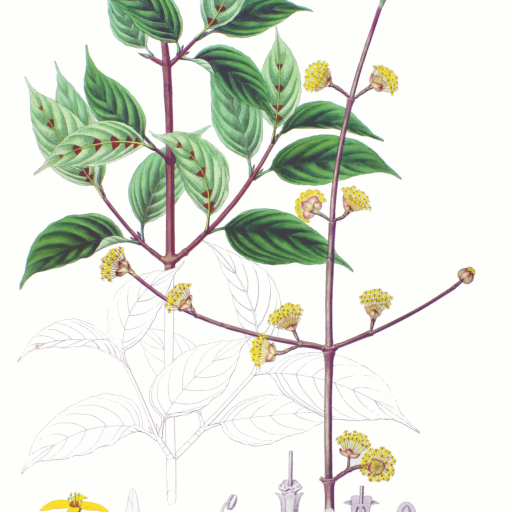
Plant Overview
Often called the "Japanese Cornelian Cherry," this elegant deciduous shrub is one of the first heralds of spring. Long before most plants wake up, it blankets its bare branches in a cloud of tiny, yellow star-shaped blossoms. Reaching back centuries in East Asian history, it is celebrated as much for its "Qi-tonifying" medicinal berries as it is for its resilient, ornamental beauty.
🔍 How to Identify
- 🌼 Early Golden Blooms: Clusters of tiny, bright yellow flowers appear in late winter or very early spring, often while snow is still on the ground and before any leaves emerge.
- 🍃 Curving Veins: The oval leaves have a distinct "arcuate" venation, meaning the veins curve gracefully toward the leaf tip rather than running straight to the edges.
- 🪵 Exfoliating Bark: As the plant matures, its bark becomes a highlight, peeling away in thin, papery flakes of gray and brown to reveal a mosaic of colors underneath.
- 🍒 Ruby Fruits: In late summer, the plant produces oblong, glossy red berries that hang like jewels among the green foliage.
🏡 In Your Garden
- 🐝 A Lifeline for Bees: Because it blooms when few other plants are active, it serves as a critical early-season food source for pollinators emerging from hibernation.
- 🪴 Adaptable Roots: While it prefers moist, well-drained soil rich in organic matter, it is surprisingly "tough as nails," tolerating urban pollution and various soil pH levels once established.
- ✂️ Low Maintenance Shape: It naturally grows as a multi-stemmed large shrub or small tree. It requires very little pruning, making it ideal for gardeners who prefer a "set it and forget it" landscape highlight.
⚠️ Safety & Toxicity
- ✅ Edible Fruits: The berries are non-toxic to humans and are traditionally used in teas, syrups, and jellies, though they are quite tart and astringent until they are fully ripe (almost over-ripe).
- 🐾 Pet Safety: This plant is generally considered non-toxic to dogs and cats. However, as with any fruit, if a pet consumes a large quantity of the pits, it could lead to mild digestive upset or a choking hazard.
✨ Fun Fact
In traditional Chinese medicine, the dried fruit of this plant is known as Shan Zhu Yu. It has been a staple for over 2,000 years and is a key ingredient in the famous "Six Ingredient Rehmannia Pill," believed to boost longevity and kidney health!

Detailed Care Instructions
To grow Cornus Officinalis, also known as Japanese Cornel Dogwood or Cornelian Cherry, follow these steps:
- Climate and soil: Cornus Officinalis is native to temperate regions and grows best in zones 4-8. Choose a planting location that receives full sun to partial shade. The soil should be well-draining and fertile, so amend it with organic matter like compost if necessary.
- Planting: Plant the Cornus Officinalis in early spring or in the fall. Dig a hole that is wide and deep enough to accommodate the root ball of the plant. Place the plant in the hole and backfill with soil, gently firming it around the roots. Water thoroughly.
- Watering: Keep the soil consistently moist but not waterlogged. Water regularly, especially during dry spells. Mulching around the base of the plant can help retain moisture in the soil.
- Fertilizing: In early spring, apply a balanced organic fertilizer around the base of the plant. This will provide the necessary nutrients for growth.
- Pruning: Pruning is not necessary for Cornus Officinalis, but you can remove any dead or damaged branches to maintain a healthy appearance.
- Pests and diseases: Cornus Officinalis is generally resistant to pests and diseases. However, keep an eye out for common issues like aphids, powdery mildew, or leaf spot. Treat any problems promptly.
- Harvesting: Cornelian cherries typically ripen in late summer or early fall. Harvest the bright red fruits when they are fully ripe. They can be eaten fresh, used in cooking, or made into jams and jellies.
- Propagation: Cornus Officinalis can be propagated by seeds or cuttings. Collect seeds from mature fruits and sow them in a well-draining potting mix. For cuttings, take semi-hardwood cuttings in late summer or early fall and root them in a rooting hormone and well-draining potting mix.
Remember that plants may have specific requirements depending on their location and growing conditions, so it's always best to refer to local gardening resources or consult with a horticulturist for specific guidance.

Place in a bright room that is sun drenched almost all day. Or directly in a south-facing window.

Cornus Officinalis plant prefers consistent soil moisture, so it is important to water it regularly, especially during dry spells or hot weather. The soil should be moist but not waterlogged, as this can cause root rot. It is best to water the plant deeply and thoroughly, allowing the soil to soak up the water before watering again. Avoid wetting the leaves, as this can increase the risk of disease. When watering, it is important to avoid getting water on the plant's flowers or fruit as this can cause them to rot prematurely. Additionally, it is important to water the plant early in the day so that any excess moisture can evaporate before nighttime.
To fertilize the Cornus Officinalis plant, use a balanced fertilizer with equal amounts of nitrogen, phosphorus, and potassium. Apply the fertilizer in early spring just before new growth begins and again in early summer after blooming. Be sure to follow the manufacturer's instructions for the amount of fertilizer to use. Avoid over-fertilizing, as this can harm the plant. Water the plant thoroughly after fertilizing to help the nutrients reach the roots.
Cornus Officinalis plant prefers well-draining soil that is rich in organic matter and nutrients. The soil should have a pH of around 6.0 to 7.5. A combination of loam and sandy soil is ideal for this plant as it provides adequate drainage and aeration. It is important to avoid using heavy clay soil as it can retain too much moisture and cause root rot. Adding compost or aged manure to the soil can improve moisture retention and support the growth of beneficial microorganisms. Additionally, regular fertilization is recommended to provide the plant with necessary nutrients. Overall, a well-drained, nutrient-rich soil is essential for optimal growth and health of Cornus Officinalis plant.
Cornus Officinalis plant can be propagated through several methods. One method is through seed propagation. Collect the seeds from the ripe fruit and sow them directly into the soil in a pot or in a seed tray. The pot or tray should be kept in a warm and moist place until the seed germinates. Once the seedlings have grown their first true leaves, they can be transplanted into individual pots or into a permanent location in the garden.
Another method is through stem cuttings. Take a cutting from the plant by cutting a stem that is several inches long with a clean, sharp knife. Remove the leaves from the lower part of the stem and dip it in rooting hormone. Plant the stem cutting in a pot containing moist soil. Keep the soil moist and place the pot in a warm and bright location but not in direct sunlight. Once the cutting has rooted, it can be transplanted to a larger pot or directly into the garden.
Division is another way to propagate Cornus Officinalis plant. Dig up the entire plant and carefully separate the roots into smaller sections. Each section should have a good root system and several stems. Replant the sections into individual pots or directly in the garden.
Layering is also a method of propagation for Cornus Officinalis plant. Select a stem near the base of the plant and bend it toward the ground. Make a small cut in the bark of the stem and lightly cover the area with soil. Wait until roots have formed and then cut the stem from the parent plant. Replant the new plant in a pot or directly in the garden.








