Plant Overview
Known as the Red Osier Dogwood or "Red-twig Dogwood," this North American native is a true four-season showstopper. While many plants fade into the background during winter, the Cornus sericea sets the snowy landscape ablaze with its signature blood-red stems. Historically, its flexible branches were prized by Indigenous peoples for weaving baskets and crafting dreamcatchers, earning it a permanent place in both wild landscapes and home gardens.
🔍 How to Identify
- 🔴 The Stems: Its most striking feature is the bright red to deep burgundy bark on young branches, which becomes most vibrant during the late autumn and winter months.
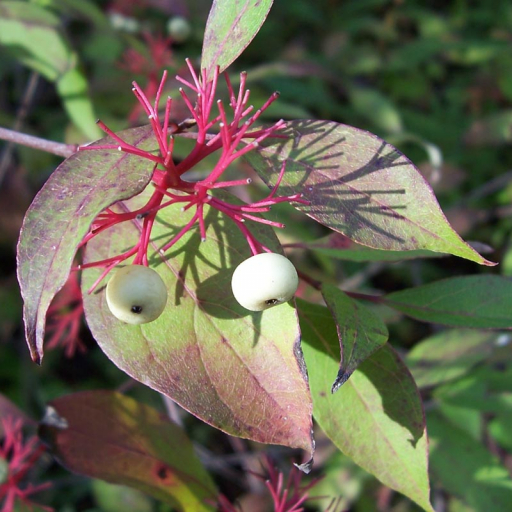
- 🍃 The Leaves: Oval-shaped with smooth edges and distinct veins that curve toward the leaf tip. In autumn, the green foliage transforms into a beautiful palette of purple and reddish-orange.
- 🌼 The Flowers & Fruit: In late spring, it produces flat-topped clusters of tiny creamy-white flowers, which eventually turn into small, waxy white berries (drupes) by late summer.
🏡 In Your Garden
- 💧 The "Wet Feet" Specialist: Unlike many shrubs that rot in soggy soil, this dogwood thrives in damp areas. It is a champion for rain gardens, pond edges, or spots in your yard where water tends to collect.
- ✂️ Pruning for Color: The brightest red color only occurs on young, new growth. To keep your plant looking vibrant, gardeners often use a "renewal pruning" technique, cutting back about one-third of the oldest, grayish stems to the ground each spring.
- 🐦 Wildlife Magnet: It acts as a bustling "nature hotel." The dense thickets provide excellent nesting sites, while the high-fat white berries are a critical food source for over 90 species of birds, including bluebirds and cedar waxwings.
⚠️ Safety & Toxicity
- 🐾 Low Toxicity Status: While not considered "deadly," the berries and leaves contain compounds that can cause mild stomach upset, nausea, or vomiting if ingested in large quantities by pets or curious children.
- 🌿 Skin Sensitivity: Some individuals may experience mild skin irritation (dermatitis) when handling the foliage or stems for long periods. It is always a good idea to wear gloves when pruning.
✨ Fun Fact
The inner bark of the Red Osier Dogwood was a primary ingredient in "Kinnikinnick," a traditional herbal smoking mixture used by various Native American tribes for ceremonial purposes, often mixed with tobacco or other dried herbs.

Detailed Care Instructions
To grow Cornus Sericea, commonly known as redosier dogwood, follow these steps:
- Choosing a suitable location: Cornus Sericea prefers full sun to partial shade. Ensure the area has well-draining soil and enough space for the plant to spread since it can grow up to 12 feet tall and wide.
- Planting method: Dig a hole that is slightly wider and deeper than the root ball of the plant. Place the plant in the hole, ensuring that the soil level matches the top of the root ball. Backfill the hole with soil, gently firming it around the plant. Water thoroughly after planting.
- Watering: Consistent watering is crucial during the establishment period. Water the plant deeply once or twice a week, ensuring the soil stays consistently moist but not waterlogged. After the first year, the plant becomes more drought-tolerant and requires less frequent watering.
- Mulching: Apply a layer of organic mulch around the base of the plant to conserve soil moisture and suppress weeds. Keep the mulch a few inches away from the stems to avoid causing rot.
- Fertilization: Cornus Sericea does not typically require regular fertilization. However, you can apply a balanced slow-release fertilizer in early spring if you feel the need. Follow the instructions on the package for application rates.
- Pruning: Prune Cornus Sericea during late winter or early spring before new growth emerges. This plant benefits from regular pruning to enhance its shape and encourage new colorful stems. Remove any dead, damaged, or crossing branches to maintain a healthy and attractive appearance.
- Pests and diseases: Cornus Sericea is generally resistant to most pests and diseases. However, it can occasionally suffer from issues like powdery mildew or twig borers. Monitor your plant regularly and take appropriate action if any problems arise.
- Winter protection: Cornus Sericea tends to be hardy and can withstand cold temperatures. However, if you live in an extremely cold climate, you can protect the plant during winter by adding a layer of mulch around the base and wrapping the stems with burlap.
By following these steps and providing the necessary care, you should be able to grow healthy and vibrant Cornus Sericea plants.

Place in a window with dappled sun or a spot in the middle of a room. Or directly in a window facing west or east.

The best way to water this plant is to soak the soil deeply and thoroughly, allowing the water to penetrate several inches into the root zone. It is important to avoid getting water on the foliage, which can lead to fungal diseases. Watering should be done regularly, especially during dry spells, but care should be taken not to overwater, which can lead to root rot. Mulching around the base of the plant can help to retain moisture in the soil and reduce the need for frequent watering.
To fertilize this plant, use a balanced fertilizer with a ratio of 10-10-10, applied at a rate of 2 pounds per 100 square feet of planting area. Apply the fertilizer in early spring before the plant begins to show new growth. In subsequent years, apply the fertilizer in early spring and again in mid-summer, following the same rate and ratio. Water the plant thoroughly after fertilizing to help the nutrients reach the roots. Avoid getting the fertilizer on the leaves or stems of the plant.
The recommended soil for Cornus Sericea plant should be friable and well-draining. It should be rich in organic matter and able to retain moisture without being waterlogged. The ideal soil pH for this plant is slightly acidic to neutral, ranging from 5.0 to 7.0. It is also important to ensure that the soil provides adequate nutrients such as nitrogen, phosphorus, and potassium, as well as trace elements like iron and manganese. Additionally, the soil should be free of weeds and other unwanted plants that may compete for nutrients and resources.
To propagate this plant, collect young stem cuttings from the mother plant in late spring or early summer. Choose stems that are green and flexible, and approximately 6-8 inches in length. Remove the leaves from the bottom half of the stem, and make a clean diagonal cut at the base of the cutting. Dip the cut end in rooting hormone powder to encourage root growth.
Fill a pot with a well-draining soil mixture, and make a hole in the center to insert the cutting. Place the pot in a warm, bright location but out of direct sunlight, and water the cutting thoroughly. Cover the pot with a plastic bag to create a humid environment and encourage rooting.
Check the cutting regularly for signs of growth, such as new leaves or roots growing from the base. Once it has established a good root system, which may take several weeks or even a few months, it can be transplanted into a larger container or planted directly into the soil in a suitable location.
Common pests of the red-osier dogwood include Scale insect, larvae. Make a habit of checking your red-osier dogwood frequently for pests so that any infestations can be caught and managed early.








