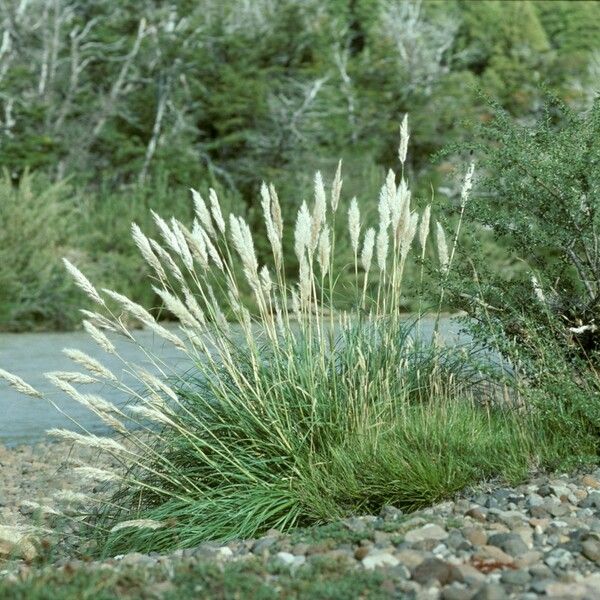
Plant Overview
Often called the Andean Hair Grass, Cortaderia pilosa is the elegant, smaller cousin of the famous (and sometimes unruly) Giant Pampas Grass. Hailing from the windswept slopes of the Andes and the rugged Falkland Islands, this grass is a master of survival in harsh conditions. It brings a touch of wild, airy movement to any landscape, offering a softer, more manageable texture than its massive relatives.
🔍 How to Identify
- 🌾 Foliage: Forms dense, low-growing mounds of very fine, thread-like green leaves that look almost like a head of tousled hair.
- ☁️ Plumes: Produces upright, silvery-white flower spikes that have a distinctively silky, feathery texture, typically appearing in late summer.
- 📏 Stature: It is much more compact than common Pampas grass, usually staying under 2 feet tall, which makes it an ideal choice for smaller garden borders or rockeries.
🏡 In Your Garden
- ⛰️ Highland Heritage: Because it originates in peaty, rocky mountain soils, it requires exceptional drainage. It is highly drought-tolerant once established but will rot if left in standing water during the winter.
- 🌬️ Wind Warrior: This plant is incredibly resilient to salt spray and high winds. It is a "top-tier" choice for coastal gardens or exposed balconies where other ornamental plants might struggle to stay upright.
- ✂️ Winter Maintenance: To keep it looking fresh, it’s best to comb through the foliage or lightly prune the dead blades in early spring to make way for new, vibrant growth.
⚠️ Safety & Toxicity
- ✅ Status: Generally non-toxic to humans and common household pets.
- 🧤 Skin Irritation: Like many ornamental grasses, the edges of the leaves contain silica, which can act like tiny saws. Always wear gardening gloves when pruning or dividing the plant to avoid "grass cuts" or skin irritation.
✨ Fun Fact
In its native habitat in the Falkland Islands, Cortaderia pilosa is known as "White Grass." It covers vast areas of the islands, providing a vital nesting habitat for various ground-dwelling birds and protecting the soil from intense sub-antarctic erosion.

Detailed Care Instructions








