Plant Overview
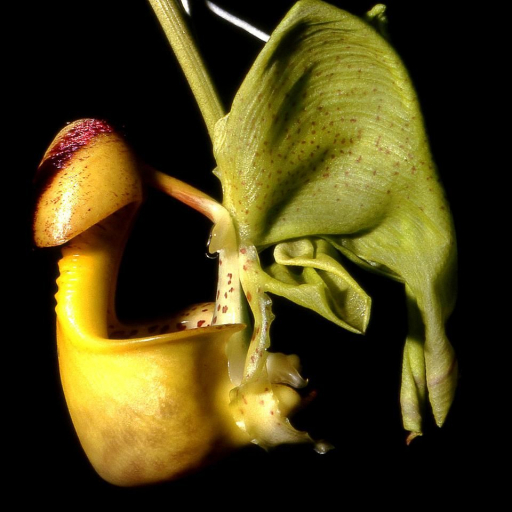
Known as the "Bucket Orchid," Coryanthes macrantha is a masterpiece of evolutionary engineering found in the rainforests of South America. It is famous for its complex, alien-looking flowers that use a literal "trap and release" mechanism to ensure pollination. In the wild, it forms a fascinating symbiotic relationship with stinging ants, making it one of the most intellectually rewarding plants for a collector to study.
🔍 How to Identify
- 🪣 The "Bucket": The most striking feature is the large, waxy, bucket-shaped lip (epichile) that collects a clear, slippery fluid secreted by the plant.
- 🕯️ Waxy Textures: The flowers are heavy and flesh-like, often featuring yellow, orange, or brownish tones with intricate dark red or purple speckling.
- 🌿 Ribbed Pseudobulbs: The plant grows from deeply furrowed, conical pseudobulbs that produce two long, pleated, lance-shaped leaves at the top.
🏡 In Your Garden
- 🐜 Ant Ambitions: In nature, these orchids are "myrmecophytes," meaning they often grow inside the nests of stinging ants. While you don't need ants at home, this means they crave high-nutrient environments and constant moisture around their roots.
- 🧺 The Hanging Habit: Because the flower spikes grow downward (pendulous), this orchid must be planted in a slatted wooden basket or a net pot. If planted in a standard solid pot, the flower spikes will dive into the soil and rot before they ever bloom.
- ☁️ Humidity is King: These are true jungle dwellers. They require very high humidity (70%+) and consistent warmth to thrive; they do not have a traditional "dormancy" period and hate drying out completely.
⚠️ Safety & Toxicity
- ✅ Safe for Pets: Like the vast majority of the orchid family, Coryanthes macrantha is considered non-toxic to cats, dogs, and horses.
- 🧤 Skin Sensitivity: While not poisonous, some people find the waxy coating or the intense fragrance of the blooms can cause mild skin or respiratory sensitivity if they are highly allergic to floral scents.
✨ Fun Fact
The Bucket Orchid doesn't offer nectar; it produces a specific perfume that male Euglossine bees use to attract mates. The bee becomes "intoxicated" by the scent, slips on the waxy rim, falls into the liquid-filled bucket, and can only escape through a narrow tunnel that glues pollen to its back!

Detailed Care Instructions








