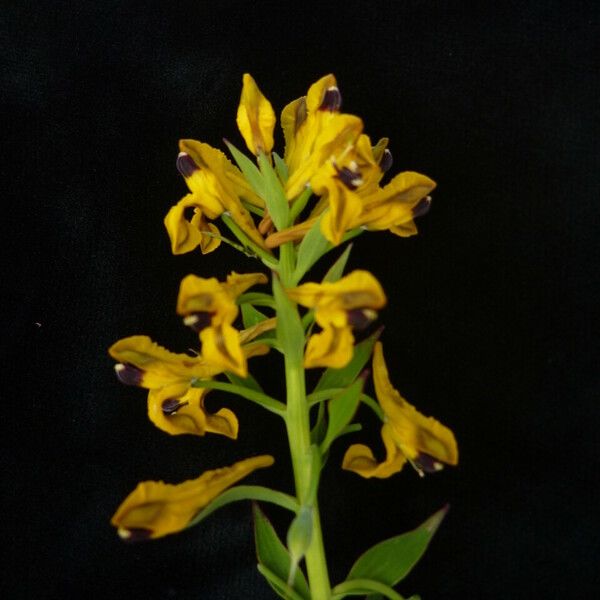
Plant Overview
Known as the Elegant Corydalis, this delicate beauty is like the fine lace of the plant world. While it looks fragile enough to belong in a Victorian botanical drawing, it is actually a resilient member of the poppy family. Often found clinging to rocky slopes and mountain crevices, it brings a touch of ethereal grace to rugged environments with its misty foliage and dangling, spurred blooms.
🔍 How to Identify
- 🌿 Lacy Foliage: The leaves are deeply divided and "glaucous," meaning they have a soft, powdery blue-green tint that looks almost frosted.
- 🌸 Spurred Flowers: It produces clusters of narrow, tubular flowers that look like tiny slippers. They typically feature a prominent "spur" at the back and are often creamy-white or pale yellow with delicate purple or maroon tips.
- ☁️ Airy Habit: The plant grows in a low, mounded clump, usually reaching about 8–12 inches in height, creating a soft "cloud" effect in the garden.
🏡 In Your Garden
- 🪨 Rock Specialist: Because it originates from mountainous regions, this plant demands excellent drainage. It is happiest tucked into a stone wall, a rock garden, or a gravel bed where water can’t pool around its crown.
- 🌬️ Cool & Collected: Unlike many summer bloomers, the Elegant Corydalis prefers "dappled" sunlight and cooler temperatures. In very hot climates, it may go dormant in mid-summer to protect itself from the heat.
- 🌱 The Wanderer: It is a prolific self-seeder. While not invasive, it has a charming habit of "planting itself" in unexpected places, like the narrow cracks between paving stones where few other plants could survive.
⚠️ Safety & Toxicity
- 🚫 Status: Toxic if ingested.
- 🐾 Details: Like many members of the Papaveraceae (Poppy) family, it contains isoquinoline alkaloids. While it tastes bitter enough to deter most animals, it can cause lethargy or stomach upset in pets and humans if eaten. It is generally avoided by deer and rabbits.
✨ Fun Fact
The Elegant Corydalis uses "ant-power" to spread its seeds! Each seed has a tiny, fleshy attachment called an elaiosome that is rich in fats and proteins. Ants carry the seeds back to their nests to feed their larvae, effectively "planting" the Corydalis in a nutrient-rich underground environment.

Detailed Care Instructions








