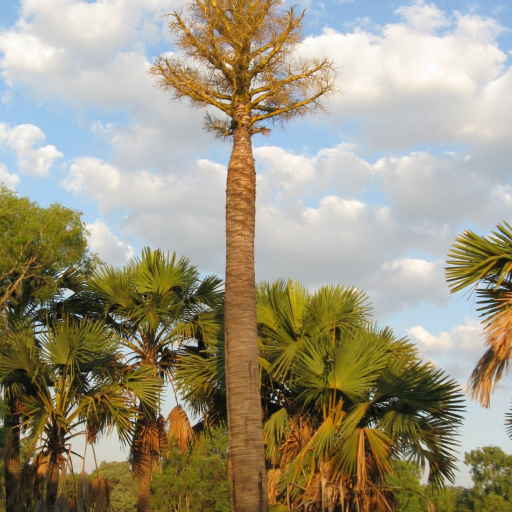
Plant Overview
Often called the Gebang Palm or the Buri Palm, Corypha utan is a true titan of the tropical world. This palm lives a long, quiet life for 30 to 80 years before ending its journey with the most spectacular "grand finale" in the botanical kingdom. In many Southeast Asian cultures, it is a "tree of life," providing everything from ancient writing parchment to sturdy building materials.
🔍 How to Identify
- 🌿 Colossal Fronds: Features massive, circular fan-shaped leaves that can reach up to 5 meters in diameter. They are stiff, pleated, and deeply divided into segments.
- 🪵 Textured Trunk: A thick, grey, solitary trunk that is often marked by distinct spiral scars left by fallen leaves, giving it a rugged, architectural look.
- ⚔️ Armed Stalks: The long leaf stalks (petioles) are not friendly; they are lined with prominent, hard, black teeth that can easily snag clothing or skin.
🏡 In Your Garden
- 🏝️ Space is King: This is not a plant for a small backyard. Because of its massive eventual spread, it is best suited for large estates, parks, or botanical collections where it has room to breathe.
- ☀️ Sun & Resilience: It thrives in full tropical sun and is remarkably drought-tolerant once established. It develops a deep taproot early on, which means it hates being moved—always pick a "forever home" for it from the start.
- ⏳ The Final Act: This palm is monocarpic, meaning it flowers only once at the end of its life. It produces a massive, terminal flower spike (the largest in the plant world) and then dies, leaving behind thousands of seeds to start the cycle anew.
⚠️ Safety & Toxicity
- 🛡️ Physical Hazard: The primary risk is physical. The serrated "teeth" on the leaf stalks can cause deep scratches, and the sheer weight of a falling dead frond can be dangerous to anyone standing beneath it.
- 🐾 Mild Irritant: While not famously poisonous, the raw fruit pulp and seeds contain calcium oxalate crystals. If chewed by pets or children, it can cause significant mouth irritation, swelling, and drooling.
✨ Fun Fact
The leaves of this palm were the "hard drives" of ancient history. Known as Lontar, the dried leaves were used as durable paper for centuries to record Southeast Asian literature, maps, and sacred religious texts, many of which survive in museums today!

Detailed Care Instructions
To grow a Corypha Utan plant, also known as Talipot palm, you can follow these steps:
- Climate: Ensure that you live in a warm tropical or subtropical climate, as the Corypha Utan plant thrives in temperatures above 55°F (13°C).
- Location: Find a suitable location in your garden where the plant can receive full sun. It requires at least 6 hours of direct sunlight daily.
- Soil: The Talipot palm prefers sandy, well-draining soil. Ensure the soil is fertile and has a pH level between 6.0 and 7.5. You can amend the soil with organic matter like compost to improve its fertility and drainage.
- Planting: When planting the Corypha Utan plant, dig a hole that is large enough to accommodate the root ball. Place the plant in the hole, making sure the top of the root ball is level with the surrounding ground. Backfill the hole gently, ensuring there are no air pockets around the roots.
- Watering: Water the plant thoroughly after planting and water it regularly, especially during the establishment period. Keep the soil moist but not waterlogged, as excessive water can lead to root rots. Reduce watering during the winter months.
- Fertilization: Apply a balanced slow-release fertilizer in spring and summer to provide essential nutrients to the plant. Follow the product instructions for dosage and application.
- Pruning: Prune any dead or damaged fronds regularly to maintain the plant's appearance and health. Also, remove any suckers or offshoots to prevent overcrowding.
- Protection: Provide protection to the plant during harsh weather conditions such as strong winds, heavy rains, or frost. You can cover the plant with a frost blanket or move it to a sheltered area if necessary.
- Patience: The Corypha Utan plant is a slow-growing palm, and it may take several years for it to mature and produce its characteristic massive inflorescence. Be patient and provide the necessary care and maintenance consistently.
- Enjoy: Once your Corypha Utan plant starts to produce its impressive flower spike, it will be a sight to behold. Enjoy the beauty and grandeur of this rare and unique palm species.

Place in a bright room that is sun drenched almost all day. Or directly in a south-facing window.

To water this plant, you should check the soil moisture level using a moisture meter or by sticking your finger into the soil. Water when the top inch of soil is dry to the touch. When watering, pour water slowly and evenly around the base of the plant, being careful not to let water sit in the crown or on the leaves. Allow excess water to drain away, and do not let the plant sit in standing water. During periods of active growth, you may need to water more frequently, but be sure to adjust for any changes in weather or conditions.
- Start by selecting a well-draining potting mix that is suitable for tropical plants.
- Choose a pot that is large enough to accommodate the plant's root system and allows for sufficient growth.
- Fill the pot about two-thirds full with the potting mix, leaving enough space for the plant.
- Carefully transplant the Corypha Utan plant into the pot, ensuring that the roots are spread out evenly.
- Once the plant is secured in the pot, water it thoroughly, allowing excess water to drain out completely.
- Wait for a couple of weeks to allow the plant to acclimate before applying any fertilizer.
- When it's time to fertilize, use a balanced liquid organic fertilizer or slow-release granular fertilizer formulated for tropical plants.
- Follow the instructions on the fertilizer packaging for the correct dilution ratio or application rate.
- Apply the fertilizer evenly over the soil surface, making sure not to touch the plant's leaves or stems.
- Water the plant after fertilizing to ensure the nutrients are properly absorbed by the roots.
- Repeat the fertilization process every 4-6 weeks during the growing season, which is typically spring and summer.
- Monitor the plant for any signs of nutrient deficiencies or excesses, such as yellowing leaves or stunted growth.
- Adjust the fertilization schedule or type of fertilizer as needed, taking into consideration the plant's response and environmental conditions.
- Remember to regularly assess the plant's watering needs and adjust accordingly, as overwatering can lead to nutrient leaching and poor growth.
- Lastly, provide the Corypha Utan plant with adequate sunlight, warmth, and humidity to optimize its growth and overall health.
The ideal soil for the Corypha Utan plant is a well-draining, loamy soil that has a neutral pH level. It should be rich in organic matter and have good moisture retention capability. The soil should have a good balance of sand, silt, and clay to ensure proper aeration, drainage, and nutrition uptake. To enhance soil structure, it’s recommended to incorporate compost or well-rotted manure during planting or top-dressing. Avoid compacted or waterlogged soils as they can lead to poor growth and root rot. Regular soil moisture checks ensure that the plant has enough water without over-watering. Testing the soil pH at least once a year will help determine if soil amendments are necessary to maintain the preferred neutral pH.
To propagate Corypha Utan plant, you can follow these steps:
- Begin by selecting a healthy and mature Corypha Utan plant from which you will take cuttings. Make sure it is free from any diseases or pests.
- Prepare a clean and sharp cutting tool such as a pruning shear or knife. It is important to ensure that the tool is sterilized using rubbing alcohol or bleach to prevent the spread of any potential diseases.
- Identify a suitable stem to take the cutting from. Look for a stem that is firm and healthy, avoiding any stems that are wilted or damaged. Ideally, choose a stem that is semi-woody.
- Make a clean and swift cut just below a node, which is a point on the stem where leaves or buds grow. This is where the new roots will form.
- Remove any leaves from the lower third of the cutting, as these can become submerged in the rooting medium and may rot. However, you can leave a few small leaves at the top to support photosynthesis.
- Prepare a rooting medium, which can be a mixture of peat moss and perlite or a well-draining potting soil. Moisten the medium slightly, ensuring it is not too wet.
- Dip the cut end of the cutting into a rooting hormone powder or gel, which will help stimulate root growth. Follow the instructions on the packaging for the correct application method and dosage.
- Create a small hole in the prepared rooting medium using a pencil or your finger. Insert the cutting into the hole, making sure it is firmly planted and the hormone-treated end is covered.
- Place the potted cutting in a warm and humid environment, such as a propagator or a clear plastic bag with ventilation holes. This will help maintain moisture levels and improve the chances of successful rooting.
- Keep the cutting away from direct sunlight, as excessive light can hinder root development. Instead, provide bright, indirect light to encourage healthy growth.
- Monitor the moisture level of the rooting medium regularly. It should be kept slightly moist but not waterlogged. Avoid overwatering, as it can lead to rotting.
- After a few weeks, gently tug on the cutting to check for resistance, indicating that roots have developed. Once roots are established, you can gradually expose the new plant to more light and decrease the humidity.
By following these propagation techniques, you can successfully propagate Corypha Utan plants and expand your collection.








