Plant Overview
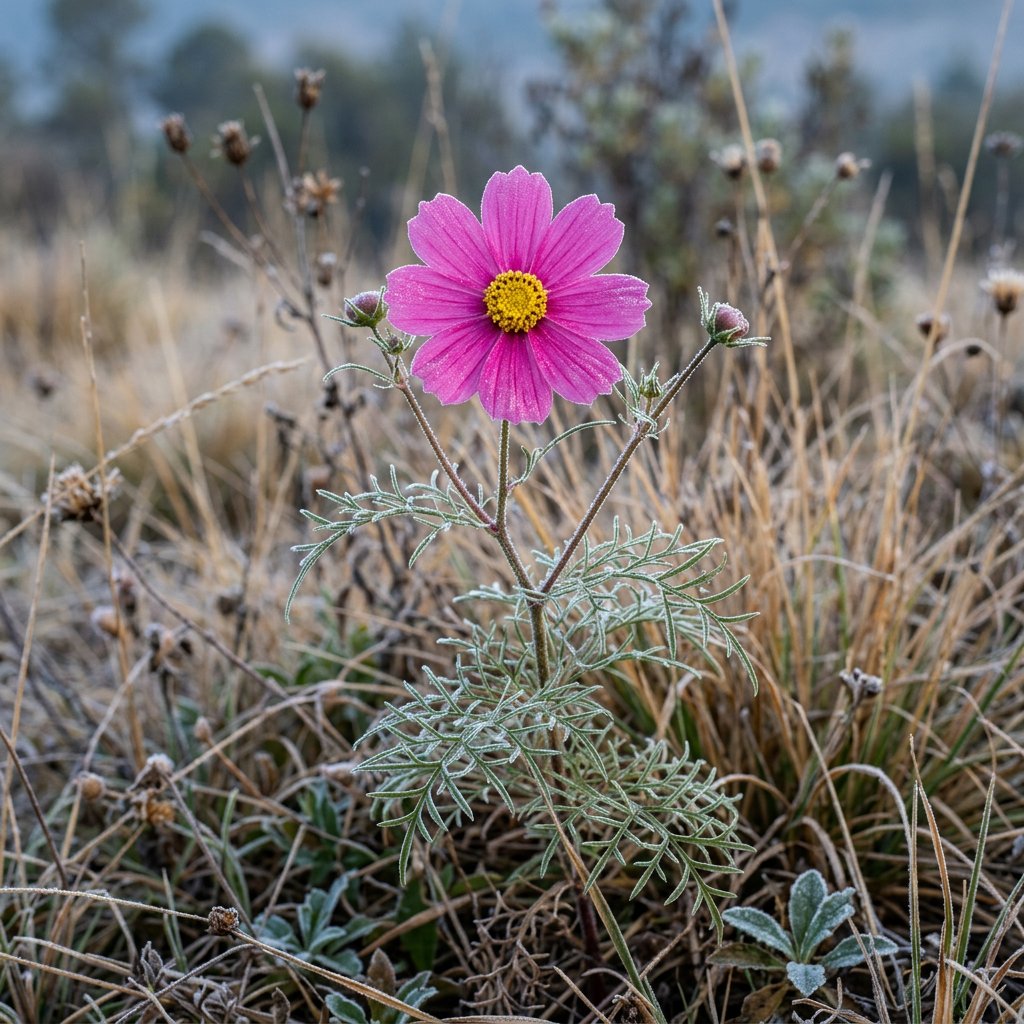
Often called the "Mexican Aster," Cosmos bipinnatus is the quintessential cottage garden flower. These tall, airy blooms dance on spindly stems, bringing a sense of wild elegance and a splash of color to any landscape. Native to Mexico, they have become a global favorite because they thrive on neglect, making them a "confidence-booster" plant for beginner gardeners.
🔍 How to Identify
- 🌿 Feathery Foliage: The leaves are deeply bipinnate and finely divided into thread-like segments, giving the plant a delicate, fern-like appearance even before the flowers arrive.
- 🌸 Radiant Blooms: The daisy-like flowers feature a central yellow disc surrounded by "rays" (petals) that typically come in shades of pink, white, or deep carmine.
- 📏 Airy Stature: They have a tall, lanky growth habit, often reaching 3 to 5 feet in height, which creates a beautiful "see-through" effect in flower beds.
🏡 In Your Garden
- 🌱 The "Less is More" Rule: Cosmos actually prefers "lean" or poor soil. If you give them too much fertilizer or rich organic matter, they will grow massive amounts of green foliage but very few actual flowers.
- 🦋 A Pollinator Party: Their open, flat flower heads act as perfect landing pads for butterflies, hoverflies, and honeybees, making them an essential addition to any biodiversity-focused garden.
- ✂️ Deadheading for Success: To keep the plant blooming until the first frost, you should pinch off faded flowers. This prevents the plant from putting energy into seeds and forces it to create more buds.
⚠️ Safety & Toxicity
- ✅ Safe for All: Cosmos bipinnatus is classified as non-toxic to humans, dogs, cats, and horses.
- 🧤 Sensitive Skin: While not poisonous, the sap can occasionally cause very mild skin irritation or a "contact rash" in individuals with highly sensitive skin if handled during heavy pruning.
✨ Fun Fact
The name "Cosmos" was given to the plant by Spanish mission priests in Mexico. It comes from the Greek word kosmos, which means "harmony" or "ordered universe," referring to the perfectly symmetrical and evenly spaced arrangement of its petals.

Detailed Care Instructions
To grow Cosmos Bipinnatus plants, follow these steps:
- Choose a suitable location: Cosmos Bipinnatus plants thrive in full sunlight, so select a sunny spot in your garden or yard.
- Prepare the soil: The soil should be well-draining and fertile. Add organic compost or well-rotted manure to improve soil quality and fertility.
- Sow the seeds: Cosmos Bipinnatus seeds can be directly sown into the ground after the last frost date in your area. Alternatively, you can start the seeds indoors 4-6 weeks before the last frost and transplant them later. Space the seeds 12-18 inches apart and cover them with a thin layer of soil.
- Watering: Keep the soil evenly moist during the germination period. Once the plants are established, they are quite drought-tolerant. Water deeply once a week and allow the soil to dry out between watering.
- Fertilizing: Cosmos Bipinnatus plants are not heavy feeders. If the soil is not particularly fertile, you can apply a balanced fertilizer during the growing season according to the package instructions.
- Mulching: Mulch around the base of the plants to retain moisture, suppress weed growth, and regulate soil temperature.
- Support: Cosmos Bipinnatus plants can grow quite tall and may require support. Place stakes or a trellis near the plants to prevent them from toppling over as they grow.
- Deadheading: To encourage continuous blooming, remove spent flowers by cutting the stem just above a leaf node. This will prevent the plants from setting seed and divert their energy into producing more blooms.
- Pests and diseases: Cosmos Bipinnatus plants are generally resilient and not prone to many pests or diseases. However, keep an eye out for aphids, slugs, and snails. Use organic pest control methods if necessary.
- Harvesting seeds (optional): If you wish to collect seeds for future planting, let some flowers fully mature and dry on the plants. Once the petals have fallen off, cut the seed heads and allow them to dry further indoors. Gently separate the seeds from the seed heads and store them in a cool, dry place.
By following these steps, you should be able to successfully grow Cosmos Bipinnatus plants and enjoy their beautiful flowers throughout the growing season.

Place in a bright room that is sun drenched almost all day. Or directly in a south-facing window.

To water this plant, gently pour water onto the soil around the base of the stem. Avoid getting water on the leaves or flowers as this can cause damage or encourage fungal growth. Ensure the soil is moist but not overly saturated by allowing excess water to drain away. Watering once or twice a week is usually sufficient, although more frequent watering may be necessary during periods of hot weather or prolonged drought. It is important to monitor the soil moisture level and adjust watering as needed, as too little water can cause the plant to wilt and too much water can lead to root rot.
To fertilize Cosmos Bipinnatus plants, you should first choose a balanced, all-purpose fertilizer with equal amounts of nitrogen, phosphorus, and potassium. Apply the fertilizer to the soil around the plant at the beginning of the growing season and then once a month throughout the summer. Be sure to follow the package instructions for how much fertilizer to use based on your plant size and age. Avoid applying fertilizer to the foliage or flowers, and water the plant before and after fertilizing to help it absorb the nutrients.
Cosmos Bipinnatus plant prefers a well-draining soil that is nutrient-rich and contains organic matter. The soil pH should be between 6.0 and 7.0, which is slightly acidic to neutral. The plant grows well in sandy loam or loam soil that is not too heavy and retains moisture well. The soil should be kept moist, but not waterlogged, to promote healthy growth and flowering. Use a mixture of equal parts garden soil, compost, and sand to create the perfect soil mix for your Cosmos Bipinnatus plant. Avoid using heavy clay soil or soil that is too water-retentive as it can cause root rot and other problems.
Cosmos bipinnatus is a plant that can be propagated easily through seed. Here are the steps you can follow:
- Collect mature seeds from the parent plant. The seeds can be easily distinguished by their dark brown color and papery texture.
- Prepare the soil in a pot or container. The soil should be well-draining and moist.
- Sow the seeds on the soil surface. Do not bury the seeds too deep as they require light to germinate.
- Water the soil gently. Ensure that the soil remains moist until the seeds germinate.
- Place the pot or container in a warm and sunny location. Cosmos bipinnatus requires plenty of sunshine to thrive.
- Once the seedlings emerge, thin them out to prevent overcrowding. Keep only the strongest seedlings and remove the weaker ones.
- Transplant the seedlings into individual containers once they have developed strong roots and at least two sets of true leaves.
- Continue to care for the young plants by providing them with plenty of sunshine and water. Gradually introduce them to outdoor conditions by placing them outside for short periods of time.
- Finally, transplant the young plants into a larger container or garden bed when they have become strong and healthy.
With patience and care, you can easily propagate cosmos bipinnatus from seed and enjoy their beautiful blooms for years to come.
Common pests of the garden cosmos include Aphids, thrips, larvae. Make a habit of checking your garden cosmos frequently for pests so that any infestations can be caught and managed early.








