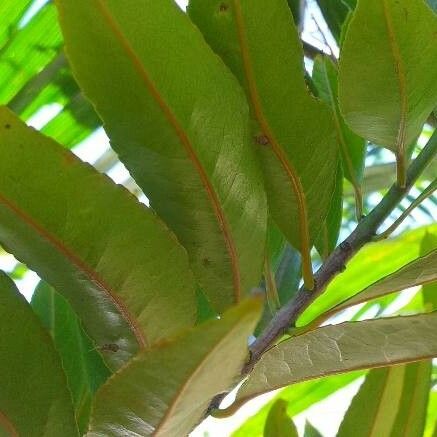
Plant Overview
Known as the Mauritian Ironwood or Bois de Fer, this rare botanical jewel hails from the volcanic slopes of the Mascarene Islands. It earns its formidable nickname from its incredibly dense, tough wood that was once highly prized by colonial shipbuilders. Today, it is a protected treasure, celebrated more for its elegant, winged foliage and its status as a resilient symbol of island biodiversity.
🔍 How to Identify
- 🌿 The Foliage: Features striking compound leaves (pinnate) usually composed of 3 to 7 leaflets. These leaves have a leathery texture and a vibrant, glossy green sheen that catches the light beautifully.
- 🪵 The Bark & Wood: Younger trees display smooth, grayish bark. The wood beneath is famously heavy and dark; it is one of the few types of timber that is so dense it will actually sink in water.
- 🎈 The Fruit: It produces unique, inflated seed capsules that look like tiny, three-lobed lanterns. These turn from a soft green to a rich, tawny brown as they mature.
🏡 In Your Garden
- 🐢 Slow and Steady: This is not a plant for the impatient gardener. It grows at a glacial pace, focusing its energy on creating that legendary "iron" density in its trunk rather than rapid height.
- 🏝️ Island Needs: Because it evolved in the Indian Ocean, it craves well-draining soil—ideally mimicking volcanic earth—and struggles in heavy, waterlogged clay which can cause root distress.
- 🌬️ Wind Resistance: Thanks to its sturdy structure and flexible but strong branches, it is exceptionally "cyclone-proof," making it an excellent choice for coastal areas prone to high winds.
⚠️ Safety & Toxicity
- 🛡️ Safe Profile: Cossinia pinnata is generally considered non-toxic. There are no documented reports of the leaves or fruit being poisonous to humans, cats, or dogs.
- 🌱 Handle with Care: While not toxic, the plant is rare and sensitive to root disturbance. The "danger" here is mostly to the plant itself—it hates being moved once established, so choose its forever-home in your garden carefully.
✨ Fun Fact
The wood of the Cossinia pinnata is so remarkably heavy that it was historically used to craft mechanical pulleys and ship blocks. It functioned almost like a natural metal, surviving extreme friction and pressure that would have splintered softer woods!

Detailed Care Instructions
| Humidity | Normal |
| Lighting | Part Sun |
| Difficulty | Easy |
| Temperature | 14°C - 29°C |
| Hardiness Zones | 10 - 11 |

Place in a window with dappled sun or a spot in the middle of a room. Or directly in a window facing west or east.

When the top few inches of soil dry out, water your plants. If the top few inches of soil are still moist, do not water your plant. Wait a few days, then poke your finger into the soil to see if anything has changed. Overwatering poses a disease risk, such as the development of fungal diseases in the roots. These plants have adaptations in there leaves that allow them to survive in low water supply.
The relative humidity levels between 30 and 50 percent are ideal for these plants. They exhibit unpleasant symptoms when the moisture content in the environment is unfavorable. Avoid letting the air temperature rise too high or low and use a humidifier, whenever possible. Misting is also beneficial, although frequent watering is also necessary. The optimal relative humidity will promote plant growth.








