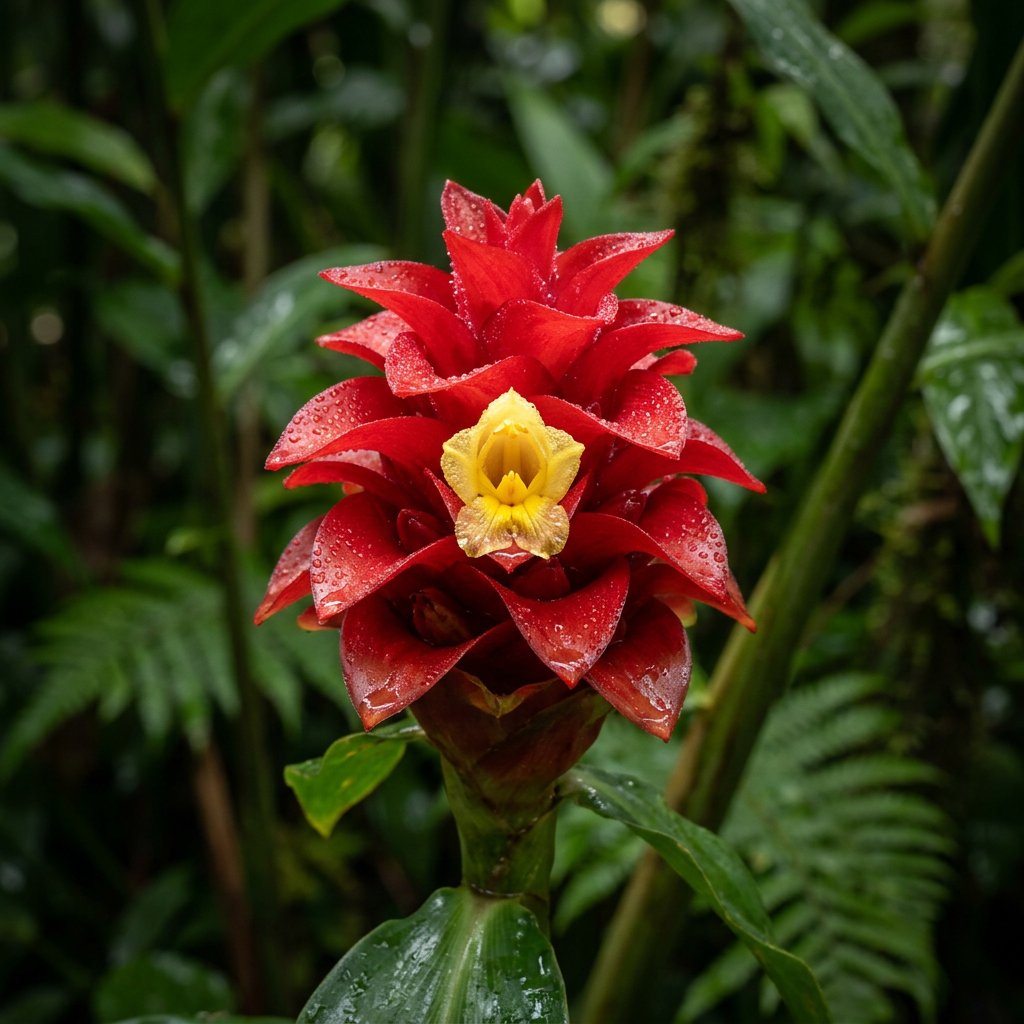
Plant Overview
Often called the Red Button Ginger or "Scarlet Spirit," this vibrant perennial is a tropical showstopper. Native to Central and South America, it is beloved for its architectural "cones" that look like waxy red candles. Unlike common culinary ginger, this species is grown primarily for its striking ornamental beauty and its ability to bloom almost year-round in warm climates.
🔍 How to Identify
- 🔴 The "Button" Bracts: The most iconic feature is the terminal spike—a dense, waxy, egg-shaped cone of brilliant red bracts. From these red scales, small, tubular orange-yellow flowers occasionally emerge one by one.
- 🌀 Spiral Stems: Look closely at the stalks; the lush, dark green leaves are arranged in a distinct spiral pattern around the stem, a classic trait of the Costaceae family.
- 🍃 Foliage Texture: The leaves are thick, elliptical, and glossy on top with a slightly matted or "pubescent" underside, giving the plant a heavy, luxurious feel.
🏡 In Your Garden
- ☀️ Light & Color: While it can handle full sun, the "buttons" stay more vibrant and the leaves less scorched if the plant receives filtered light or morning sun with afternoon shade.
- 💧 Moisture Consistency: This is not a succulent; it hates drying out completely. Because it grows from rhizomes, it prefers consistently moist, well-draining soil. If the leaves start to curl, it’s likely a plea for more humidity or a deep drink.
- 🐜 An Ant's Paradise: Don't be alarmed if you see ants crawling all over the red cones. The plant produces "extrafloral nectaries" (sweet nectar outside the flower) to attract ants, who in turn protect the plant from more harmful pests.
⚠️ Safety & Toxicity
- ✅ Pet & Child Safe: Costus woodsonii is generally considered non-toxic to dogs, cats, and humans. It is a safe choice for busy households and "curious" pets.
- 🧤 General Caution: While not poisonous, the sap from broken stems can be sticky and may cause very mild skin irritation for those with extreme sensitivities. It is always a good practice to wash your hands after pruning.
✨ Fun Fact
The "Red Button" isn't actually the flower—it's a collection of bracts (modified leaves). The actual flowers are edible and have a surprising, refreshing citrus-like crunch. They are sometimes used in tropical regions as a colorful, sour garnish for salads!

Detailed Care Instructions
To grow Costus Woodsonii plant, also known as Spiral Ginger, you can follow these steps:
- Obtain a healthy plant: Purchase a healthy Costus Woodsonii plant from a reputable nursery or garden center. Alternatively, you can obtain a rhizome (root) cutting for propagation.
- Choose the right location: Select a suitable location in your garden or indoor space that receives partial shade to filtered sunlight. This plant prefers warm and humid environments.
- Prepare the soil: The soil should be well-draining and rich in organic matter. If the soil at your selected location is heavy or clay-like, amend it with compost or peat moss to improve drainage.
- Planting or potting: If you have obtained a potted plant, simply transfer it to a larger container with drainage holes using well-draining potting soil. If starting from a rhizome, plant it horizontally with the eyes or buds facing upwards, burying it about 2-3 inches deep.
- Watering: Keep the soil consistently moist but not soggy. The Costus Woodsonii plant requires regular watering, especially during dry periods. Avoid letting the soil dry out completely between watering sessions.
- Fertilization: Feed the plant with a balanced liquid fertilizer or slow-release granules according to the package instructions during the growing season (spring and summer). This will provide the necessary nutrients for healthy growth.
- Mulching: Apply a layer of organic mulch around the base of the plant but avoid touching the stem. Mulching helps retain moisture, suppresses weeds, and provides some insulation for the root system.
- Pruning: Remove dead or damaged leaves as needed to maintain a neat appearance. Pruning is generally not necessary unless the plant becomes overcrowded.
- Protect from extreme cold: If you live in a region with freezing temperatures, it is important to protect your Costus Woodsonii plant from frost. Consider covering it with a frost cloth or bringing it indoors during the coldest months.
- Propagation: To propagate the plant, you can divide the rhizomes during spring. Carefully separate the rhizomes and plant them in separate containers or locations.
By following these steps and providing regular care, your Costus Woodsonii plant should grow well and bring beautiful spiral-shaped flowers to your garden or indoor space.

Place in a bright room that is sun drenched almost all day. Or directly in a south-facing window.

To water this plant, first ensure that the soil is completely dry, as over-watering can cause root rot. Then, slowly pour water directly onto the soil, making sure to saturate it thoroughly. Allow any excess water to drain out of the pot's drainage holes. It is important to avoid getting water on the leaves, as this can cause damage or disease. Watering frequency will depend on the plant's environment, but it is generally recommended to water when the top inch of soil feels dry to the touch.
To properly fertilize this plant, it is recommended to use a balanced fertilizer with equal amounts of nitrogen, phosphorus, and potassium. The fertilizer application can be done every 2-3 months during the growing season, which is typically from spring to fall. It is important not to over-fertilize, as this can lead to burning of the plant's roots and leaves. Always follow the instructions on the fertilizer label and dilute it to half strength before application. Fertilizing this plant can help to promote healthy growth and vibrant foliage.
The best soil for the Costus Woodsonii plant should be well-draining with a pH range of 6 to 7. It should contain a mixture of organic materials like peat moss, compost, and leaf mold to enhance its nutrient content. Additionally, the soil should be rich in minerals such as potassium, phosphorus, magnesium, and calcium to promote healthy growth. Avoid using heavy clay soils or soils that retain water for long periods as they can cause root rot and damage the plant. Regularly fertilize the soil with a balanced fertilizer to maintain optimal soil fertility.
To propagate this plant, you can take stem cuttings. Choose a healthy stem with several leaves attached and make a clean cut just below a node. Remove the lower leaves from the stem cutting and dip the cut end in rooting hormone powder. Plant the cutting in a pot filled with well-draining soil. Water the cutting and cover the pot with a plastic bag to create a greenhouse effect. Place the pot in a warm and bright location, but out of direct sunlight. Keep the soil moist and mist the cutting regularly. After a few weeks, you should see new growth indicating successful rooting.
Common pests of the red cane include Scale insect, mealybugs, spider mites, aphids, thrips. Make a habit of checking your red cane frequently for pests so that any infestations can be caught and managed early.








