Plant Overview
Known commonly as the Glossy Cotoneaster, this elegant shrub is a favorite for gardeners seeking structure and seasonal drama. Originating from the rocky mountain slopes of Western China, it is prized for its "mirror-finish" foliage that catches the sunlight with every breeze. While its spring flowers are modest and delicate, its transformation into a jet-black berry-laden specimen in the autumn makes it a quiet star of the landscape.
🔍 How to Identify
- 🍃 Mirror-Like Foliage: The leaves are small, oval, and exceptionally shiny on the upper surface. This "varnished" look is why it was named nitens, which is Latin for "shining."
- 🌸 Pink-Tipped Blooms: In late spring, the shrub produces tiny, bell-shaped flowers. They are typically white with a soft pink blush, appearing in small clusters that are highly attractive to bees.
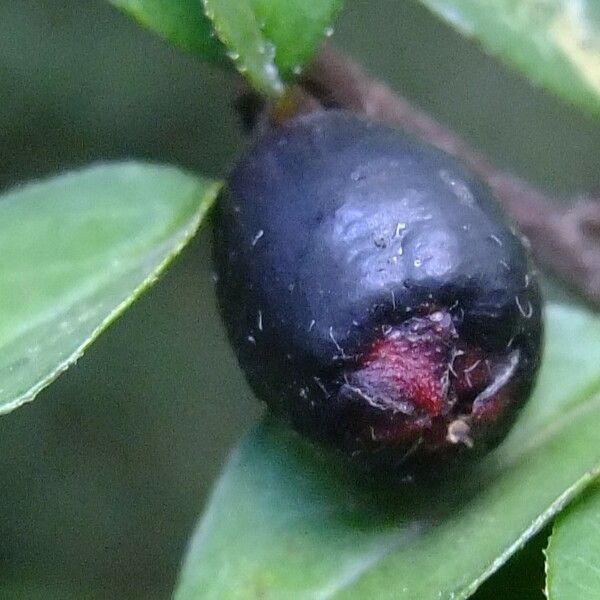
- 🌑 Jet-Black Berries: Unlike many of its red-berried cousins, this variety produces small, egg-shaped fruits that turn a deep, glossy black as they ripen in the fall.
🏡 In Your Garden
- ✂️ Pruning Nuance: This shrub has a graceful, upright, and arching habit. Because it blooms on the previous year's wood, you should avoid "haircut" style pruning. Instead, selectively thin out older branches after the flowers fade to maintain its natural fountain-like shape.
- 🍂 Autumnal Fire: Beyond the berries, the foliage provides a spectacular late-season show. The glossy green leaves often turn vibrant shades of plum, purple, and bronzy-red before dropping for the winter, creating a high-contrast look against the dark fruit.
⚠️ Safety & Toxicity
- 🐾 Mildly Toxic: The berries of the Glossy Cotoneaster contain cyanogenic glycosides. While they are not usually fatal, they can cause significant stomach upset, vomiting, and lethargy if ingested by dogs, cats, or curious children.
- 🧤 Skin Sensitivity: While not considered an allergen, the dense, woody stems can be scratchy. It is recommended to wear gloves when pruning or transplanting to avoid minor skin abrasions.
✨ Fun Fact
🐦 The Bird's Pantry: While the berries are toxic to humans, they are a gourmet treat for songbirds! Birds like thrushes and waxwings often wait until the berries have gone through several "freeze-thaw" cycles in winter, which softens them and makes the nutrients easier to digest when other food sources are scarce.

Detailed Care Instructions
To water the plant, ensure that the soil is completely dry before watering. Once you confirm that the soil is dry, you can water the plant thoroughly, allowing the water to soak into the soil. Avoid letting the plant sit in standing water as this can cause root rot. Instead, water the plant using a watering can or a garden hose with a gentle flow. You can also use a drip irrigation system to water the plant slowly and evenly. In the winter months, water the plant sparingly to prevent the roots from becoming waterlogged.
Cotoneaster Nitens plant prefers a well-draining soil that is rich in nutrients. The soil should be slightly acidic with a pH range of 6.0 to 7.5. It is best to use a soil that is composed of a mixture of sand, loam, and organic matter such as compost or peat moss. A mixture of 50% sand, 35% loam, and 15% organic matter is recommended. Avoid using heavy soils that do not drain well, as excess water can cause root rot and other fungal diseases. It is also important to ensure that the soil is free from weeds, pests, and diseases before planting to prevent any potential issues in the future.








