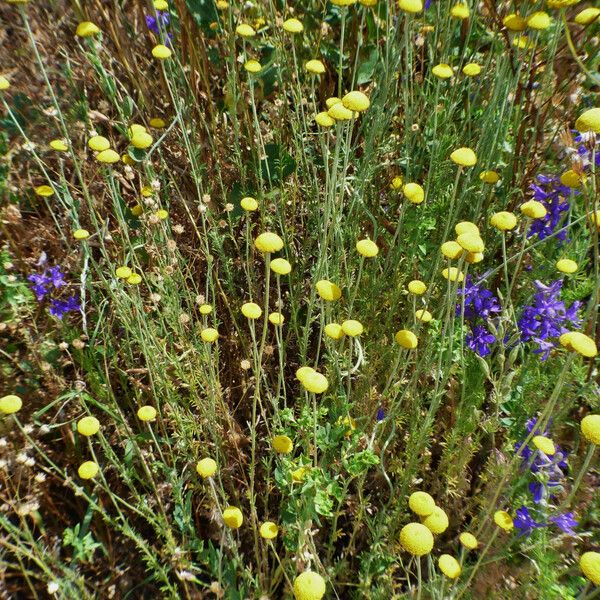
Plant Overview
Often called Yellow Buttons or Chamomile Weed, this low-growing charmer is frequently mistaken for a tiny, petal-less daisy. Originally hailing from parts of Africa and Asia, it has traveled the globe, often settling into damp garden corners or cracks in the pavement. It is a resilient little "pioneer" plant that loves to carpet bare soil with its feathery, fern-like foliage.
🔍 How to Identify
- 🌼 The Flowers: Its most striking feature is the small, bright yellow flower heads that look like soft buttons. Unlike daisies, they lack the outer white "petals" (ray florets), giving them a "naked" look.
- 🌿 The Foliage: The leaves are deeply lobed and feathery, closely resembling the leaves of true Chamomile or Yarrow, providing a soft, green texture to the ground.
- 🌱 Growth Habit: It stays very close to the earth, typically growing no more than a few inches high, but it can spread horizontally to form dense, cushiony mats.
🏡 In Your Garden
- 💧 The Moisture Lover: While many weeds prefer dry soil, Cotula anthemoides is a fan of dampness. You’ll often find it thriving near leaky outdoor taps, pond edges, or in heavy clay soils that hold onto water.
- 🛤️ Compaction Specialist: It is surprisingly tough and can handle "foot traffic" better than most garden plants. This makes it an accidental ground cover in high-traffic areas where grass might struggle to grow.
⚠️ Safety & Toxicity
- 🐾 Pet Safety: It is generally considered non-toxic to cats and dogs; however, it belongs to the Asteraceae family (the same as ragweed), which can occasionally cause mild stomach upset if grazed upon in large amounts.
- 🧴 Skin Sensitivity: Some individuals with sensitive skin may experience "Compositae dermatitis"—a mild itchy rash—after handling the plant extensively without gloves.
✨ Fun Fact
The genus name Cotula comes from the Greek word kotule, which means "small cup." This refers to the way the leaves are shaped where they attach to the stem, forming a tiny, cup-like depression that can catch droplets of dew.

Detailed Care Instructions

Place in a bright room that is sun drenched almost all day. Or directly in a south-facing window.

Some plants require more regular watering than others, which should be done every few days. It's critical to maintain the soil moist all of the time. The water requirements of the same plant placed in pots with varying sizes will differ. Because the water in the smaller pot evaporates faster than the water in the larger pot, it will require more watering. Regardless of pot size, the surface should constantly be maintained moist.








