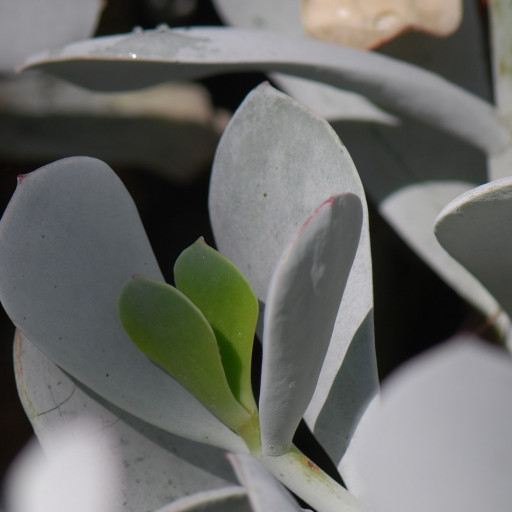
Plant Overview
Commonly known as "Pig’s Ear" due to its thick, oval leaves, this hardy succulent hails from the rocky slopes of South Africa. It is a favorite among succulent collectors for its architectural beauty and the ethereal silver-blue glow it brings to sunny garden beds. In its native habitat, it survives harsh droughts and intense sun, making it a "tough love" plant that actually thrives when ignored.
🔍 How to Identify
- 👂 The "Pig's Ear" Leaves: The most striking feature is the pair of thick, fleshy, paddle-shaped leaves that often sport a distinct reddish-pink margin along the edges.
- ❄️ Silvery Farina: The foliage is coated in a thick, white waxy powder (farina) that gives the plant a ghostly, matte appearance and protects it from intense UV rays.
- 🔔 Bell-Shaped Blooms: During the cooler months, it sends up a tall, sturdy stalk topped with clusters of drooping, coral-to-orange bell-shaped flowers that are a magnet for hummingbirds.
🏡 In Your Garden
- ☀️ Sunscreen Coating: That powdery white coating is permanent but easily smudged; avoid touching the leaves, as fingerprints won't disappear and the plant loses its natural protection against sunburn.
- 💧 Drainage Over Diet: This plant hates "wet feet" more than anything else. It is best grown in gritty, sandy soil and requires a "soak and dry" watering routine where the soil dries out completely between drinks.
⚠️ Safety & Toxicity
- 🚫 Toxic Status: Contains bufadienolides, which are cardiac glycosides that can be dangerous if eaten.
- 🐾 Pet & Child Risk: This plant is toxic to dogs, cats, and livestock. Ingestion can lead to vomiting, lethargy, or heart palpitations, so it is best placed on a high shelf or in a protected part of the garden.
✨ Fun Fact
In traditional South African medicine, the fleshy part of the leaf was historically used to treat corns and warts by tying a peeled leaf directly to the skin—though modern gardeners are advised to stick to admiring its beauty rather than its pharmacy!

Detailed Care Instructions
| Color | Silver Foliage With Orange Flowers |
| Soil Ph | 6-7.5 |
| Humidity | Dry |
| Invasive | Weed |
| Lighting | Part Sun |
| Soil Type | Light, Sandy, And Well-Draining |
| Bloom Time | Summer |
| Difficulty | Easy |
| Plant Type | Succulent |
| Mature Size | 3-6 Feet Tall |
| Native Area | South Africa |
| Temperature | 15°C - 30°C |
| Sun Exposure | Full Sun To Partial Shade |
| Hardiness Zones | 9-11 |
To grow Cotyledon Orbiculata (also known as Pig's Ear), you can follow these steps:
- Choose a suitable location: Cotyledon Orbiculata prefers full sun to partial shade. If growing indoors, place it near a sunny window.
- Select a well-draining pot: Use a clay or terracotta pot with drainage holes to prevent root rot. Make sure it is large enough to accommodate the plant's roots.
- Prepare the soil: Use a well-draining soil mix suitable for succulents or cacti. Mix regular potting soil with sand or perlite to improve drainage.
- Planting the cutting or offset: You can propagate Cotyledon Orbiculata from stem cuttings or offsets (baby plants that grow near the base of the parent plant). Allow the cuttings or offsets to dry for a few days before planting.
- Watering: Water your plant thoroughly and allow the soil to dry out completely before watering again. Succulents like Cotyledon Orbiculata are adapted to survive in drought conditions, so be careful not to overwater.
- Fertilizing: Apply a balanced, water-soluble fertilizer diluted to half-strength once per month during the growing season (spring and summer). Avoid fertilizer during winter when the plant is dormant.
- Pruning: Trim off any dead or damaged leaves to encourage healthy growth. You can also pinch back the stems to promote branching and a bushier appearance.
- Pests and diseases: Cotyledon Orbiculata is generally resistant to pests and diseases. However, keep an eye out for common succulent pests like mealybugs or aphids. If necessary, treat them with an insecticidal soap.
- Winter care: During winter, these plants enter a dormant period, so reduce watering and provide them with a cooler location (around 50°F or 10°C). This will mimic their natural winter conditions.
By following these steps and providing proper care, your Cotyledon Orbiculata plant should thrive and grow successfully.

Place in a window with dappled sun or a spot in the middle of a room. Or directly in a window facing west or east.

When watering this plant, it is important to avoid overwatering as it can lead to root rot. Allow the top inch of soil to dry out before watering again. It is also important to use a well-draining soil mix and a container with drainage holes to allow excess water to escape. Water at the base of the plant rather than overhead to avoid getting water on the leaves, which can lead to fungal infections. In the winter months, reduce watering frequency and water sparingly as the plant goes dormant.
For best results, provide Cotyledon Orbiculata plant with a slow-release fertilizer that is high in phosphorus. Apply the fertilizer sparingly during the growing season, once every two to three months. Be sure to water the plant thoroughly after fertilizing to help the nutrients penetrate the soil. Avoid fertilizing during the plant's dormant season.
For Cotyledon Orbiculata plant, it is recommended to use well-draining soil that has a high percentage of perlite or sand mixed in it. The soil should also be fertile and nutrient-rich to ensure proper growth of the plant. It is important to avoid using soil that retains too much moisture, as this can lead to root rot and other issues. Adding organic matter to the soil can also help to improve its overall quality, giving the plant the nutrients it needs to thrive. Overall, the ideal soil for Cotyledon Orbiculata should be loose, well-draining, and nutrient-rich.
To propagate this plant, you will need to take stem cuttings from the parent plant. Choose healthy, mature stems and use a sharp, clean knife to make a clean cut. Allow the cuttings to dry and callus over for a few days before planting them in well-draining soil. It's important to keep the soil lightly moist but not too wet during the propagation process. The cuttings will take root within a few weeks and can be gradually acclimated to brighter light and less humidity as they grow.
Common pests of the round-leafed navel-wort include Mealybugs. Make a habit of checking your round-leafed navel-wort frequently for pests so that any infestations can be caught and managed early.








