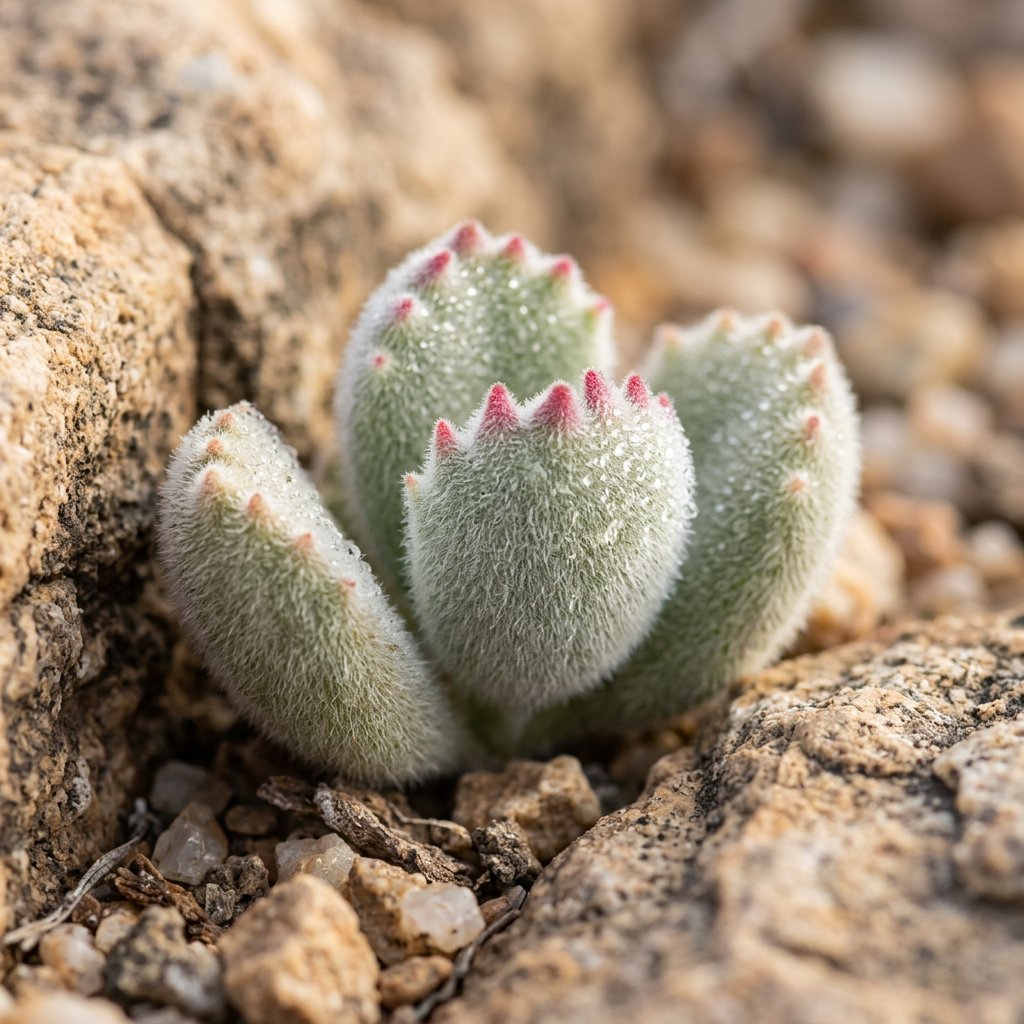
Plant Overview
Often called the "Bear's Paw," this charming succulent looks like it belongs in a storybook. Native to the rocky terrains of South Africa, its chunky, velvety leaves are famous for the tiny "claws" that decorate their tips. It is a slow-growing favorite for windowsill gardeners who want a plant that looks as cuddly as a stuffed animal.
🔍 How to Identify
- 🐾 The "Paws": Plump, wedge-shaped leaves covered in a fine layer of soft, white downy hair (tomentose), giving the plant a distinct fuzzy texture.
- 💅 The Claws: The leaf tips feature 3 to 10 small, reddish-brown "teeth" that perfectly mimic the sharp claws of a bear.
- 🔔 The Flowers: In the right conditions, it sends up a stalk with dangling, bell-shaped flowers in shades of orange, coral, or yellow.
🏡 In Your Garden
- ☀️ Sun-Kissed Claws: The iconic "red claws" are actually a stress response to sunlight; if the plant is kept in too much shade, the tips will turn green and the plant will lose its signature look.
- 💧 Fragile Foliage: While it looks sturdy, the leaves are surprisingly heavy and loosely attached. Rough handling or overwatering can cause the "paws" to snap off easily, so it's best to place it somewhere it won't be bumped.
- 🌬️ Air Circulation: Because of its fuzzy coat, this plant can trap moisture between its leaves, making it prone to fungal issues if the air is too stagnant.
⚠️ Safety & Toxicity
- 🐱 Toxic to Pets: Cotyledon tomentosa is considered toxic to cats, dogs, and horses.
- 🤢 Symptoms: Ingestion can cause vomiting, lethargy, or tremors. Because it looks like a toy, keep it on high shelves out of reach of curious nibblers.
✨ Fun Fact
The fine hairs on the leaves aren't just for decoration—they act as a sophisticated survival tool. They trap a layer of moist air against the leaf surface and reflect intense UV rays, allowing the Bear's Paw to survive the scorching heat of the South African sun!

Detailed Care Instructions
| Color | Green |
| Soil Ph | Around 6 (Acidic) |
| Humidity | Dry |
| Lighting | Full Sun |
| Toxicity | Toxic |
| Soil Type | Well-Draining Soil; Coarse Sand And Perlite Mix |
| Bloom Time | July And September |
| Difficulty | Easy |
| Plant Type | Densely-Branched Succulent |
| Mature Size | 12 – 20 Inches Tall |
| Native Area | South Africa |
| Temperature | 20°C - 28°C |
| Sun Exposure | Full Sun To Partial Shade |
| Hardiness Zones | 9-11 |
To grow a Cotyledon tomentosa plant, also known as Bear's Paw plant, you can follow these steps:
- Choose a suitable container: A well-draining pot with drainage holes is necessary to prevent waterlogged soil. Opt for a pot that is slightly larger than the current size of the plant.
- Select the right soil: Bear's Paw plants prefer a well-draining succulent or cactus potting mix. You can also create your own by combining potting soil, perlite, and coarse sand in a ratio of 2:1:1.
- Provide proper lighting: Place your Bear's Paw plant in a spot that receives bright, indirect sunlight. Direct sunlight can scorch the leaves, so filtered or indirect light is ideal. If you don't have a suitable location with bright light, you can use grow lights to supplement the plant's light requirements.
- Watering: Cotyledon tomentosa plants have succulent leaves and prefer moderate watering. Allow the soil to dry out slightly between watering sessions to avoid overwatering. Typically, watering once every 7-10 days is sufficient. Ensure that excess water drains out of the pot to prevent root rot.
- Temperature and humidity: Bear's Paw plants thrive in temperatures between 60-75°F (15-24°C). They do well in average humidity levels, but it's important to avoid excessively dry air, especially during the winter months. You can increase humidity by placing a tray of water near the plant or misting it occasionally.
- Fertilization: Feed your Cotyledon tomentosa plant with a diluted succulent or cactus fertilizer during the growing season (spring and summer). Follow the instructions on the fertilizer package for proper dilution and frequency of application.
- Pruning and propagation: To maintain a compact shape, you can prune the Bear's Paw plant by removing leggy or overgrown stems. The cuttings from pruning can be used for propagation. Allow the cuttings to dry for a few days before planting them in moist succulent soil.
- Monitor for pests and diseases: Keep an eye out for common succulent pests like mealybugs and spider mites. If you notice any signs of infestation, use an appropriate insecticidal soap or neem oil to control the pests.
Remember, each plant may have specific needs, so it's always a good idea to do further research and adapt care instructions to your specific circumstances.

Place in a window with dappled sun or a spot in the middle of a room. Or directly in a window facing west or east.

To water this particular plant, it is important to allow the soil to dry out at least partially between each watering. This will help prevent overwatering, which can be harmful to the plant. When watering, use a watering can or hose with a gentle stream of water to avoid damaging the plant. Water the soil around the base of the plant, being careful not to get water on the leaves or stem. Ensure that any excess water can drain away from the plant to prevent standing water, which can also be harmful. It is recommended to water the plant every 7-10 days or as needed based on the soil dryness.
To fertilize this plant, use a balanced, water-soluble fertilizer, such as a 10-10-10 formula, during the growing season. Dilute the fertilizer according to the package instructions and apply it every two weeks. Be sure to water the plant before and after fertilizing to minimize the risk of fertilizer burn. Additionally, you can incorporate a slow-release fertilizer into the soil at the beginning of the growing season to provide nutrients over a longer period of time.
The plant in question will benefit from a well-draining soil mix that contains a combination of organic matter and mineral components. The ideal soil should have a pH level between 6 and 7 and should be able to retain moisture without becoming waterlogged. A mixture of sand, perlite, peat moss and loam soil can help create the perfect soil environment for this plant. Additionally, it's essential to ensure that the pot or container has enough drainage holes to prevent water buildup in the soil. Good soil preparation will ensure that the Cotyledon Tomentosa can grow and thrive in its new home.
To propagate this plant, you need to start by taking a cutting from it. You can do this by using clean and sharp garden shears to cut a stem from the plant just above a node. Next, you need to remove the lower leaves from the stem, leaving just a few at the top. This will ensure that the stem focuses its energy on producing roots rather than supporting leaves.
Once you have cut the stem, you need to allow it to dry out for a few days. This will help to prevent rotting when you plant it. After it has dried out, you can dip the cut end of the stem in rooting hormone, which will help to encourage root growth.
Next, you can plant the stem in a well-draining soil mix. Make a hole in the soil with a pencil and gently insert the stem into the soil. Press the soil around the stem to firm it in place.
Water the soil well, and then cover the pot with a plastic bag to create a humid environment for the cutting. Place the pot in bright, indirect sunlight, and keep the soil moist but not saturated.
After a few weeks, you should start to see new growth from the stem, which is a sign that it has rooted. You can then remove the plastic bag and continue to care for the plant as normal.
Common pests of the bear paw include Mealybugs. Make a habit of checking your bear paw frequently for pests so that any infestations can be caught and managed early.








