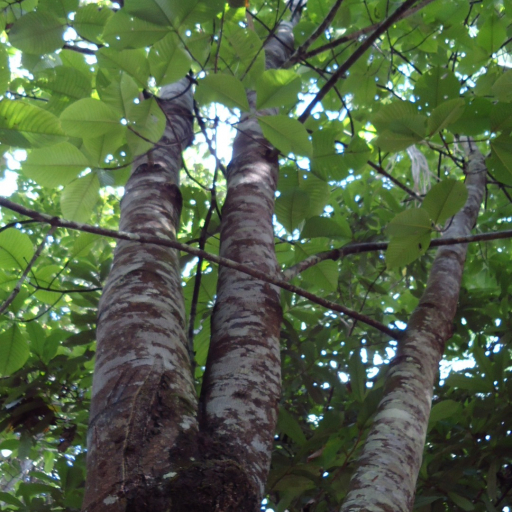
Plant Overview
Meet the "Cow Tree" of the Amazon. Known as Sorva or the Milk Tree, Couma macrocarpa is a towering tropical giant native to the lush rainforests of South America. It earned its nickname from the thick, creamy, white latex that flows from its bark, which is so sweet and nutritious that it has been used as a milk substitute by indigenous communities for centuries.
🔍 How to Identify
- 🍃 Whorled Foliage: The leaves are large, leathery, and dark green, typically growing in groups of three (whorls) along the branches.
- 🥛 The "Milk" Test: If the bark is slightly nicked, it immediately releases a copious amount of thick, white, sticky sap that looks remarkably like dairy milk.
- 🍒 Round Fruits: It produces globose, brownish-yellow fruits about the size of a plum. Inside, the pulp is soft, sweet, and contains several small seeds.
🌳 In Your Garden & Habitat
- 🌧️ Rainforest Roots: Because this is a canopy tree from the Amazon, it requires high humidity, consistent warmth, and deep, acidic soil to thrive. It is not a candidate for indoor potting or temperate gardens.
- 🏗️ Space Requirements: In the wild, it can reach heights of over 100 feet. If you are lucky enough to live in a tropical climate, it needs vast horizontal space and protection from strong winds while young.
- 💧 Water Enthusiast: Unlike succulents, the Sorva hates "dry feet." It thrives in areas with high rainfall and needs soil that stays consistently moist but doesn't become a stagnant swamp.
⚠️ Safety & Toxicity
- ✅ Safe & Edible: The fruit is highly prized for its sweet flavor and is often used to make juices, ice creams, and sweets.
- 🧴 Latex Sensitivity: While the white sap is traditionally consumed and used as a base for chewing gum, individuals with severe latex allergies should avoid contact with the tree's "milk" to prevent skin or respiratory irritation.
- 🐾 Pet Safety: There are no documented toxicities for cats or dogs regarding the fruit pulp, but the large, hard seeds can pose a significant choking hazard.
✨ Fun Fact
The latex of the Couma macrocarpa was once a major export for the "Chicle" industry. Before synthetic rubbers were common, the sap from this tree helped provide the stretchy, chewy base for the world’s chewing gum!

Detailed Care Instructions
To successfully grow Couma Macrocarpa, also known as the Macaw Palm or Macaw Tree, you should follow these steps:
- Climate: Couma Macrocarpa thrives in tropical or subtropical climates with temperatures between 20-35°C (68-95°F).
- Location: Choose a location that provides full to partial sunlight. The plant can tolerate shade but may not grow as vigorously.
- Soil: Use well-draining soil with good moisture retention. The soil should be rich in organic matter and have a slightly acidic to neutral pH.
- Watering: Keep the soil evenly moist but avoid waterlogging. Water the plant regularly, especially during dry periods.
- Fertilizer: Apply a balanced slow-release fertilizer in spring and summer to promote growth. Follow the package instructions for the appropriate amount.
- Pruning: Prune any dead or damaged fronds to maintain the plant's appearance and health.
- Mulching: Apply a layer of organic mulch around the base of the plant to retain moisture, suppress weeds, and provide nutrients.
- Pest and disease control: Monitor the plant regularly for signs of pests or diseases such as scale insects or fungal infections. Treat immediately using appropriate organic or chemical solutions.
- Propagation: Propagate Couma Macrocarpa from fresh seeds. Soak the seeds in warm water for a day or two to speed up germination. Plant the seeds in a well-draining potting mix and keep them warm and moist until germination occurs.
- Potting: If growing in containers, choose a large pot with good drainage and use a high-quality potting mix. Ensure the pot is large enough to accommodate the plant's root system as it grows.
- Winter protection: If you live in a region with cold winters, protect your Couma Macrocarpa from frost by moving it to a sheltered location or covering it with a frost cloth.
Remember to research and follow any specific instructions or guidelines for your particular region or growing conditions.
To properly water this plant, first make sure that the soil is dry to the touch before adding any water. When watering, make sure to evenly moisten the entire rootball of the plant, but avoid over-watering. Water slowly and deeply, ensuring that the water reaches the bottom of the container or the roots in the ground. Provide enough water so that the excess drains out the bottom of the container or the ground becomes slightly damp. This plant prefers to dry out between watering, so be sure not to water too frequently. Additionally, avoid getting water on the leaves to prevent the risk of fungal growth.
To fertilize this plant, you should use a slow-release fertilizer with a balanced blend of nitrogen, phosphorus, and potassium. Apply the fertilizer in the spring when new growth appears, following the manufacturer's instructions for application rates. Be careful not to over-fertilize, as this can damage the plant's roots and lead to poor growth. Water the plant well after fertilizing to help distribute the nutrients evenly throughout the soil. Additionally, you can supplement with organic fertilizers such as compost or manure, applied in a thin layer around the base of the plant. Avoid fertilizing during periods of drought or heat stress.
For optimal growth, it is recommended to use a well-draining soil with a neutral pH level. This can be achieved by using a mix of high-quality potting soil, sand, and perlite. The soil should be moist but not waterlogged, and the plant should not be allowed to sit in standing water. It is also important to ensure that the soil is rich in nutrients, which can be achieved by using fertilizer or organic compost. The soil should be replenished regularly to maintain the plant's health and promote vigorous growth.
To propagate this plant, one should take a stem cutting from the parent plant. The stem should be mature, with leaves present and without any signs of disease or damage. The cutting should be at least 4-6 inches long, and should be cut at an angle. The lower leaves of the cutting should be removed, so that it has only a few leaves remaining on top. The cutting should then be dipped in rooting hormone and placed in a well-draining potting mix. The pot should be kept in a warm, bright location, with daily misting to keep the cutting moist. It may take several weeks for the cutting to develop roots and begin to grow. Once it has established roots, it can be repotted into a larger container or planted directly in the ground.








